Key Takeaways
- •LPBF enables modular fan blade leading edges for rapid testing.
- •One build plate can produce ~50 leading‑edge modules, cutting prototype cost.
- •Acoustic performance matches monolithic rotor, with pressure deviation under 4 Pa.
- •Modular design isolates noise‑control region, preserving aerodynamic balance.
- •Researchers plan trailing‑edge modules and testing under disturbed inflow.
Pulse Analysis
The HVAC sector has long struggled with fan‑generated noise, especially in applications downstream of heat exchangers where turbulent flow amplifies acoustic emissions. Traditional aeroacoustic research requires building a complete rotor for each geometric tweak, a process that is both time‑consuming and expensive. Recent advances in laser powder bed fusion (LPBF) offer a way to break this bottleneck by allowing designers to fabricate complex metal parts with high precision and minimal post‑processing. By leveraging this technology, engineers can explore bio‑inspired serrations, slits, or porous structures without the overhead of full‑blade production.
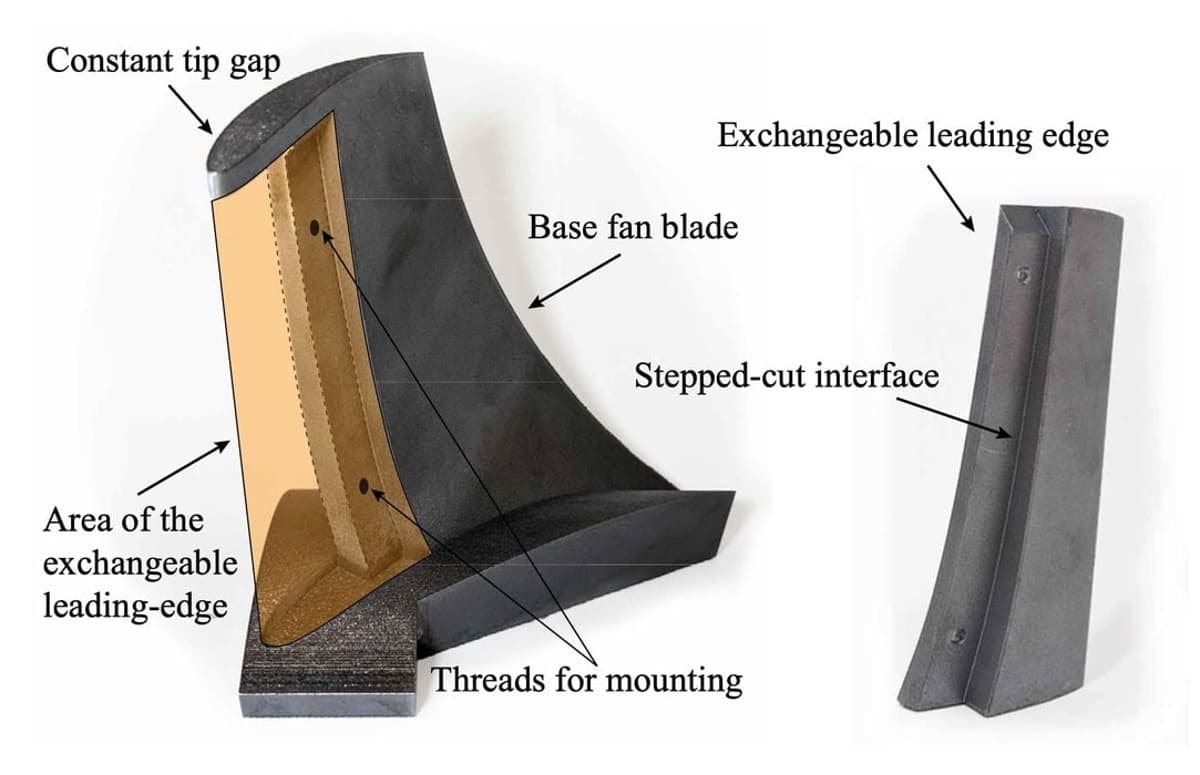
The research team at Aalen University and the University of Erlangen‑Nuremberg introduced a modular fan blade concept that isolates the leading‑edge region for rapid iteration. Using an AlSi10Mg alloy on an SLM 280HL, they printed the noise‑control module at 30 µm contour resolution and 60 µm infill, fitting roughly fifty variants on a single build plate while the base blade required only four prints per rotor. Test results in an anechoic chamber showed acoustic performance indistinguishable from a monolithic blade, with static pressure deviations staying below 4 Pa across the operating range.
This modular LPBF approach could reshape how HVAC manufacturers conduct noise‑reduction research, slashing prototype costs and accelerating design cycles. By keeping the hub and balance unchanged, laboratories can swap leading‑edge modules in minutes, enabling systematic mapping of serration geometries or porous patterns. The method also opens pathways to incremental production, where only the noise‑control segment is additively manufactured while the remainder is forged or stamped. Future work will need to address durability under real‑world flow conditions, certification hurdles, and scaling the process for mass‑market fan blades.
LPBF Modular Fan Blades Target Quieter HVAC
Comments
Want to join the conversation?