Polymaker’s Advanced Filament Selection Tool Includes Color Matching and Material Comparison
•March 9, 2026
0
Key Takeaways
- •Polymaker app narrows filament choices via color matching
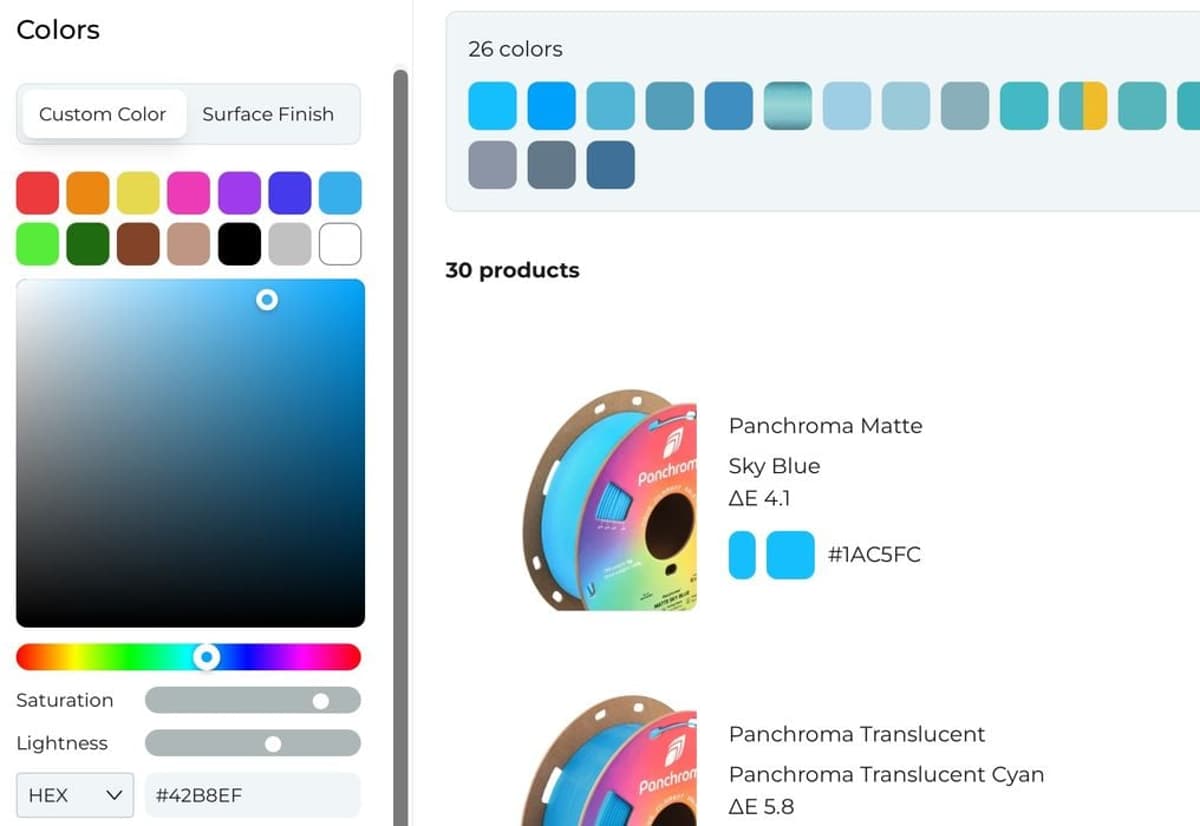
- •Supports RGB, HEX, HSL, CYMK codes for precise selection
- •Upload image to auto‑detect dominant color for filament match
- •Compare tensile strength and heat deflection across materials
- •PolyBot chatbot answers product queries in real time
Summary
Polymaker has launched an advanced online filament selection tool that streamlines product discovery through color matching, finish filters, and engineering property comparisons. Users can input RGB, HEX, HSL, or CYMK codes, upload images for automatic color extraction, and select from 20 finish types to quickly narrow the catalog. The app also offers an XY chart comparing tensile strength and heat‑deflection temperature, plus a chatbot named PolyBot for instant support. This suite positions Polymaker as the most sophisticated filament chooser on the market.
Pulse Analysis
The proliferation of 3D‑printing materials has created a classic choice‑overload scenario, where buyers confront dozens of filament variants and risk paralysis. Behavioral economics shows that too many options can stall purchasing, a problem Polymaker directly addresses with a guided selection experience. By converting a sprawling catalog into a focused set of recommendations, the tool shortens the decision cycle and reduces the cognitive load on engineers and hobbyists alike.
Polymaker’s platform distinguishes itself through several technical capabilities. Color matching accepts industry‑standard codes—RGB, HEX, HSL, CYMK—and even extracts dominant hues from uploaded images, ensuring visual fidelity for brand‑specific projects. Users can also filter by 20 surface finishes and compare key engineering metrics such as tensile strength versus heat‑deflection temperature on an interactive XY chart. The integrated PolyBot chatbot provides real‑time answers, turning the app into a one‑stop shop for specification, education, and purchase.
The broader implications ripple across the filament ecosystem. As Polymaker sets a new benchmark for digital product discovery, competitors will likely develop comparable tools to avoid losing market share. Future iterations may tie directly into CAD software, enabling designers to select materials within the modeling environment and streamline supply‑chain logistics. Ultimately, sophisticated selection tools could become a standard expectation, driving higher conversion rates and fostering more precise, application‑specific 3D‑printing outcomes.
Comments
Want to join the conversation?