Researchers Embed Working Strain Sensors In LPBF Titanium
Key Takeaways
- •Direct ink writing creates 10 µm silver traces on TPGDA dielectric.
- •One‑mm titanium powder layer shields sensors from melt‑pool heat.
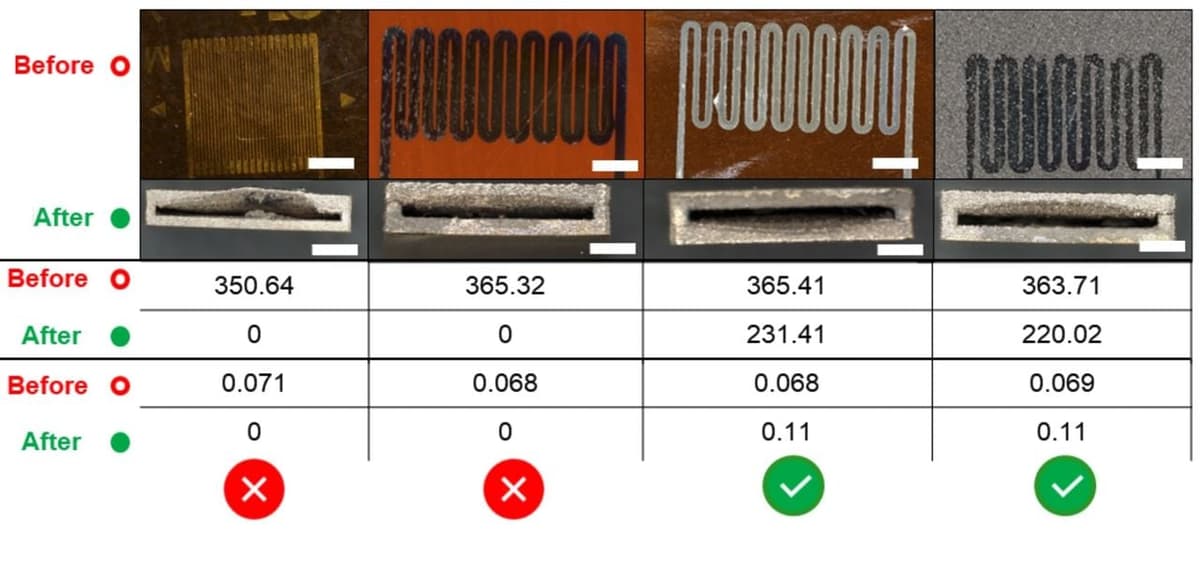
- •Phenolic and TPGDA‑backed gauges survive LPBF with functional resistance.
- •Embedded sensors retain strain sensitivity, enabling in‑situ health monitoring.
Pulse Analysis
Additive manufacturing has long promised the ability to produce complex metal parts on demand, yet integrating electronics has remained a stumbling block, especially for titanium alloys. Ti‑6Al‑4V’s low thermal conductivity and narrow process window cause polymer dielectrics to char or delaminate when exposed to the intense heat of laser powder‑bed fusion. Traditional solutions rely on cavities, coatings, or post‑assembly sensors, which add weight, reduce design freedom, and complicate certification. The new research tackles these constraints by rethinking the sensor stack and protecting it with a sacrificial powder barrier, turning a perceived weakness into a functional advantage.
The breakthrough hinges on three coordinated innovations. First, a thin film of tripropylene glycol diacrylate (TPGDA) provides a polymer dielectric that tolerates the 150 °C curing step without degrading at the higher temperatures encountered later. Second, direct‑ink‑writing deposits silver nanoparticle inks with line widths near ten micrometres, achieving a baseline resistance of roughly 350 Ω. Third, a one‑millimetre layer of Ti‑6Al‑4V powder is spread over the printed gauge before the final wall is fused, acting as a thermal shield that keeps the embedded device near room temperature despite nearby melt‑pool peaks. Finite‑element models and experimental three‑point‑bending tests confirm that the sensors not only survive the build but also exhibit a modest increase in gauge factor, indicating enhanced strain sensitivity after the brief sintering exposure.
For aerospace manufacturers, the ability to embed strain gauges without sacrificing build volume or resorting to complex inserts could transform structural health monitoring strategies. Real‑time data from within load‑bearing components would enable predictive maintenance, reduce unscheduled downtime, and support certification of next‑generation aircraft with higher safety margins. Moreover, the use of roll‑to‑roll‑compatible TPGDA and widely available DIW equipment suggests a path to scale the technology from laboratory prototypes to production‑line parts. As the industry pushes toward smarter, lighter, and more reliable airframes, embedded sensor technologies like this are poised to become a critical differentiator, driving both performance gains and cost efficiencies.
Researchers Embed Working Strain Sensors In LPBF Titanium
Comments
Want to join the conversation?