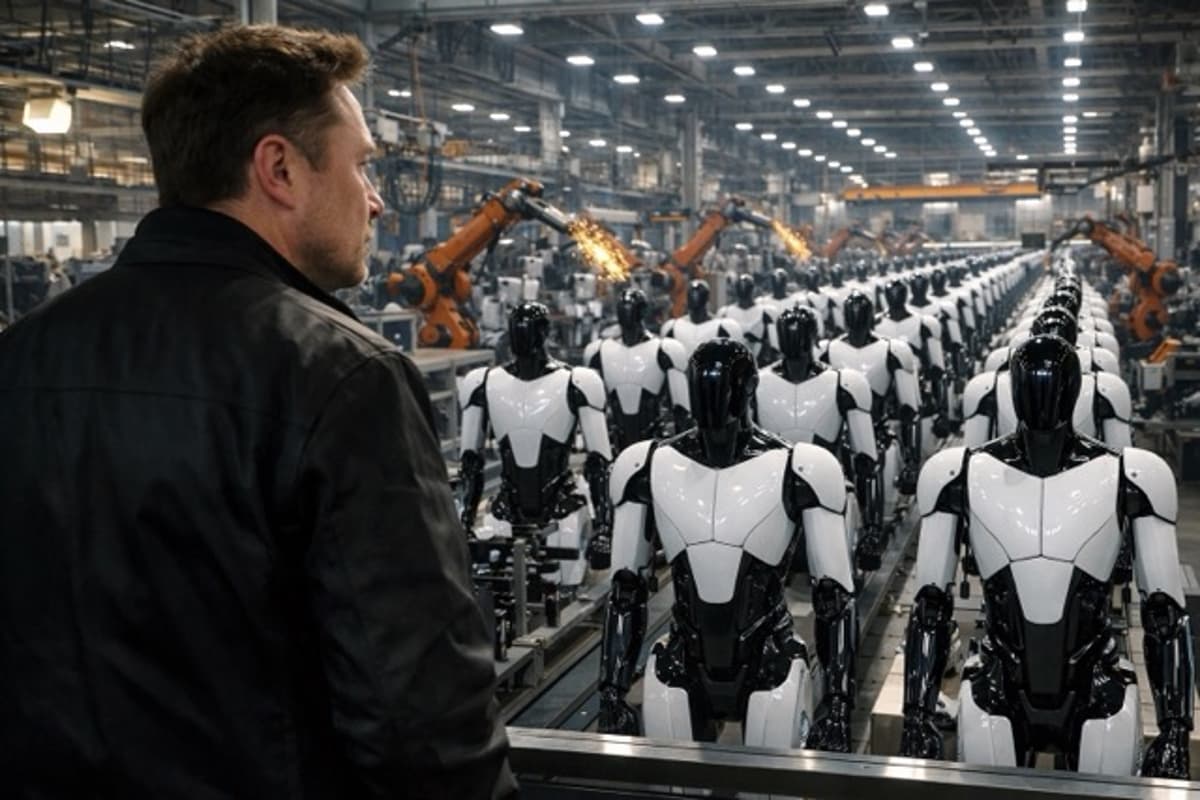
Tesla Isn’t Joking About Building Optimus at an Industrial Scale: Here We Go
Key Takeaways
- •First‑gen Optimus line aims for 1 M robots annually at Fremont.
- •Tesla plans 5.2 M sq ft, $5‑10 B expansion at Giga Texas.
- •Target capacity: 10 M Optimus units per year from Texas factory.
- •AI5 chip tape‑out completed to power Optimus hardware.
- •Optimus price projected $20‑30 k, aiming for mass‑market adoption.
Pulse Analysis
Tesla’s push into humanoid robotics marks a strategic pivot from its traditional automotive focus. The Optimus robot, now moving from prototype to pilot production at Fremont, signals the company’s confidence in achieving economies of scale. By targeting one million units per year initially, Tesla aims to refine manufacturing processes, reduce per‑unit costs, and gather real‑world data that will inform the next generation of models. This early‑stage rollout also serves as a testbed for the AI5 inference chip, a custom processor designed to handle the robot’s vision and decision‑making workloads.
The centerpiece of Tesla’s robot ambitions is the planned expansion at Gigafactory Texas. Adding more than 5.2 million square feet of new building space—an investment of $5‑10 billion—will create a dedicated Optimus factory capable of churning out up to 10 million units annually. Co‑locating the robot line with the AI training clusters (over 230,000 H100‑class GPUs) and the forthcoming Terafab chip fab creates a vertically integrated ecosystem. This proximity reduces latency between software training, chip fabrication, and hardware assembly, potentially slashing development cycles and driving down costs faster than competitors can match.
If Tesla can deliver Optimus at the projected $20‑30 k price point, the robot could become a mass‑market product, opening revenue streams comparable to its vehicle business. The company’s claim that billions of units will be needed for both consumer and industrial applications suggests a multi‑trillion‑dollar market opportunity. Success would not only diversify Tesla’s earnings but also cement its role as a leader in AI‑driven hardware, challenging traditional robotics firms and reshaping supply chains across manufacturing, logistics, and home automation. The scale and integration of Tesla’s approach make the Optimus rollout a pivotal moment for the broader robotics industry.
Tesla isn’t joking about building Optimus at an industrial scale: Here we go
Comments
Want to join the conversation?