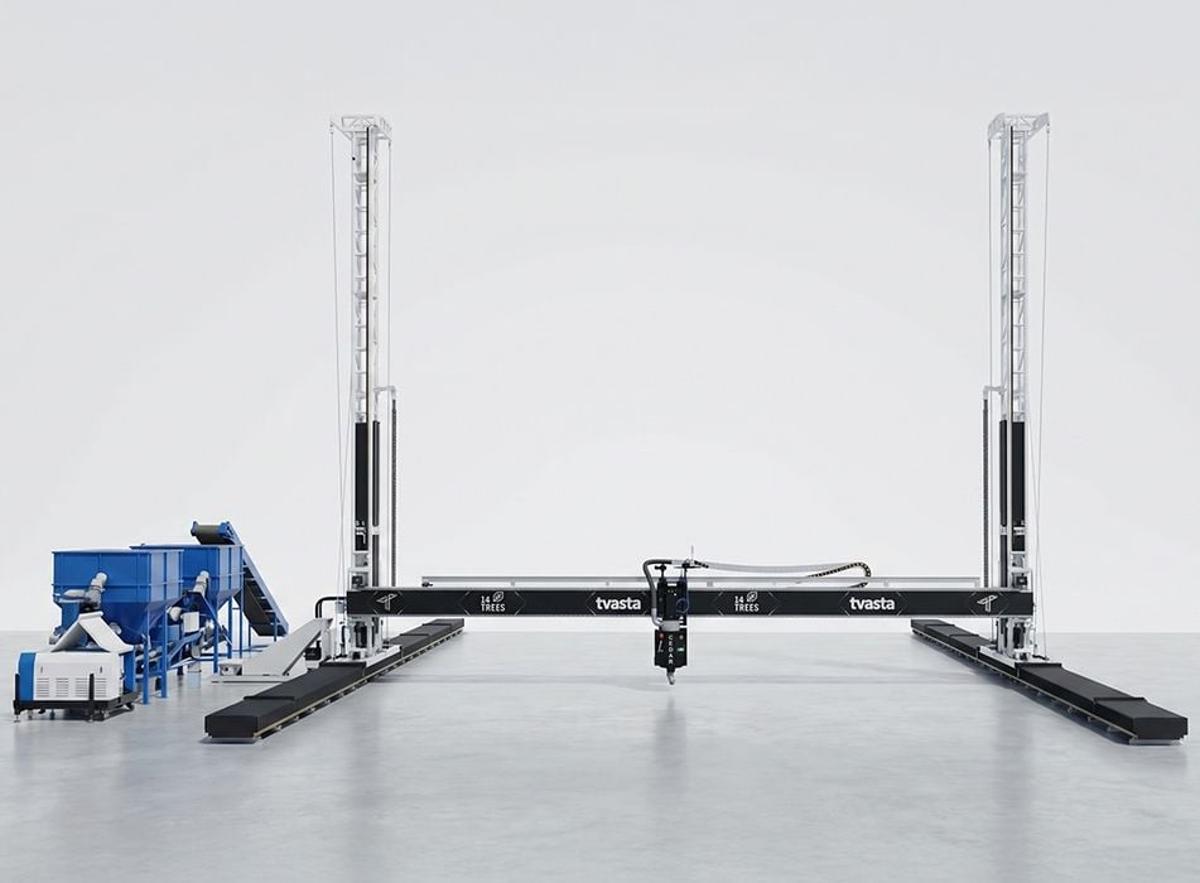
Tvasta Differentiates Cedar 3D Printer With AI-Based Concrete Mix Optimization
Key Takeaways
- •Cedar integrates AI to tailor concrete mixes from local materials.
- •Tvasta offers both gantry and robotic‑arm 3DCP platforms.
- •AI training includes thousands of mix combinations for performance optimization.
- •Differentiation targets cost‑effective, faster large‑scale construction.
- •Market crowded; AI feature may provide Tvasta’s competitive advantage.
Pulse Analysis
The concrete 3D printing (3DCP) industry is hitting an inflection point, with startups and established firms racing to capture market share in a sector projected to exceed $10 billion by 2030. Traditional 3DCP systems rely on proprietary concrete recipes that often require specialized aggregates, limiting geographic scalability and inflating material costs. As a result, many entrants struggle to differentiate beyond hardware form factors, leading to a crowded landscape of gantry and robotic‑arm printers that offer little unique value.
Tvasta’s Cedar seeks to break this pattern by embedding an AI engine that evaluates thousands of historic mix formulations and recommends optimal blends based on locally available sand, cement, and supplementary materials. This approach not only reduces dependence on imported or pre‑qualified mixes but also shortens the trial‑and‑error phase on site, cutting project timelines by up to 30 percent according to internal tests. Moreover, the AI‑driven mix can improve structural performance and reduce waste, aligning with sustainability goals that are increasingly important to developers and regulators.
If the AI optimization delivers on its promises, Cedar could become a catalyst for broader 3DCP adoption, especially in emerging markets where material logistics are a barrier. Competitors may be forced to integrate similar intelligence or risk losing contracts to more adaptable solutions. For investors and construction firms, the key takeaway is that technology differentiation—particularly through data‑centric material science—will likely dictate the next wave of winners in the 3D‑printed building space. Tvasta’s move signals a shift from hardware‑only competition to a hybrid model where software adds measurable economic value.
Tvasta Differentiates Cedar 3D Printer With AI-Based Concrete Mix Optimization
Comments
Want to join the conversation?