Wavelength-Dependent SLA: 3D Printed Action Plots
Key Takeaways
- •Action plots turn resin spectra into printable geometry for direct evaluation
- •385 nm LEDs outperform 405 nm for TPO-based resins, reducing exposure time
- •Pigments and fillers shift absorption, causing under‑or over‑cure at different wavelengths
- •Physical plots reveal optimal wall thickness, overhang fidelity, surface roughness per wavelength
- •Could become ASTM/ISO benchmark for spectral‑response material qualification
Pulse Analysis
The photopolymerization landscape is evolving as printer manufacturers replace the legacy 405 nm monochrome light engine with shorter‑wavelength 385 nm sources and even visible‑light channels. This shift is driven by higher photon energy, faster cure rates, and the ability to tailor initiator chemistries. However, photoinitiators such as TPO, TPO‑L, and dental-specific agents absorb light unevenly, meaning a dose that works at one wavelength may produce over‑cure, under‑cure, or surface defects at another. Understanding these spectral nuances is now a competitive advantage for resin developers and machine builders alike.
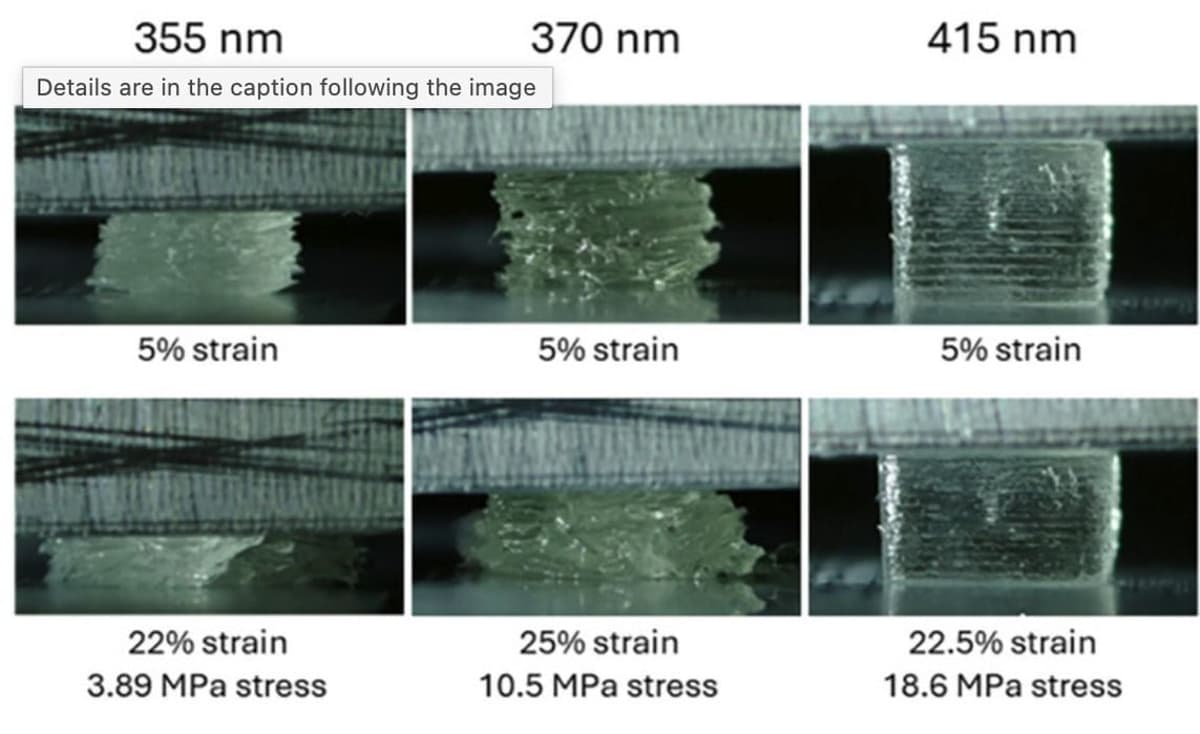
The “action plot” concept translates a traditional spectral efficiency chart into a three‑dimensional test coupon. By printing a lattice of struts and gaps, then exposing each region to a precise dose at a chosen wavelength, manufacturers obtain a visual map of cure success. Surviving struts indicate sufficient polymerization, while missing features flag problematic settings. This physical readout captures critical parameters—minimum wall thickness, overhang fidelity, and surface roughness—without relying solely on spreadsheet calculations. For labs working with pigmented, ceramic‑filled, or biocompatible resins, the method accelerates the iteration cycle, allowing rapid adjustment of exposure energy, grayscale compensation, or even per‑layer wavelength selection where hardware permits.
Beyond immediate process optimization, action plots could reshape industry standards. ASTM and ISO committees are increasingly interested in reproducible, geometry‑based metrics for material qualification. A universally accepted spectral‑response coupon would enable cross‑vendor comparisons, streamline certification, and reduce the risk of costly print failures in high‑value sectors such as dental prosthetics and aerospace composites. As the market embraces multi‑wavelength printing, the ability to quickly visualize and quantify wavelength‑dependent cure behavior will become a cornerstone of resin innovation and quality assurance.
Wavelength-Dependent SLA: 3D Printed Action Plots
Comments
Want to join the conversation?