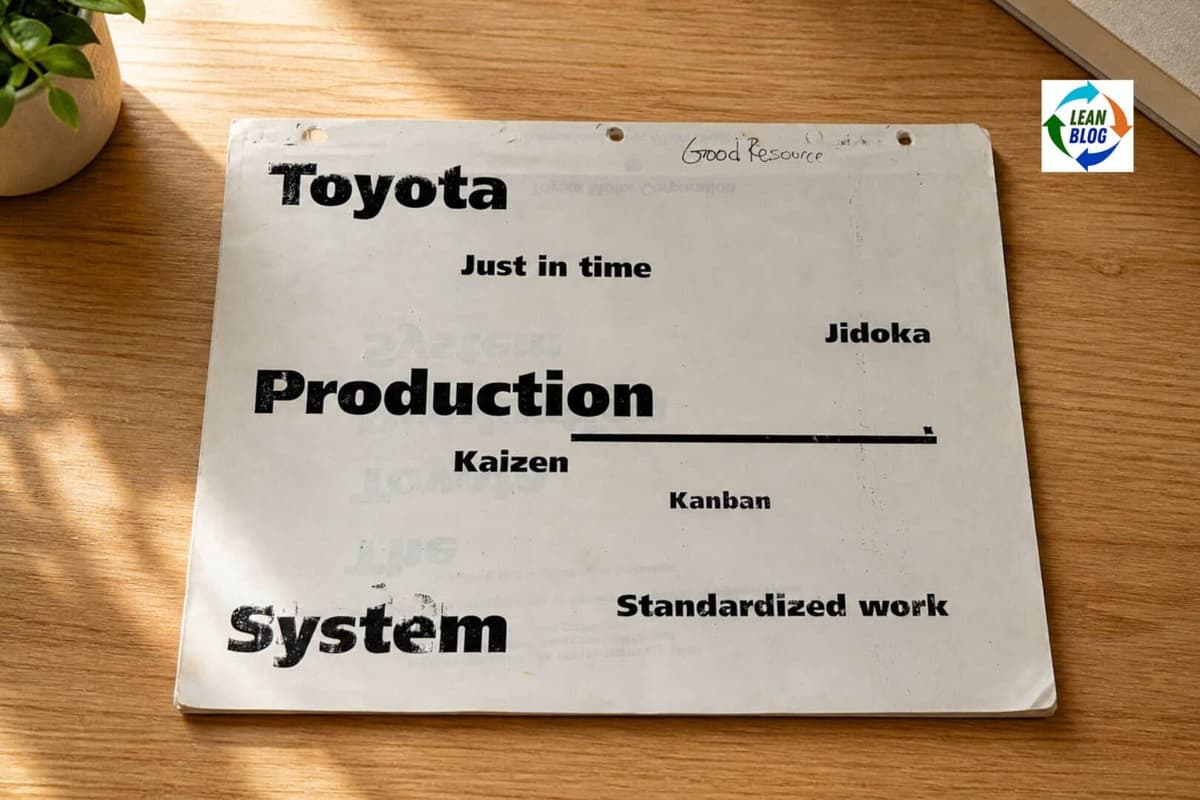
What Toyota Said About Their Own Production System in 1992
Key Takeaways
- •Toyota's 1992 booklet foregrounds employee judgment over tools
- •It admits TPS creates “creative tension” that can be stressful
- •Employees submitted ~2 million ideas in 1990, 97% implemented
- •Modern Lean must address cultural gaps highlighted in the booklet
Pulse Analysis
The 1992 Toyota Production System (TPS) booklet arrived at a pivotal moment, sandwiched between the seminal "Machine That Changed the World" and the later "Lean Thinking". Unlike later Western analyses that dissected kanban, Jidoka, and heijunka, Toyota’s own narrative placed people at the core, proclaiming that quality and productivity stem from tapping employees' innate judgment. This early self‑portrait offers a rare glimpse into the company’s internal language before consultants codified the methodology, making it a valuable primary source for scholars and practitioners alike.
Central to the booklet is the candid acknowledgment of "creative tension"—the relentless vigilance required by just‑in‑time production and continuous kaizen. Toyota openly admits this pressure can be stressful, yet it frames it as a catalyst for empowerment, citing an astonishing two million improvement proposals in 1990 with a 97% implementation rate. Modern concepts such as psychological safety and employee ownership echo these ideas, suggesting that Toyota’s cultural blueprint anticipated contemporary research on high‑performance work systems. The document’s focus on job ownership and the human‑machine interface foreshadows today’s emphasis on autonomy and trust in lean transformations.
For organizations importing Lean today, the booklet serves as a cautionary reminder: tools alone do not drive results. Replicating TPS requires nurturing the same cultural foundations—empowering frontline workers, encouraging relentless problem‑solving, and managing the inherent stress of continuous improvement. Leaders must translate Toyota’s implicit assumptions about shared values, lifetime employment, and labor‑relations into their own contexts, or risk superficial adoption that yields only short‑term gains. Understanding the cultural underpinnings highlighted in the 1992 publication is therefore essential for sustainable, scalable lean initiatives.
What Toyota Said About Their Own Production System in 1992
Comments
Want to join the conversation?