Key Takeaways
- •Sorting 3D waste by type/color is impractical for small shops
- •Filament-quality recycling equipment costs thousands, beyond desktop budgets
- •Polymer degradation limits reuse to few cycles before performance drops
- •Industrial depolymerization is expensive, not viable for hobbyists
- •Biodegradable PHA is the only printable polymer that truly composts
Pulse Analysis
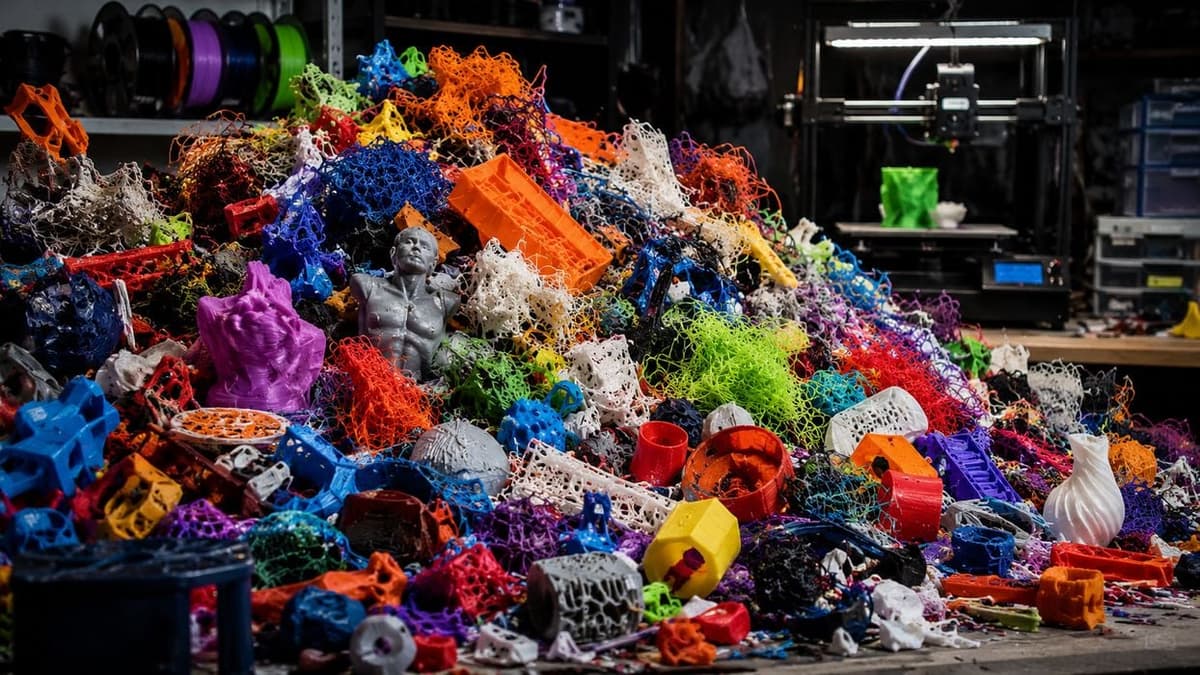
Recycling 3D‑printer scraps sounds attractive because it promises lower material costs and reduced plastic waste. In theory, thermoplastic filaments can be melted and re‑extruded, mirroring the original manufacturing process. However, most desktop users generate mixed‑material waste—different polymers, colors, and additives—that must be meticulously sorted to avoid compromising filament quality. The sorting step alone becomes a logistical nightmare, especially when the volume of waste is low and the cost of manual segregation outweighs any savings.
Beyond sorting, the equipment needed to produce high‑quality filament is prohibitively expensive for hobbyists. Commercial recycling lines employ multi‑stage drying, precise temperature control, laser‑based diameter monitoring, and water‑bath cooling—systems that can run into tens of thousands of dollars. Smaller, consumer‑grade devices lack these controls, resulting in inconsistent filament diameter and weakened mechanical properties. Even if the hardware barrier were overcome, thermoplastic polymers degrade each time they are heated; molecular chains break down, reducing tensile strength and melt flow. After only a few cycles, the material no longer meets the tolerances required for reliable printing, forcing users to blend in fresh resin.
The only scalable solutions lie in industrial depolymerization, which breaks polymers back into monomers for true reuse, or in developing biodegradable alternatives like polyhydroxyalkanoates (PHA). Both approaches remain costly or present printing challenges, keeping true recycling out of reach for most makers. Until cheaper, universal depolymerization technologies or widely printable compostable filaments emerge, 3D‑printer waste will continue to feed the growing microplastic stream, highlighting a critical sustainability gap in additive manufacturing.
Why Recycling 3D Printer Scraps Will Never Work
Comments
Want to join the conversation?