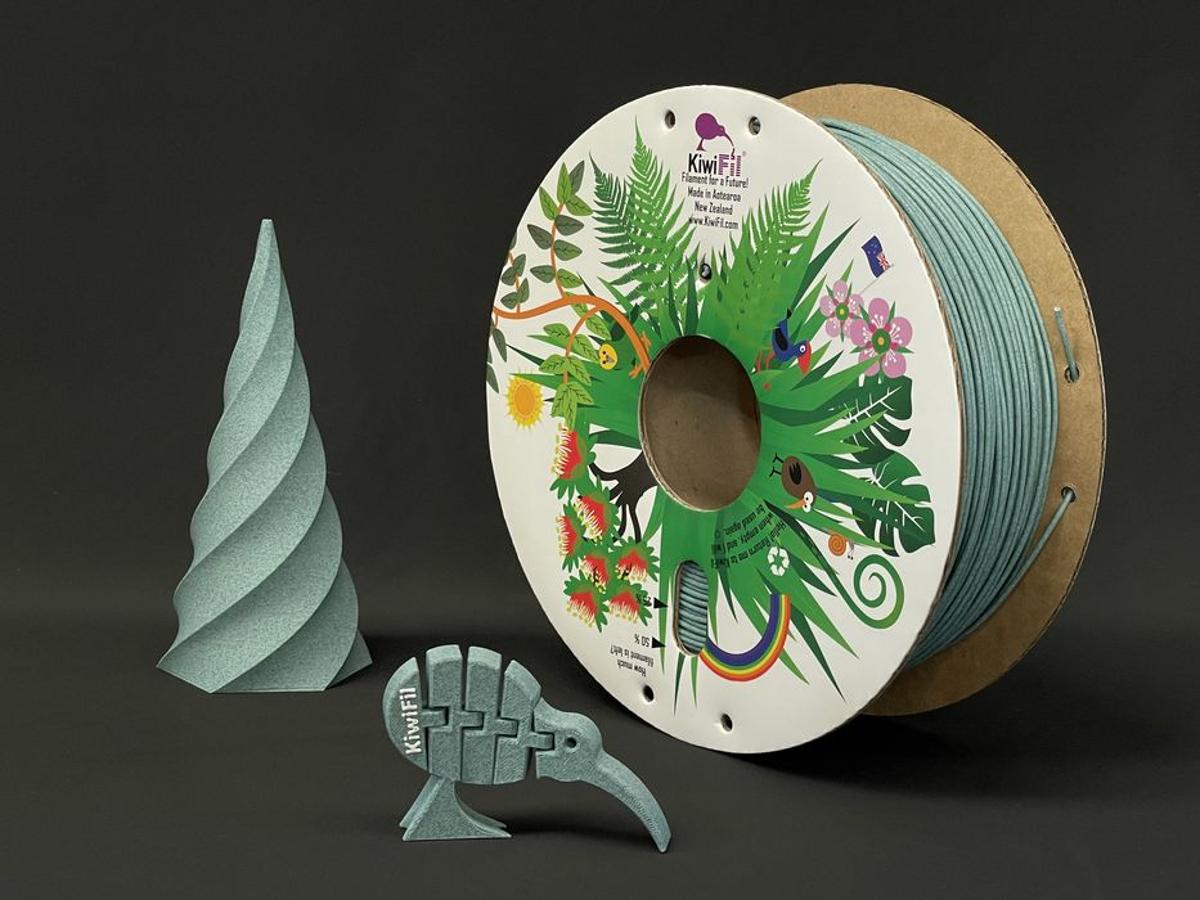
“WoolyFil” Uses Natural Wool Pigments to Color PLA Filament
Key Takeaways
- •Wool Source converts wool fiber into fine pigment particles for 3D printing
- •Pigments blend with recycled PLA, creating WoolyFil filament with standard print parameters
- •Green Marble and Riverstone sold via KiwiFil for $19 per 250 g spool
- •Full‑kilogram spools cost $36, underscoring premium price for eco‑friendly filament
Pulse Analysis
Wool Source’s breakthrough hinges on a patented extraction method that transforms raw wool into micron‑sized pigment particles. Unlike traditional dyes that rely on petrochemical feedstocks, the wool‑derived pigments are produced without fossil fuels or harsh chemicals, offering a fully renewable color solution. By mixing these pigments with recycled polylactic acid (PLA), the company creates WoolyFil filament that behaves exactly like standard PLA, eliminating the need for new printer settings or hardware modifications. This seamless integration lowers the barrier for manufacturers and hobbyists seeking greener materials.
The market response highlights both opportunity and challenge. At US $19 for a 250‑gram spool, WoolyFil is competitively priced against specialty filaments, yet the US $36 price tag for a full kilogram reflects the premium associated with sustainable inputs. KiwiFil’s partnership ensures local production in New Zealand, reducing transportation emissions and supporting regional supply chains. Early adopters can leverage the four‑color base system—yellow, black, blue, and red—to mix a broad palette, expanding design possibilities while maintaining a low environmental footprint.
WoolyFil arrives amid a broader push for bio‑based additives in additive manufacturing. As regulators and consumers demand lower carbon footprints, filament manufacturers are exploring alternatives such as plant‑derived dyes, recycled polymers, and biodegradable blends. Wool Source’s approach demonstrates that natural fibers can serve as a feedstock for high‑performance colorants, potentially extending to other polymers like PCL, PBS, and PHA. While cost remains a hurdle, scaling production and improving pigment efficiency could drive prices down, making eco‑friendly filament a mainstream choice for the industry.
“WoolyFil” Uses Natural Wool Pigments to Color PLA Filament
Comments
Want to join the conversation?