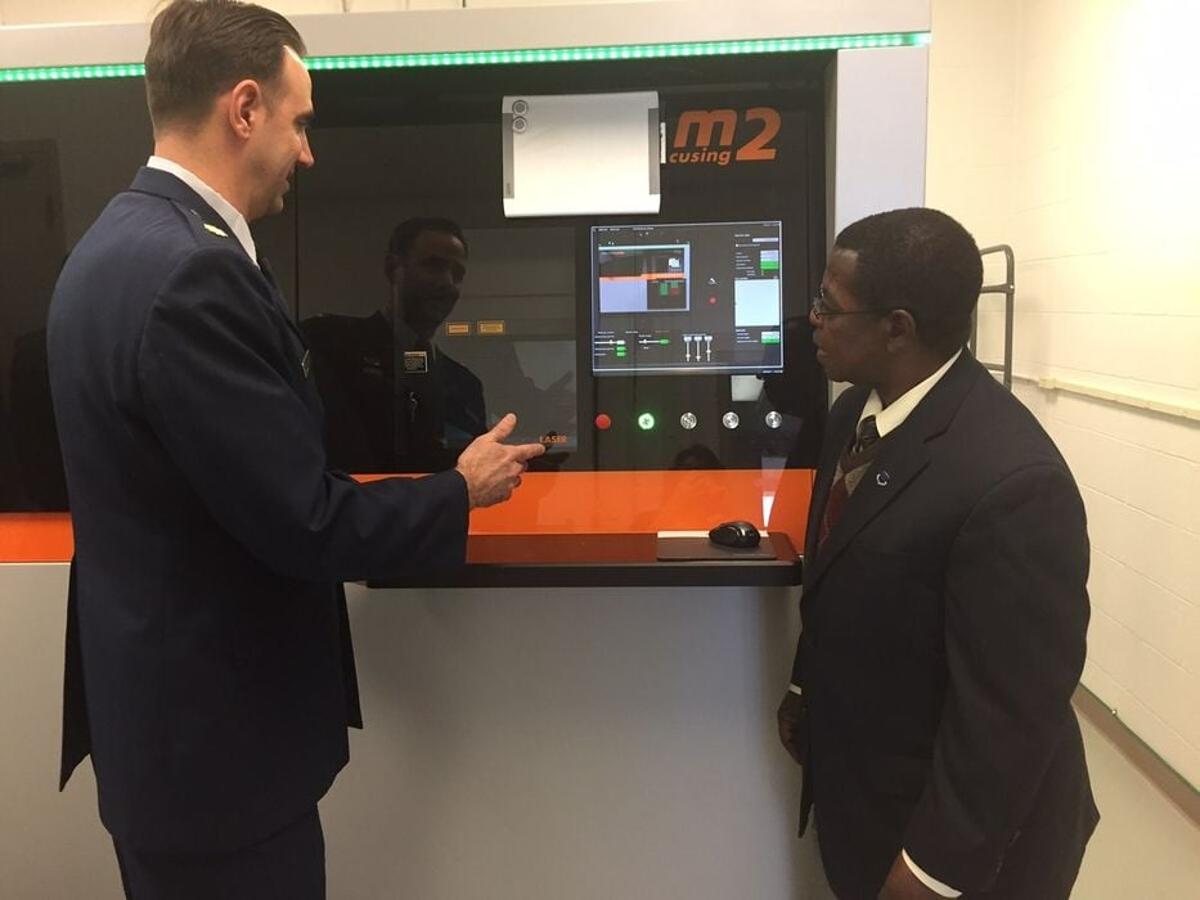
Wright-Patterson Air Force Base: Ohio’s Tech Powerhouse Meets 3D Printing Innovation
•February 26, 2026
0
Why It Matters
Accelerating 3D‑printing adoption slashes sustainment costs and boosts aircraft readiness, while proven aerospace applications signal a transformative shift in defense supply chains and the broader aerospace industry.
Key Takeaways
- •Large‑format printer contract worth $2.5 million awarded
- •3D‑printed components installed on C‑5 aircraft within days
- •Rapid part production cuts lead times from months to days
- •Metal additive research yields lighter, stronger aerospace parts
- •AFRL’s 85% printed launch vehicle demonstrates mature technology
Pulse Analysis
Wright‑Patterson Air Force Base (WPAFB) serves as a strategic R&D powerhouse for the U.S. Air Force, employing roughly 38,000 personnel across research, engineering, and operational units such as AFLCMC, AFRL, and AFIT. The base’s expansive footprint fuels regional economic growth and positions it as a national leader in defense technology development, where cutting‑edge projects transition quickly from concept to fielded capability.
Additive manufacturing has become a cornerstone of WPAFB’s sustainment strategy. The Rapid Sustainment Office’s $2.5 million investment in a nine‑foot fused filament printer expands the scale of printable aerospace parts, enabling on‑demand production of critical components. Recent successes include polymer and metal parts installed on a C‑5 Galaxy within days, delivering weight reductions, ergonomic improvements, and dramatically shortened lead times compared with traditional supply chains. Parallel metal‑printing research is delivering complex lattice structures that enhance strength‑to‑weight ratios, further boosting aircraft performance.
The ripple effects extend beyond the military. AFRL’s achievements—such as a launch vehicle with 85% printed hardware—demonstrate that additive manufacturing is ready for certification and broader aerospace adoption. Collaborative programs like Pacer Edge and ALSAM are streamlining qualification pathways, reducing costs, and reshaping logistics for both defense and commercial sectors. As material science advances and tax incentives encourage R&D investment, WPAFB is poised to drive the next wave of innovation, cementing 3D printing as a critical enabler of future aerospace capabilities.
Wright-Patterson Air Force Base: Ohio’s Tech Powerhouse Meets 3D Printing Innovation
0
Comments
Want to join the conversation?
Loading comments...