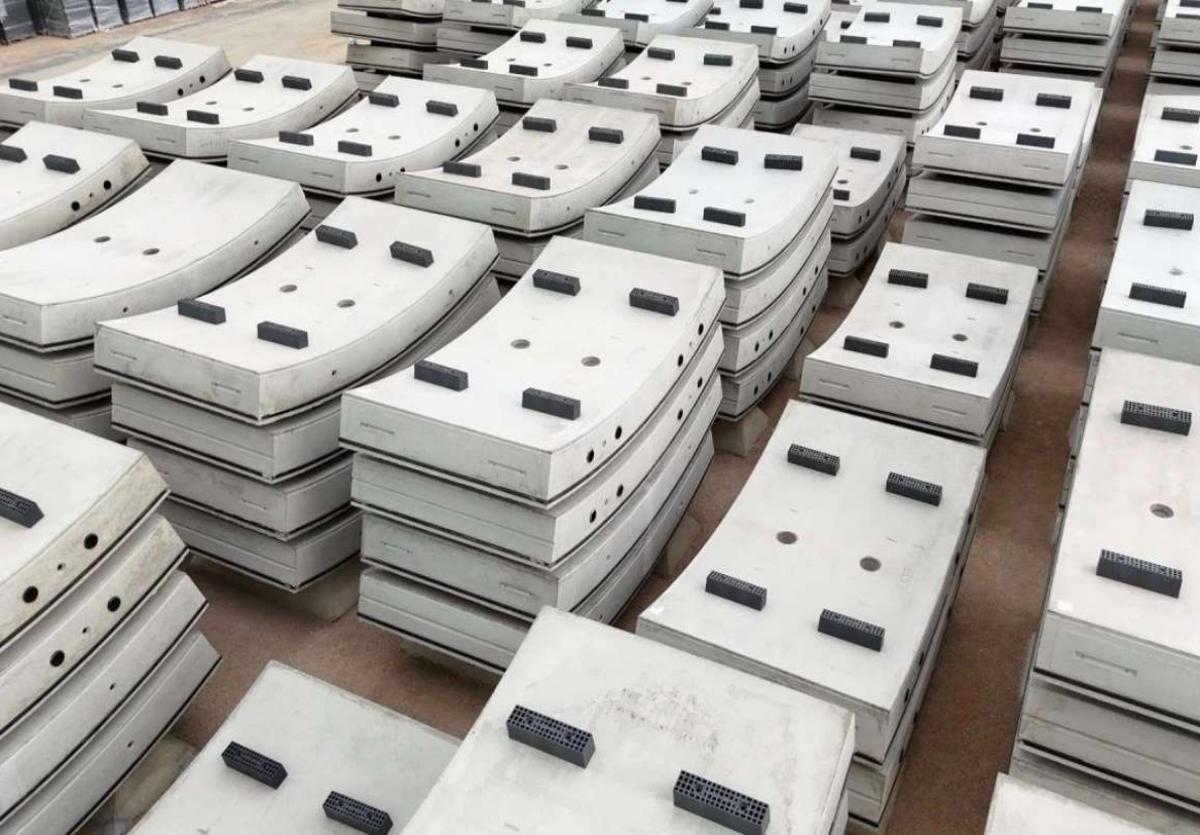
1,000th Locally Manufactured Tunnel Segment Completed in Major SA Infrastructure Project
Why It Matters
The milestone speeds Adelaide’s major transport corridor, promising faster, safer commutes for over 100,000 daily vehicles and stimulating regional job growth, while highlighting Australia’s capacity for large‑scale precast manufacturing and skills development.
Key Takeaways
- •1,000th tunnel segment marks progress on $10.2 bn USD project.
- •Facility will produce 55,000+ segments, 160 daily at peak.
- •Project supports ~60 local jobs and new Certificate III traineeship.
- •Segments weigh ~12 tonnes; 280,000 m³ concrete equals 112 Olympic pools.
- •Federal and state each invest $5.1 bn USD, targeting 2026 tunnel launch.
Pulse Analysis
The River Torrens to Darlington (T2D) corridor is one of Australia’s most ambitious infrastructure undertakings, combining a $15.4 billion Australian‑dollar budget with a strategic aim to relieve congestion on South Road. By converting the total cost to roughly $10.2 billion USD, the project ranks among the largest transport investments in the region, underscoring the federal and state commitment of about $5.1 billion USD each. The tunnel’s design relies on over 55,000 precast concrete segments, a method that accelerates construction while ensuring consistent quality.
At the heart of the effort is the Waterloo Corner precast plant, a 285‑metre shed capable of producing up to 160 twelve‑tonne segments per day. This output translates to 280,000 cubic metres of concrete—equivalent to 112 Olympic‑size swimming pools—highlighting the massive material logistics involved. Beyond the physical output, the facility sustains around 60 direct jobs and has launched a nationally recognised Certificate III traineeship, already enrolling more than 60 apprentices. This focus on skill development creates a lasting workforce legacy that will benefit South Australia’s broader manufacturing and construction sectors long after tunnelling is complete.
When operational, the tunnel will accommodate an estimated 100,000 vehicles daily, cutting travel times and improving safety across Adelaide’s busiest corridor. The use of battery‑electric Multi‑Service Vehicles for segment transport further aligns the project with sustainability goals. By delivering a non‑stop South Road, the T2D project is expected to spur economic activity, attract investment, and support job growth throughout the region, cementing South Australia’s position as a hub for large‑scale, high‑tech infrastructure development.
1,000th locally manufactured tunnel segment completed in major SA infrastructure project
Comments
Want to join the conversation?
Loading comments...