3D Printed Ghost Guns Are Hard to Trace. Researchers May Have Found a Way In
•March 3, 2026
0
Why It Matters
Chemical profiling offers law‑enforcement a tangible tool to trace otherwise untraceable 3D‑printed firearms, strengthening regulatory responses to the ghost‑gun epidemic.
Key Takeaways
- •Infrared spectroscopy distinguishes PLA, ABS, PETG plastics
- •Method cannot differentiate brands, colors, or raw vs printed filament
- •Additives like carbon fiber create detectable spectral variations
- •Filament coating alters surface chemistry; ethanol cleaning removes it
- •Sample location impacts profile due to printer nozzle residue
Pulse Analysis
The rise of privately manufactured firearms, often dubbed "ghost guns," has outpaced traditional forensic techniques that rely on toolmarks and serial numbers. As 3D‑printing technology becomes more accessible, investigators face components made from polymers that leave few physical clues. This gap has prompted a shift toward material science, where the chemical composition of the printed parts can serve as a forensic fingerprint, offering a new avenue for attribution and case building.
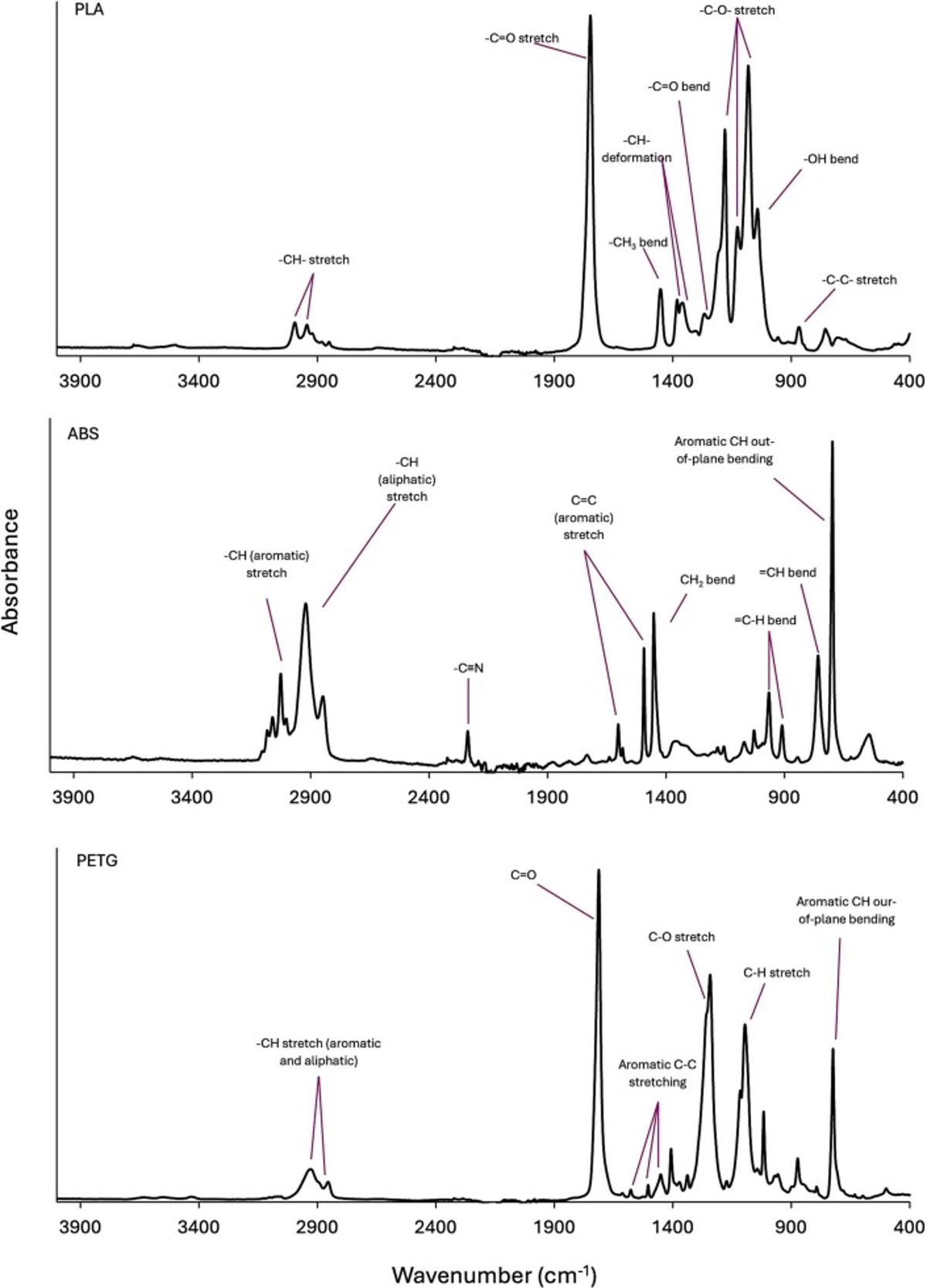
Curtin University’s recent study leverages attenuated total reflectance Fourier‑transform infrared (ATR‑FTIR) spectroscopy combined with chemometric analysis to map the spectral landscape of 67 filament products available in Australia. The researchers successfully separated PLA, ABS and PETG into distinct clusters, confirming that polymer type can be identified with high confidence. However, the method struggled to resolve finer distinctions such as brand or color, reflecting the homogenization of global filament supply chains. Notably, modified filaments—flexible PLA, carbon‑fiber reinforced blends—exhibited measurable spectral shifts, indicating that additive signatures could become a secondary source of discrimination.
For forensic laboratories, the findings suggest a pragmatic, though partial, tool for tackling 3D‑printed weapons. By focusing sampling on the interior of printed objects and cleaning surface coatings with ethanol, analysts can mitigate confounding variables and improve data reliability. While infrared profiling alone won’t replace traditional ballistics, it complements existing workflows and aligns with tightening regulatory frameworks in the U.S., Australia and beyond. Future research may integrate Raman spectroscopy or mass spectrometry to close the resolution gap, ultimately bolstering the investigative toolkit against the evolving ghost‑gun threat.
3D Printed Ghost Guns Are Hard to Trace. Researchers May Have Found a Way In
0
Comments
Want to join the conversation?
Loading comments...