Manufacturing News and Headlines
  • All Technology
  • AI
  • Autonomy
  • B2B Growth
  • Big Data
  • BioTech
  • ClimateTech
  • Consumer Tech
  • Crypto
  • Cybersecurity
  • DevOps
  • Digital Marketing
  • Ecommerce
  • EdTech
  • Enterprise
  • FinTech
  • GovTech
  • Hardware
  • HealthTech
  • HRTech
  • LegalTech
  • Nanotech
  • PropTech
  • Quantum
  • Robotics
  • SaaS
  • SpaceTech
AllNewsDealsSocialBlogsVideosPodcastsDigests

Manufacturing Pulse

EMAIL DIGESTS

Daily

Every morning

Weekly

Sunday recap

NewsDealsSocialBlogsVideosPodcasts
ManufacturingNews3D Printed Helicopter Bracket Made From Recycled Titanium Takes Flight
3D Printed Helicopter Bracket Made From Recycled Titanium Takes Flight
ManufacturingDefenseAerospace

3D Printed Helicopter Bracket Made From Recycled Titanium Takes Flight

•February 17, 2026
0
TCT Magazine
TCT Magazine•Feb 17, 2026

Why It Matters

The flight proves recycled titanium can replace imported material, strengthening UK defence supply security and advancing sustainable manufacturing.

Key Takeaways

  • •First flight using recycled‑titanium 3D‑printed bracket
  • •Bracket printed via laser powder bed fusion (LPBF)
  • •Reduces UK reliance on imported aerospace titanium
  • •Recycled feedstock cuts CO2e emissions by 93.5%
  • •Demonstrates circular economy potential for defence aerospace

Pulse Analysis

The successful flight of an A109S helicopter equipped with a 3‑D‑printed bracket marks a watershed moment for additive manufacturing in aerospace. Produced by Additive Manufacturing Solutions Limited using laser powder‑bed fusion, the component was fabricated from titanium recovered from a decommissioned aircraft, proving that recycled feedstock can meet the stringent performance standards of flight‑critical parts. This demonstration validates years of research funded by Innovate UK and shows that high‑grade titanium powder can be regenerated without compromising mechanical integrity, opening the door to broader adoption across civil and military platforms.

From a strategic perspective, the achievement directly addresses the United Kingdom’s vulnerability to foreign titanium supplies, which are currently dominated by China and Russia. By converting surplus defence assets into usable powder, QinetiQ and AMS create a domestic source that can support the Ministry of Defence’s equipment‑support programmes. The reduced import reliance not only strengthens national security but also shortens lead times and lowers procurement costs for critical air‑data systems. Industry analysts see this as a catalyst for a home‑grown supply chain that could export similar capabilities to allied nations.

The environmental impact is equally compelling: the recycled powder process delivers a 93.5 % reduction in CO₂‑equivalent emissions while achieving 97 % material efficiency. Such figures illustrate how circular‑economy principles can be embedded in high‑value manufacturing, turning waste into a competitive advantage. As regulatory pressure mounts for greener aerospace production, the UK’s early adoption positions it as a leader in sustainable metal AM. Future programmes are likely to expand the range of recycled components, accelerating the transition toward zero‑waste, resilient defence logistics.

3D printed helicopter bracket made from recycled titanium takes flight

The first flight of an aircraft containing a 3D printed structural component, made from recycled titanium, has taken place at a UK military flight testing base.

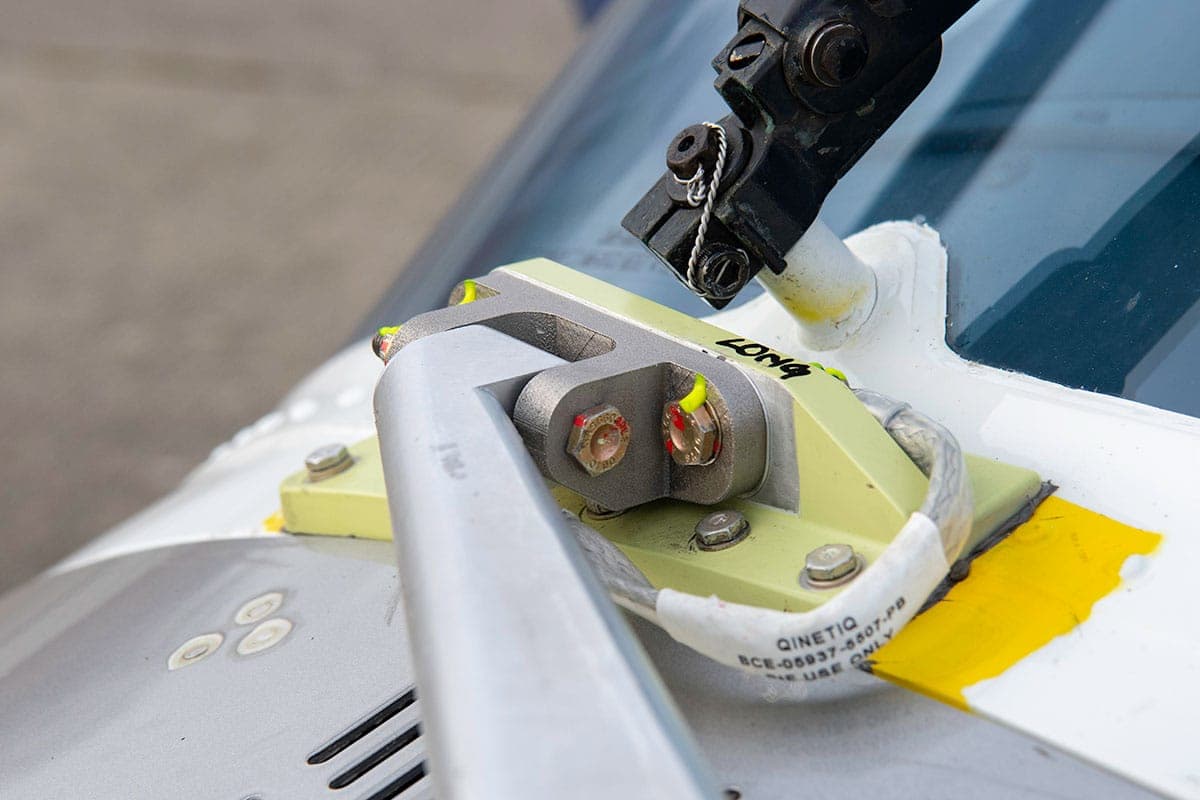
The part - a bracket made from titanium recovered from a decommissioned aircraft - forms part of an Air Data Boom attached to an A109S helicopter owned by global defence and security company QinetiQ. It was printed by metal additive manufacturing (AM) specialist Additive Manufacturing Solutions Limited (AMS) using laser powder bed fusion (LPBF).

The flight, which was conducted by QinetiQ’s Flight Test Organisation at MOD Boscombe Down in Wiltshire, is thought to be a world first.

Simon Galt, Managing Director Air, QinetiQ, said: “Our testing and engineering expertise is helping to prove the technology which will reduce the UK’s dependency on other nations for aerospace grade titanium. Not only are we helping to strengthen UK supply chains, we are also leading the rest of the world in the very latest 3D printing technology.”

The maiden flight underscores the potential for UK to reduce its dependency on imported titanium, particularly for defence applications. Currently, China and Russia are the largest suppliers of aerospace grade titanium globally, but AMS believes the UK could become self-sufficient by repurposing titanium held in scrap aircraft and turning into feedstock for AM.

Rob Higham, AMS Director & CEO, commented: "AMS has tirelessly built momentum and expertise within the additive powder market, with a sharp focus on providing recycled feedstocks. This milestone reflects the dedication of our team and QinetiQ’s commitment to a more resilient and sustainable future."

The recycled powder is said to match the required quality for the printing of new products, and achieves 97% efficiency while using 93.5% less CO2e. The test builds on an Innovate UK-funded project led by AMS in 2023 looking at the feasibility of using recycled metallic materials in AM to build a high value circular economy for the aerospace supply chain. The same year, the company began working with the UK’s Ministry of Defence Defence Equipment & Support to explore the technical feasibility of recovering critical materials from surplus defence assets.

Read Original Article
0

Comments

Want to join the conversation?

Loading comments...