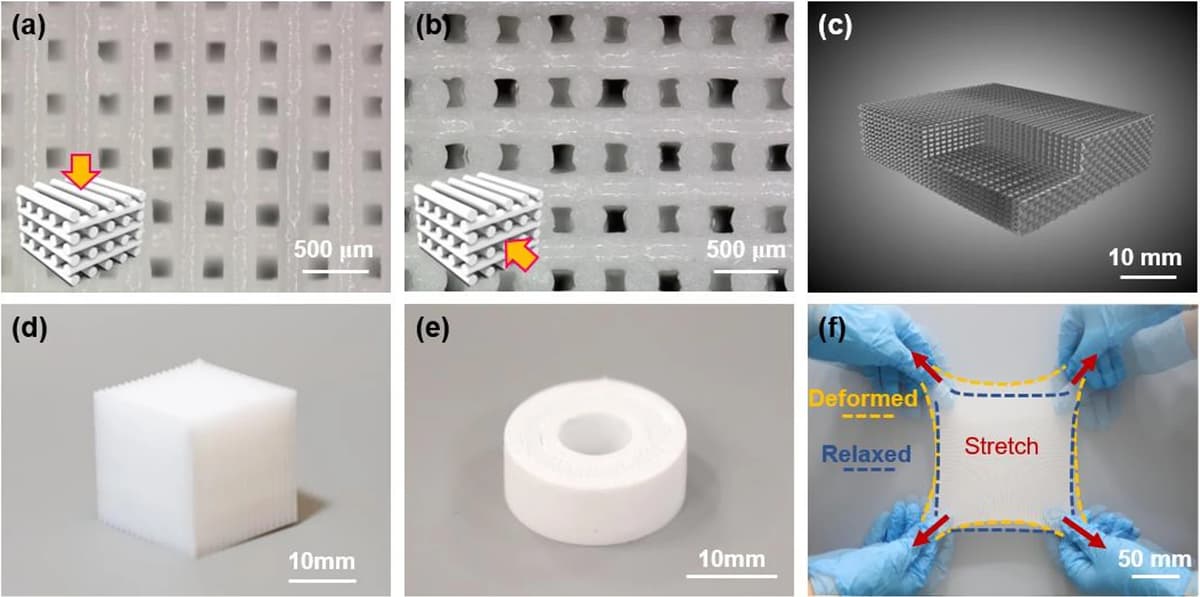
3D Printed Silicone Lattice Mixes Antifungal Resistance with Vibration Isolation
Why It Matters
The dual‑function lattice solves a long‑standing trade‑off between antifungal protection and mechanical flexibility, enabling more reliable, low‑maintenance vibration control in harsh marine environments.
Key Takeaways
- •3D‑printed silicone lattice with 1–5 wt % hBN resists fungi.
- •5 wt % hBN reduces fungal coverage below 0.8 % in ASTM G21 test.
- •Lattice retains >90 % stress after 10,000 cycles at 70 % strain.
- •Vibration isolation efficiency exceeds 80 % across temperature and humidity extremes.
- •Architecture shifts isolation frequency leftward, widening damping bandwidth.
Pulse Analysis
Additive manufacturing is redefining how engineers balance competing material properties. By formulating a printable silicone‑hBN ink, the Chinese team leveraged precise lattice geometry to create a surface that is both hydrophobic and oxidative, thwarting fungal colonization without sacrificing elasticity. The ability to tune filler content between 1 and 5 wt % ensures the composite remains extrudable, a critical factor often overlooked in antimicrobial coating research, and opens pathways for custom‑designed marine components that can be printed on‑demand.
Beyond bio‑resistance, the lattice’s mechanical profile addresses the rigorous demands of shipborne equipment. Compression tests reveal a broad stress plateau that absorbs energy through elastic buckling, while durability trials show over 90 % stress retention after 10,000 cycles at 70 % strain. Vibration isolation measurements demonstrate frequency shifts that widen the damping bandwidth, delivering isolation efficiencies above 80 % even at -20 °C and 150 °C. These results suggest the printed lattice can replace bulky, maintenance‑heavy isolators and surface coatings traditionally used in offshore rigs and naval vessels.
The broader market impact could be significant for U.S. defense contractors and offshore energy firms seeking lightweight, long‑lasting solutions. Integrating antifungal and damping functions into a single printed part reduces part count, simplifies supply chains, and cuts lifecycle costs. As additive manufacturing scales, similar composite lattices may appear in aerospace, automotive, and medical devices where moisture‑induced degradation and vibration are critical concerns. Continued research into alternative fillers and bio‑compatible polymers could further expand the technology’s applicability, positioning 3D‑printed multifunctional elastomers as a cornerstone of next‑generation resilient infrastructure.
3D Printed Silicone Lattice Mixes Antifungal Resistance with Vibration Isolation
Comments
Want to join the conversation?
Loading comments...