3D Scanning Metrology: A Guide to Accuracy and Resolution
•March 3, 2026
0
Why It Matters
By delivering both high accuracy and high resolution without physical contact, 3D scanning reduces inspection time, lowers defect risk, and enables new digital‑twin workflows that transform product development and heritage preservation.
Key Takeaways
- •Structured-light scanners capture millions of points instantly.
- •Resolution defines point density; rule of 10 guides detail.
- •Accuracy measures deviation from true dimensions, per VDI/VDE 2634.
- •AI cleans scans; robots enable 24/7 inspection.
- •Non‑contact scanning reduces damage and speeds quality control.
Pulse Analysis
The migration from tactile gauges and coordinate‑measurement machines to optical 3D scanning marks a fundamental shift in metrology. While traditional tools excel at single‑point precision, they struggle with complex geometries and fragile surfaces. Structured‑light systems project patterned illumination, translating distortions into dense point clouds that form a digital twin of the object. This high‑resolution capture, governed by the "Rule of 10," ensures that even sub‑millimeter features are represented, while accuracy—validated against standards like VDI/VDE 2634—guarantees that the virtual model mirrors reality.
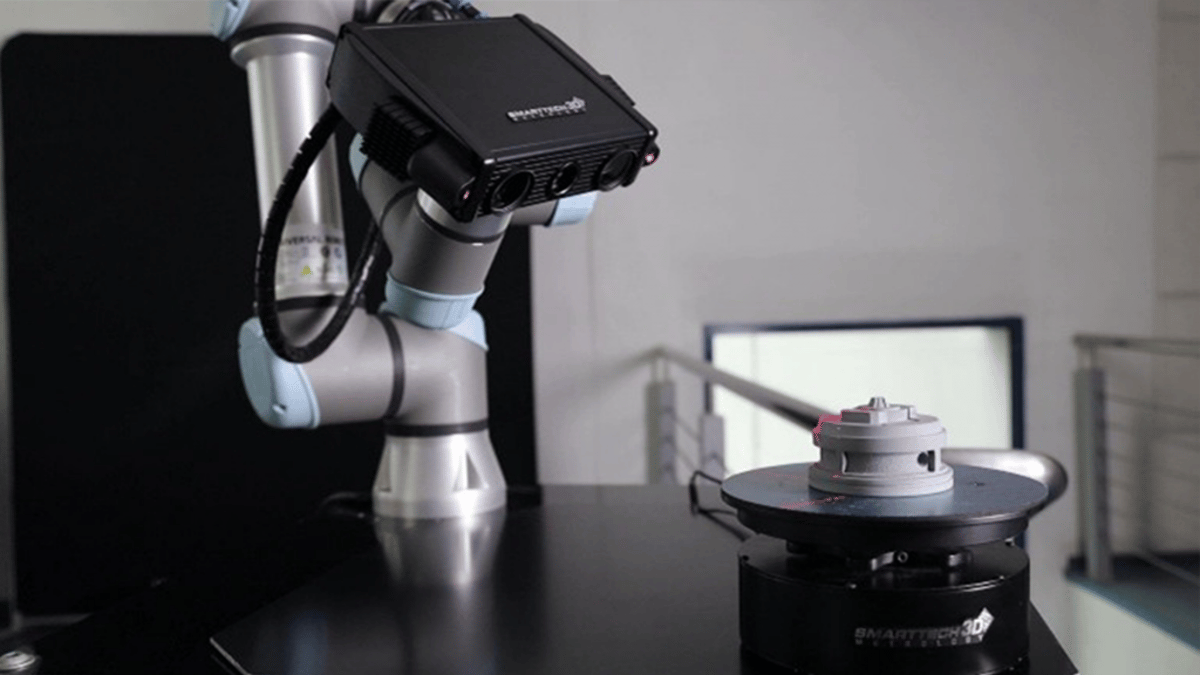
Beyond raw data acquisition, the integration of artificial intelligence is redefining the workflow. Machine‑learning algorithms automatically filter noise, fill gaps, and align scans, dramatically reducing the time engineers spend on post‑processing. Coupled with robotic arms, these smart scanners can operate continuously on production lines, delivering real‑time quality metrics and flagging deviations before parts leave the factory floor. This automation not only cuts labor costs but also minimizes human error, reinforcing compliance with stringent aerospace and automotive tolerances.
The business implications are far‑reaching. Manufacturers can accelerate time‑to‑market by shortening inspection cycles, while museums and archaeological teams protect priceless artifacts through non‑invasive digitization. In healthcare, patient‑specific implants benefit from precise anatomical mapping, improving outcomes and reducing revision surgeries. As devices become lighter and more portable, the technology is spilling out of controlled labs into field operations, enabling on‑site inspections for construction, oil‑and‑gas, and remote research. Companies that adopt these high‑accuracy, high‑resolution scanning solutions gain a competitive edge through cost savings, enhanced product quality, and the ability to leverage digital twins for predictive maintenance and design optimization.
3D Scanning Metrology: A Guide to Accuracy and Resolution
0
Comments
Want to join the conversation?
Loading comments...