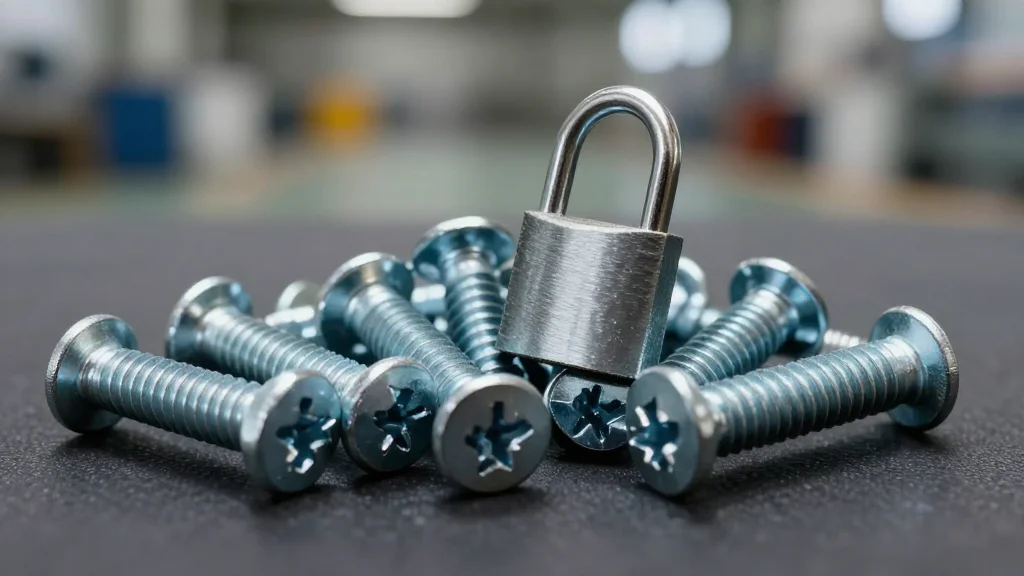
A 1% Problem that Can Derail India’s Factory Lines as Tiny Screws Throw Big Tantrums
Why It Matters
Fastener bottlenecks amplify production delays across core industries, raising overall manufacturing costs and jeopardising India’s competitiveness in global supply chains.
Key Takeaways
- •QCOs add $1k‑$1.2k licence fees, straining MSME margins.
- •Separate approvals for each fastener variant cause production delays.
- •Import dependence rises as foreign suppliers exit over certification hurdles.
- •Fastener shortages can halt assembly lines across automotive, construction, and rail sectors.
- •Risk‑based fastener regulation could restore flexibility and lower costs.
Pulse Analysis
Fasteners may account for under 1% of a product’s bill of materials, but they are the connective tissue of every assembly line. India’s recent Quality Control Orders impose a one‑product‑one‑licence model that forces manufacturers to obtain separate approvals for each size, grade or coating. The financial burden—roughly $960 to $1,200 per licence, $265 to $300 per variant test, and up to $48,000 for a dedicated testing lab—disproportionately impacts MSMEs, which dominate the fastener sector. As a result, many firms are scaling back or abandoning niche variants, creating a ripple effect that can stall entire production runs.
The supply shock is already evident. While India exports $882 million of fasteners, it imports $1.13 billion, mainly high‑precision items from China, Japan and South Korea. Certification hurdles have prompted several foreign suppliers to withdraw, shrinking the domestic supplier pool and driving up prices for specialised components. Shortages of items such as cross‑recessed screws have forced manufacturers in automotive, construction and rail to seek costly work‑arounds or delay projects, eroding the cost advantage that the Make‑in‑India programme seeks to deliver.
Policymakers face a choice between maintaining a cumbersome licensing regime and adopting a risk‑based approach that targets only safety‑critical fasteners. Streamlining approvals would lower compliance costs, broaden the supplier base, and restore the agility essential for high‑volume, low‑margin manufacturing. By aligning regulation with industry realities, India can prevent a 1% input from becoming a systemic choke point and keep its broader manufacturing ecosystem on a growth trajectory.
A 1% problem that can derail India’s factory lines as tiny screws throw big tantrums
Comments
Want to join the conversation?
Loading comments...