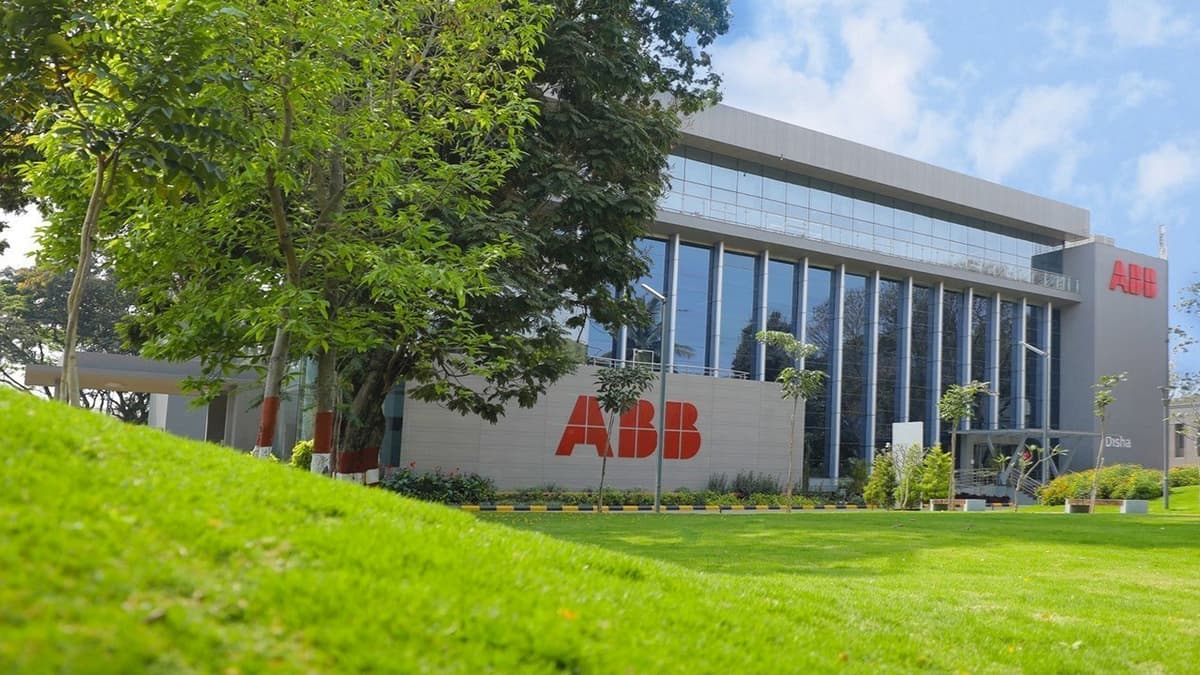
ABB Plans $75 Million Manufacturing Expansion in India
•March 10, 2026
0
Why It Matters
The infusion of capital deepens ABB’s local supply chain, accelerates technology adoption in key growth sectors, and strengthens its competitive position in a market poised for rapid electrification.
Key Takeaways
- •$75M investment adds to $35M 2025 spend.
- •Expansion creates ~300 skilled engineering jobs.
- •Focus on electrification, motion, automation for energy transition.
- •Local production now covers 85% of Indian sales.
- •Targets sustainable mobility, data centers, public infrastructure.
Pulse Analysis
ABB’s $75 million infusion into India marks the latest chapter in a decade‑long commitment that has already exceeded $230 million. By concentrating on Bengaluru’s Nelamangala and Peenya campuses, Hyderabad’s high‑power lab, and facilities in Nashik and Vadodara, the Swiss‑Swiss giant is bolstering its "local‑for‑local" strategy. This approach not only reduces supply‑chain latency but also aligns with India’s Make‑in‑India agenda, ensuring that the majority of ABB’s products sold domestically are produced on‑shore. The investment underscores the firm’s confidence in India’s growing demand for electrification, motion control and automation solutions.
The new and upgraded plants will expand production of converters, low‑voltage drives, circuit breakers and synchronous generators—components critical to sustainable mobility, data‑center power reliability, and heavy‑industry processes. By scaling converter manufacturing for high‑speed rail and metro projects, ABB positions itself as a key enabler of the country’s ambitious rail electrification plans. Simultaneously, the expanded UPS and power‑protection lines in Nelamangala and the advanced flow‑meter calibration capabilities in Peenya will serve the burgeoning renewable‑energy and infrastructure sectors, delivering higher‑efficiency, lower‑emission power systems.
From a market perspective, ABB’s aggressive expansion signals heightened competition among global automation leaders seeking a foothold in India’s $1.5 billion local revenue pool. The creation of roughly 300 skilled jobs reflects a broader talent‑development push, essential for sustaining innovation pipelines. As India’s industrial policy continues to favor domestic manufacturing and clean‑energy transitions, ABB’s expanded R&D footprint could accelerate the rollout of SF6‑free switchgear and other green technologies, reinforcing its long‑term growth trajectory in the region.
ABB plans $75 million manufacturing expansion in India
0
Comments
Want to join the conversation?
Loading comments...