Achieving More Versatility From Three-Point Gaging
•March 9, 2026
0
Why It Matters
The digital transformation reduces operator error, cuts tooling costs, and enables real‑time quality monitoring, giving manufacturers a competitive edge in precision engineering.
Key Takeaways
- •Self-centering design eliminates manual alignment.
- •Digital readouts replace mechanical micrometer heads.
- •Interchangeable heads reduce tooling costs.
- •Integrated tolerance alerts improve quality control.
- •Wireless data export streamlines documentation.
Pulse Analysis
Traditional bore gaging has relied on adjustable plugs and split‑ball gauges, which demand a skilled hand to sweep the tool through a hole and locate the minimum reading. Even with modern digital indicators that can capture min‑max values, the process still hinges on operator technique and can be time‑consuming in deep or irregular bores. These limitations have driven the industry toward more automated, self‑aligning solutions that guarantee repeatable results without extensive training.
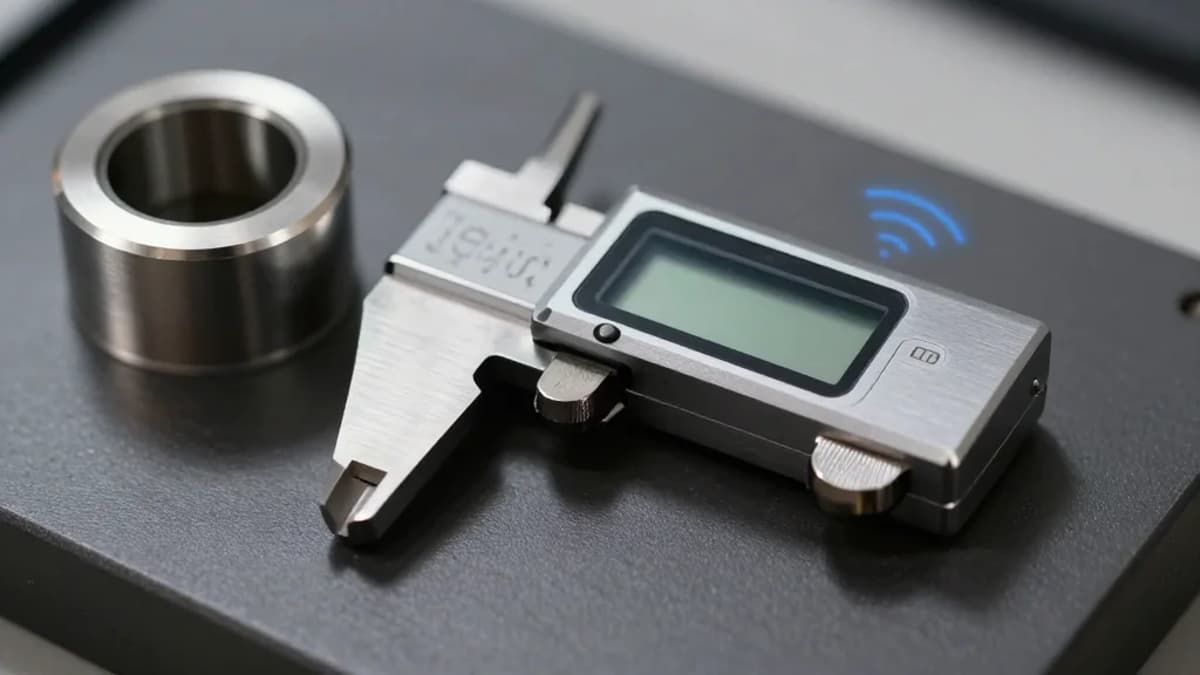
Three‑point micrometers address these challenges through a precise cone‑transfer system that automatically aligns three cylindrical contacts at 120‑degree intervals. By moving the cone axially, the contacts expand to touch the bore, delivering a true diameter without manual centering. The latest generation swaps the mechanical micrometer head for a digital readout, allowing interchangeable measuring heads to share a single electronic unit. This modularity cuts equipment costs, while digital resolution and ratchet‑controlled force ensure tighter tolerances and consistent force application across all measurements.
The shift to digital also unlocks data‑driven manufacturing. Integrated tolerance indicators give instant pass/fail feedback, and built‑in wireless modules transmit readings directly to PCs or quality‑control systems, eliminating manual data entry. As factories adopt Industry 4.0 practices, these smart three‑point micrometers become critical nodes in the data ecosystem, supporting predictive maintenance and traceability. The combined benefits of accuracy, efficiency, and seamless data capture position digital three‑point micrometers as essential tools for modern precision engineering.
Achieving More Versatility from Three-Point Gaging
0
Comments
Want to join the conversation?
Loading comments...