Additive Is for Tooling First, Then Everything Else
Companies Mentioned
Why It Matters
Manufacturers that integrate additive processes gain a tangible competitive edge, especially in high‑mix, low‑volume production, while those that lag risk losing market share to more agile rivals.
Key Takeaways
- •Tooling, jigs, and fixtures drive early ROI for additive manufacturing.
- •AI enables closed‑loop quality control and faster process development.
- •Mass‑produced parts like dental braces prove scale viability.
- •Aerospace and defense view additive as essential competitive advantage.
- •Food‑grade 3D printing remains untapped, facing material and taste hurdles.
Pulse Analysis
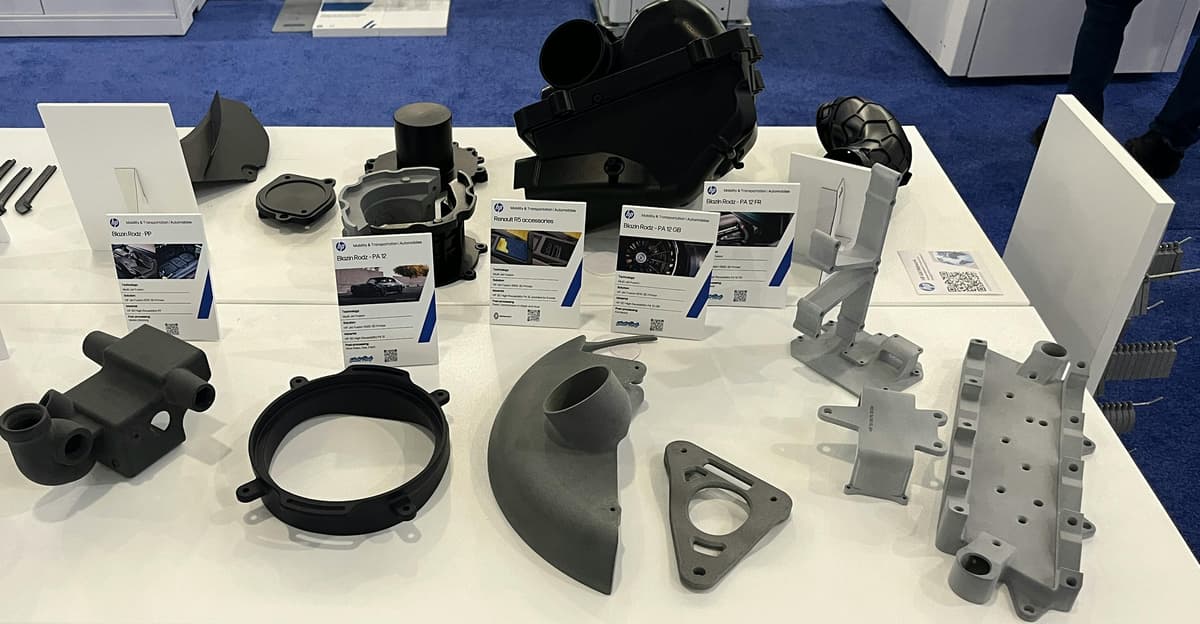
Additive manufacturing’s evolution from a novelty to a core production capability is anchored in its ability to produce bespoke tooling and fixtures. By replacing traditional machined parts with on‑demand 3D‑printed components, factories reduce lead times, cut inventory costs, and eliminate the need for expensive, single‑use tooling. This shift is especially pronounced in heavy‑industry environments where each production line may require dozens of unique jigs; the cost‑benefit analysis now favors additive solutions, accelerating adoption across automotive, aerospace, and medical device manufacturers.
Artificial intelligence is the next catalyst propelling 3D printing toward true mass production. Modern printers integrate sensor arrays that feed data into machine‑learning models, enabling real‑time defect detection and adaptive process control. The resulting closed‑loop systems improve part consistency, reduce scrap rates, and shorten qualification cycles. Moreover, edge‑based "physical AI" equips printers with autonomous decision‑making capabilities, allowing rapid material selection and parameter tuning without human intervention—an essential advantage for high‑volume, high‑precision applications.
Despite these gains, the technology’s reach is uneven. While aerospace and defense have made additive a strategic necessity, sectors such as food production lag due to stringent material safety standards and sensory quality concerns. Overcoming these barriers will require advances in food‑grade polymers and novel post‑processing techniques. As the industry matures, firms that strategically embed additive manufacturing into their digital thread will secure faster innovation cycles and stronger resilience against supply‑chain disruptions, cementing 3D printing’s role as a foundational manufacturing pillar.
Additive Is for Tooling First, Then Everything Else
Comments
Want to join the conversation?
Loading comments...