Additive Research Update: Soft Robots, Hard Materials, Recyclable Ink, and More
•February 23, 2026
0
Why It Matters
These innovations expand AM’s material palette, lower environmental impact, and open high‑value, large‑scale applications in construction, robotics, and hard‑metal manufacturing.
Key Takeaways
- •Cornell prints concrete arches underwater using seafloor sediment
- •Harvard creates mold‑free soft robots with programmable pneumatic channels
- •Helmholtz ink recycles lignin‑based prints via simple rehydration
- •Hiroshima’s hot‑wire laser deposits tungsten carbide‑cobalt with minimal waste
- •Advances move additive manufacturing toward sustainable, large‑scale production
Pulse Analysis
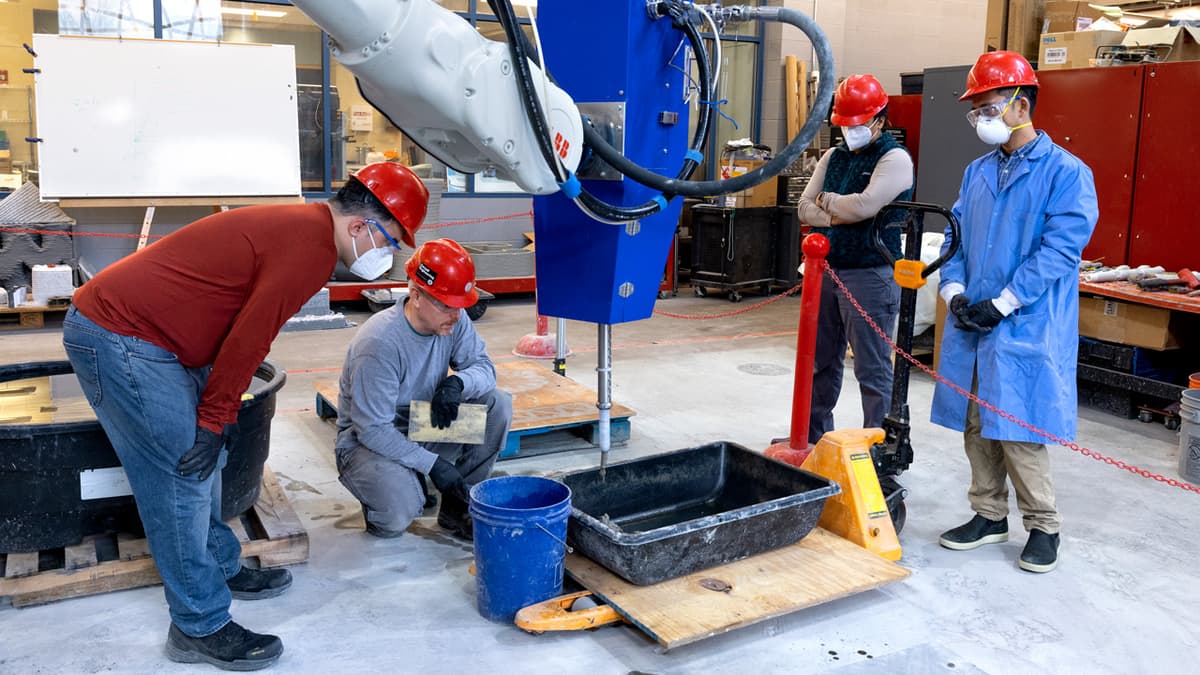
Underwater concrete printing could redefine marine infrastructure by allowing structures to be built directly on the seafloor without costly cement shipments. Cornell’s robot‑extruder adapts its mix to prevent washout, satisfying DARPA’s stringent durability criteria and paving the way for offshore habitats, renewable‑energy foundations, and rapid disaster‑response repairs. The technology also demonstrates how additive processes can integrate local sediments, reducing logistical footprints and opening new avenues for environmentally conscious construction.
Harvard’s rotational multi‑material printer eliminates traditional molds, embedding hollow channels that become pneumatic actuators after a simple wash‑away step. This approach accelerates the design‑to‑prototype cycle for soft robotics, offering customizable compliance for surgical tools, wearable assistive devices, and bio‑inspired manipulators. By controlling nozzle rotation and flow, engineers can fine‑tune channel geometry on the fly, delivering unprecedented flexibility in soft‑machine performance and reducing reliance on post‑processing.
Sustainability gains are evident in Helmholtz‑Zentrum Hereon’s lignin‑derived ink, which transforms an abundant wood by‑product into a water‑based feedstock that can be re‑hydrated and re‑printed without loss of mechanical properties. Coupled with Hiroshima’s hot‑wire laser method for tungsten‑carbide‑cobalt, which softens rather than fully melts the alloy to cut waste, the combined advances illustrate a broader industry trend toward circular material cycles and cost‑effective hard‑metal fabrication. Together, these developments signal that additive manufacturing is maturing into a mainstream, eco‑efficient production platform across sectors.
Additive research update: Soft robots, hard materials, recyclable ink, and more
0
Comments
Want to join the conversation?
Loading comments...