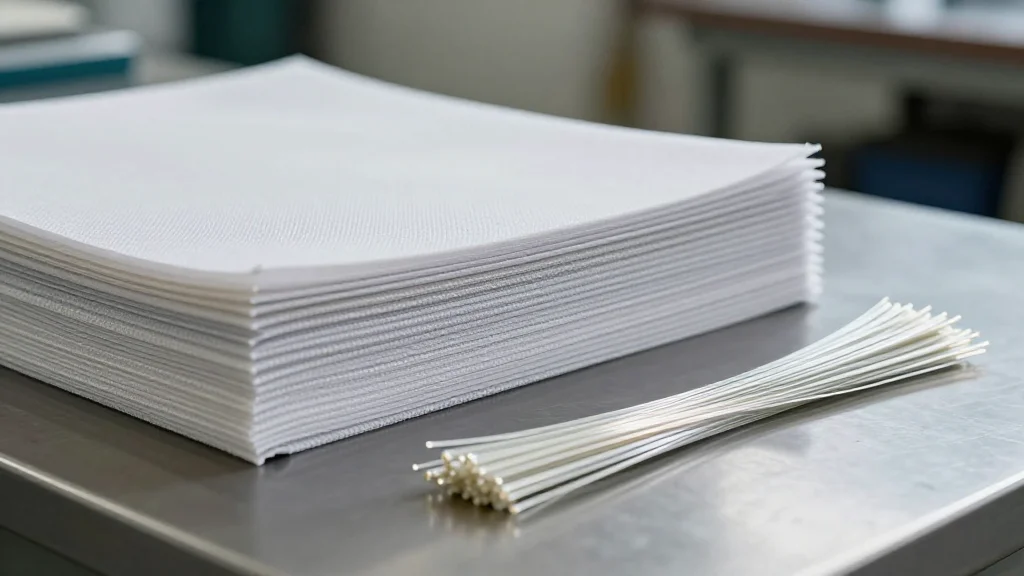
Agy and Saertex Combine Fibres with Multiaxial Fabric Configurations
Why It Matters
The partnership expands glass‑fibre’s capability to meet high‑performance, lightweight demands, offering manufacturers a cheaper substitute for traditionally expensive composite materials.
Key Takeaways
- •Agy's S-2 glass fused with Saertex's NCF fabrics.
- •Multi‑axial designs boost tensile strength, impact and fatigue resistance.
- •Compatible with infusion, RTM, prepreg, compression, pultrusion.
- •Targets aerospace, defense, pressure vessels, industrial components.
- •Reduces layer count, delivering lighter structures at lower cost.
Pulse Analysis
The composites market has long been dominated by carbon fibre, prized for its strength‑to‑weight ratio but hampered by high material costs. Glass fibre, particularly the S‑2 grade developed by Agy, offers a more affordable baseline, yet historically fell short on stiffness and fatigue performance. By integrating S‑2 glass with Saertex’s non‑crimp, multiaxial fabrics, the duo creates a hybrid that bridges the gap, delivering carbon‑like mechanical properties without the premium price tag, a shift that could reshape material selection criteria across multiple sectors.
Technical advantages stem from the engineered architecture of non‑crimp fabrics. Unlike traditional woven mats, these fabrics maintain straight, aligned fibres, allowing precise control over areal weight and fibre orientation. The resulting lay‑ups—unidirectional, biaxial or quadriaxial—can be tuned to specific load paths, reducing the number of layers needed for a given strength target. Moreover, the material’s compatibility with a suite of manufacturing methods—from resin infusion to pultrusion—streamlines production, cuts cycle times, and lowers tooling expenses, making it attractive for high‑volume aerospace and defence programs.
From a market perspective, the Agy‑Saertex alliance could accelerate adoption of glass‑based composites in applications previously reserved for carbon or aramid fibres. Aerospace OEMs seeking to meet aggressive weight‑reduction goals while managing cost pressures may opt for these new fabrics in secondary structures, interior panels, or even primary load‑bearing components. Defence contractors, who value impact and fatigue resilience, stand to benefit from the material’s robustness and ease of manufacture. As the partnership expands its product portfolio, supply chains may see a shift toward more diversified reinforcement options, fostering competition that drives innovation and price reductions across the composite industry.
Agy and Saertex combine fibres with multiaxial fabric configurations
Comments
Want to join the conversation?
Loading comments...