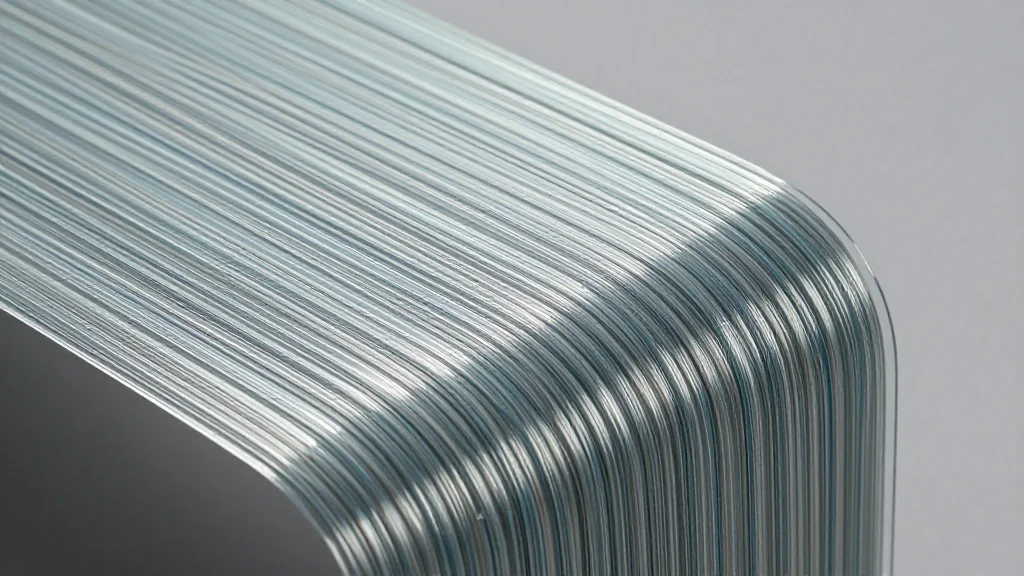
AGY, Saertex Collaborate on High-Performance Glass Fiber Noncrimp Fabrics
Why It Matters
The collaboration creates a cost‑effective glass‑fiber alternative that can rival carbon‑fiber composites, expanding design options for weight‑critical sectors and lowering manufacturing expenses.
Key Takeaways
- •AGY's S-2 glass fiber paired with Saertex multiaxial NCFs
- •Targets aerospace, defense, pressure vessels, and advanced mobility applications
- •Delivers higher specific strength, stiffness, and impact tolerance
- •Compatible with infusion, RTM, prepreg, compression molding, and pultrusion
- •Reduces part weight and layer count, cutting manufacturing costs
Pulse Analysis
The composites market has long been dominated by carbon fiber, prized for its high specific strength but hampered by steep price points. Glass‑fiber reinforcements, while more affordable, have traditionally lagged in performance. AGY’s S‑2 glass fiber, engineered for superior tensile strength, impact resistance, and fatigue life, narrows that gap, offering a compelling alternative for manufacturers seeking to balance cost and performance. By partnering with Saertex, a leader in multiaxial noncrimp fabrics, the two companies leverage precise fiber alignment and tailored surface weights to maximize load efficiency, a critical factor in aerospace and defense structures where every gram counts.
Saertex’s NCF technology arranges fibers in unidirectional, biaxial or quadriaxial configurations, allowing engineers to fine‑tune load paths for complex stress environments. When combined with S‑2 glass, the resulting laminates exhibit higher specific stiffness and improved damage tolerance compared with conventional glass systems. The synergy also supports a wide range of processing methods—including resin infusion, resin transfer molding, prepreg, compression molding, and pultrusion—making it adaptable to existing production lines. This flexibility reduces the need for costly re‑tooling, accelerating time‑to‑market for new lightweight components.
For end‑users, the partnership promises tangible benefits: lighter pressure vessels, more efficient aircraft structures, and durable components for next‑generation mobility platforms. The ability to achieve comparable performance to carbon‑fiber composites at a lower material cost could shift procurement strategies, especially in defense programs where budget constraints are acute. As certification processes progress and multiaxial constructions are qualified, the AGY‑Saertex solution is poised to become a mainstream option, driving broader adoption of high‑performance glass‑fiber composites across the industry.
AGY, Saertex collaborate on high-performance glass fiber noncrimp fabrics
Comments
Want to join the conversation?
Loading comments...