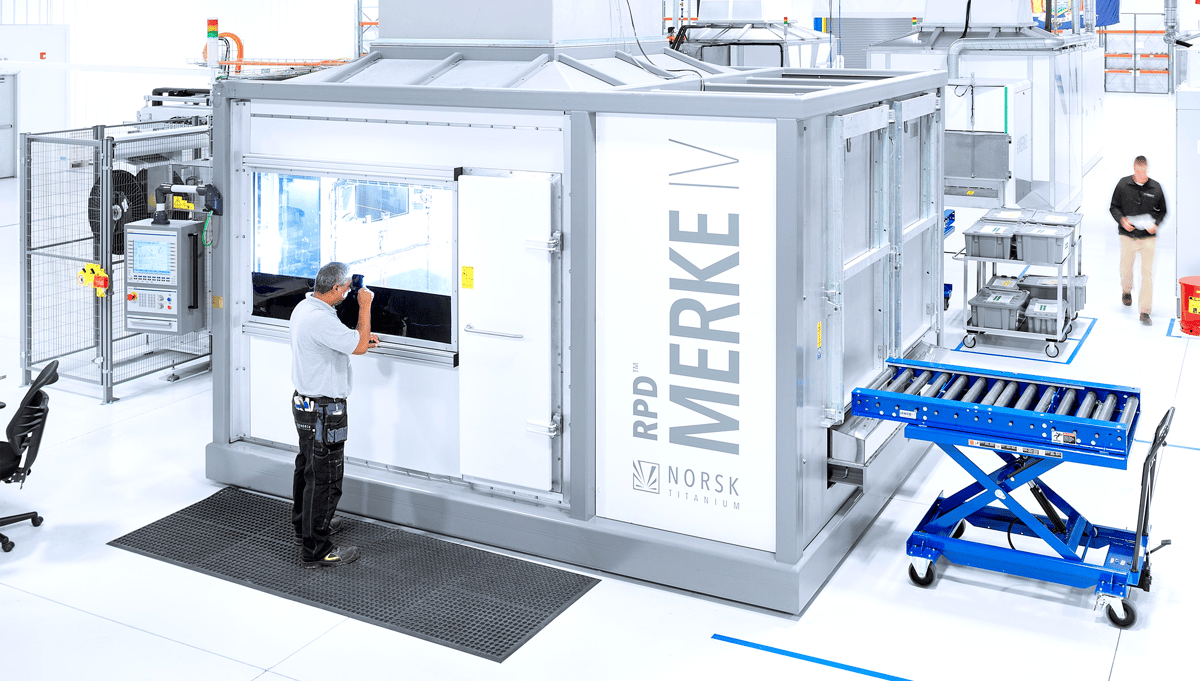
Airbus to Install Norsk Titanium Merke IV DED Systems as Process Development Partnership Commences
•March 5, 2026
0
Why It Matters
The initiative accelerates additive‑manufacturing adoption in commercial aviation, promising lower production costs and faster part turnaround. It also sets a precedent for standardized DED processes across the aerospace supply chain.
Key Takeaways
- •Airbus installs Merke IV RPD machine at Varel facility.
- •Joint evaluation targets process‑based qualification for titanium components.
- •Merke IV can produce up to 20 tonnes titanium yearly.
- •Partnership builds on 2024 master supply agreement for A350.
- •Expected cost and time savings drive broader DED adoption.
Pulse Analysis
Additive manufacturing is reshaping aerospace production, with Direct Energy Deposition (DED) emerging as a cornerstone for high‑performance titanium parts. Airbus’s strategic push to integrate DED across its assembly lines reflects a broader industry trend toward digital‑first manufacturing, where design flexibility and material efficiency drive competitive advantage. By partnering with Norsk Titanium, Airbus gains access to proprietary Rapid Plasma Deposition technology, enabling rapid iteration and tighter tolerances that traditional subtractive methods cannot match.
The Merke IV system represents a leap in RPD capability. Its 900 × 600 × 300 mm build envelope and deposition rates of 5‑10 kg per hour allow the production of complex geometries at a scale of 10‑20 metric tons per year. Such capacity aligns with Airbus’s volume requirements for the A350, while the machine’s fourth‑generation design improves energy consumption and material utilization. Early data suggest that the RPD process can cut part lead times by up to 30 % and reduce material waste, delivering tangible cost savings that resonate throughout the supply chain.
Beyond immediate gains, the partnership signals a shift toward standardized, process‑based qualification frameworks in aerospace additive manufacturing. Moving away from part‑specific validation reduces certification overhead and accelerates the introduction of new components. As other OEMs observe Airbus’s progress, the industry may see a cascade of similar collaborations, fostering a more resilient and innovative manufacturing ecosystem. The long‑term impact could be a faster, greener, and more cost‑effective pathway to next‑generation aircraft.
Airbus to install Norsk Titanium Merke IV DED systems as process development partnership commences
0
Comments
Want to join the conversation?
Loading comments...