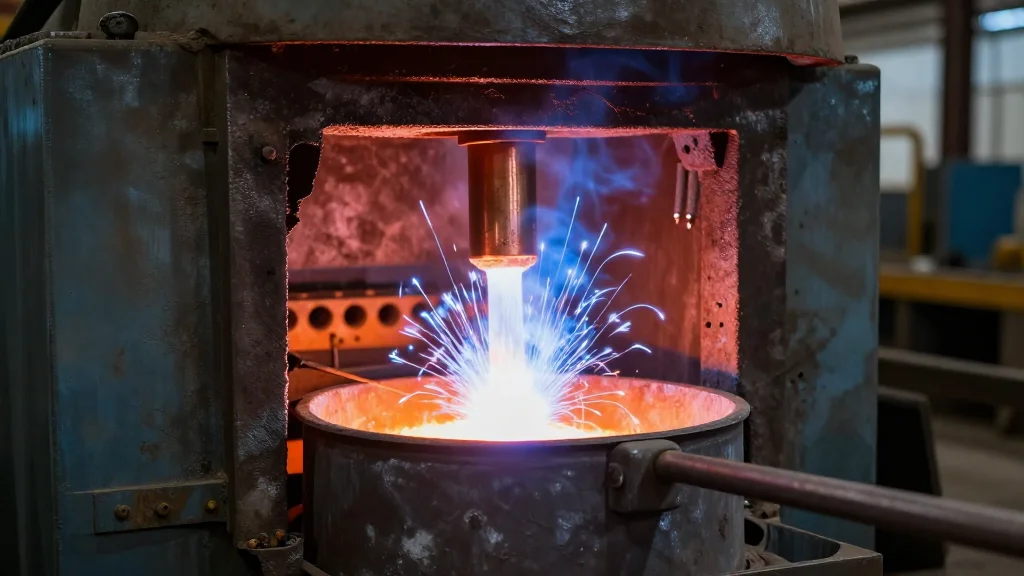
Algoma Slashes Carbon Emissions, but Pays More in Environmental Fees
Why It Matters
Ontario’s benchmark change penalises real emissions cuts, exposing a policy gap that can undermine investment in low‑carbon steel and affect industry profitability.
Key Takeaways
- •Algoma cut emissions up to 70% after $987M CAD investment.
- •Q1 carbon tax rose 71% to $6M CAD despite lower emissions.
- •Ontario shifted benchmark to electric‑arc standard, raising tax liability.
- •No carbon credits granted, limiting revenue recovery for emissions cuts.
- •U.S. tariffs and $500M CAD aid intensify Algoma’s financial strain.
Pulse Analysis
Algoma Steel’s $987 million CAD (≈$730 million USD) conversion to an all‑electric arc furnace marks one of the largest decarbonisation bets in North America’s steel sector. By retiring its coal‑fired blast furnace, the Sault Ste. Marie plant can slash annual CO₂ output by as much as 70 percent, aligning the company with emerging low‑carbon steel standards and reducing its exposure to future regulatory risk. The move also positions Algoma to meet growing demand for greener steel in automotive and construction markets, where buyers increasingly require verified emissions data.
Ontario’s intensity‑based carbon pricing system calculates a company’s tax bill against an emissions‑per‑tonne‑of‑steel benchmark rather than total output. After Algoma’s switch, the province reset its benchmark to reflect electric‑arc production standards, effectively moving the goalposts and driving the Q1 carbon levy up 71 percent to $6 million CAD despite the plant’s lower absolute emissions. Because the system does not award carbon credits for the substantial emissions drop, Algoma cannot monetize its investment, highlighting a policy gap that penalises firms that achieve real environmental gains.
Industry analysts argue that linking Ontario’s credit market to larger schemes—such as California’s cap‑and‑trade or inter‑provincial pools—could create liquidity and reward genuine reductions. A broader market would allow Algoma to sell surplus credits, offsetting the higher tax bill and improving the economics of electric‑arc upgrades for other steelmakers. Until such mechanisms are in place, the province risks discouraging capital‑intensive decarbonisation projects, potentially slowing Canada’s transition to a low‑carbon industrial base and ceding competitive advantage to jurisdictions with more flexible carbon‑credit frameworks.
Algoma slashes carbon emissions, but pays more in environmental fees
Comments
Want to join the conversation?
Loading comments...