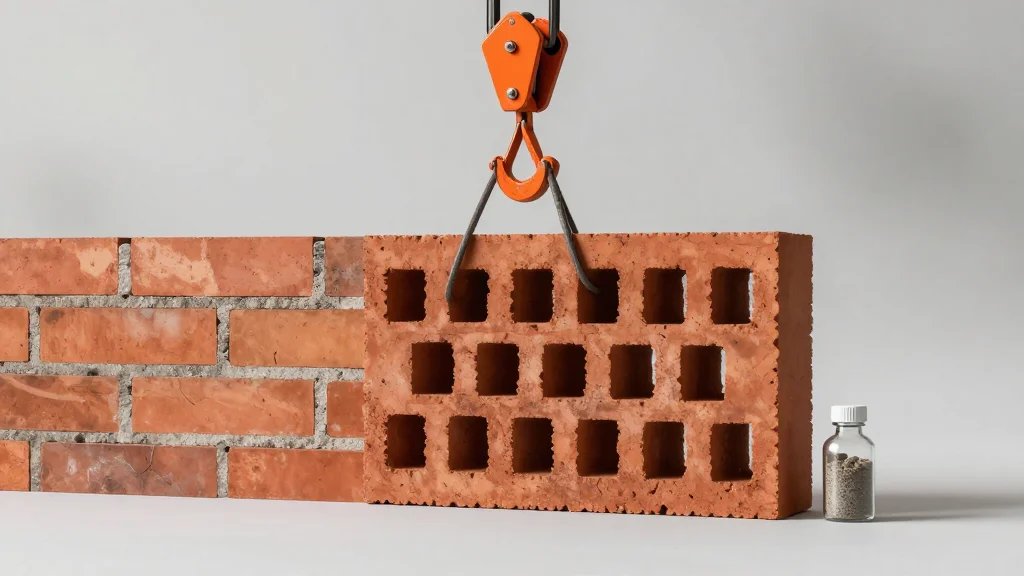
Austrian Engineers Unveil Reusable Brick Walls That Could Slash Construction Emissions by 60%

Companies Mentioned
Why It Matters
The construction sector accounts for roughly 40% of global carbon emissions, with brick production alone responsible for a sizable share of that footprint. By enabling bricks to be reclaimed and redeployed, the Re‑Use Ziegelwand system directly attacks both the emissions generated during manufacturing and the waste generated at end‑of‑life. This dual impact could help nations meet climate targets while also reducing landfill pressure. Beyond environmental benefits, the technology introduces a new business model for manufacturers and developers. Brick producers could transition from a one‑off sales model to a service‑oriented approach, leasing wall panels and generating recurring revenue. Developers, in turn, could lower material costs over a building’s lifecycle, improving the financial case for sustainable construction.
Key Takeaways
- •Reusable brick wall system could cut construction‑related CO₂ emissions by up to 60%
- •Walls are 44 cm thick, pre‑plastered and contain insulating wool for improved thermal performance
- •Developed by TU Graz researchers in partnership with Wienerberger, a leading European brick maker
- •Demonstrator built, dismantled and rebuilt on a large scale, meeting all structural and durability standards
- •Pilot projects with municipal and private developers planned for later 2026
Pulse Analysis
The Re‑Use Ziegelwand project arrives at a moment when the construction industry is under intense pressure to decarbonize. While many firms have turned to low‑carbon materials such as cross‑laminated timber or prefabricated concrete, few have tackled the entrenched waste problem of brick demolition. By re‑engineering the joint rather than the brick itself, the Austrian team sidesteps the need for new material science breakthroughs and leverages existing manufacturing capacity.
Historically, circular construction initiatives have struggled with scalability because they often require bespoke components or extensive retrofitting. The Graz system’s reliance on standard‑size bricks and factory‑controlled prefabrication could overcome those barriers, offering a plug‑and‑play solution that integrates with current building codes. However, widespread adoption will hinge on regulatory acceptance of reversible joints and on the economics of disassembly—particularly labor costs and the logistics of transporting large wall panels.
Looking ahead, the technology could catalyze a broader shift toward material‑as‑a‑service models. If brick manufacturers begin to lease panels and guarantee their performance over multiple lifecycles, the industry could see a new revenue stream that aligns profit motives with sustainability goals. This alignment may also attract financing from green‑bond investors, further accelerating market penetration. The upcoming pilots will be the litmus test: success could trigger a cascade of standards revisions across the EU, while setbacks may relegate the concept to a niche experimental status.
Austrian Engineers Unveil Reusable Brick Walls That Could Slash Construction Emissions by 60%
Comments
Want to join the conversation?
Loading comments...