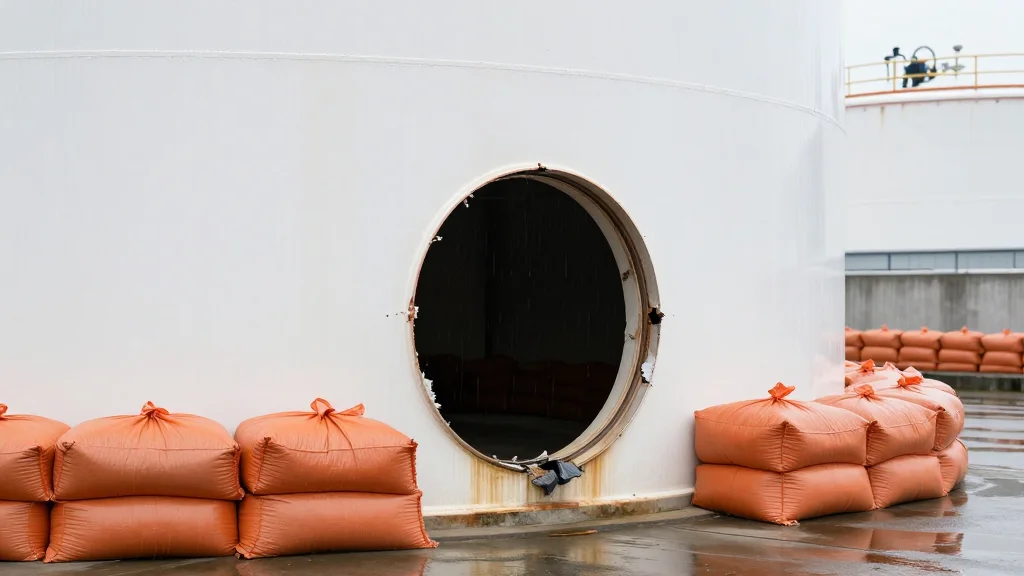
Authorities Share More Details From Nippon Dynawave Disaster
Companies Mentioned
Why It Matters
The tragedy highlights acute safety risks in pulp‑and‑paper operations and may reshape regional supply balances, pressuring competitors and influencing pricing in the SBS folding‑carton segment.
Key Takeaways
- •White‑liquor tank implosion killed 11 workers at Nippon Dynawave.
- •Sandbags deployed to prevent contamination as rain entered site.
- •Shutdown may modestly affect SBS folding‑carton market, benefiting Clearwater Paper.
- •Adjacent International Paper mill relies on 75,000 tons of NDP pulp annually.
- •Investigations continue; union warns against drawing conclusions from photos.
Pulse Analysis
The implosion of the white‑liquor tank at Nippon Dynawave Packaging on May 26 sent shockwaves through the Pacific Northwest’s pulp and paper sector. The sudden release of pressure killed 11 employees, many of whom were caught in a shift‑change near the break room, and forced the Longview mill into an indefinite shutdown. State regulators responded quickly, deploying sandbags and containment measures to prevent runoff as rain threatened the site. The incident has revived scrutiny of aging equipment, emergency‑response protocols, and labor‑union safety advocacy in an industry that has long grappled with hazardous processes.
From a market perspective, the outage removes roughly 75,000 tons of kraft slurry pulp that NDP supplied to the neighboring International Paper facility, but the broader impact on solid‑bleached‑sulfate (SBS) folding‑carton supply appears limited. Analysts at Truist Securities argue that while the mill’s niche liquid‑packaging board output is modest, the temporary loss may nudge pricing in related grades such as coated recycled board and coated unbleached kraft. Investors have already rewarded companies like Clearwater Paper and Graphic Packaging International, whose shares outperformed on expectations of a short‑term supply rebalancing.
Investigations by the Washington Department of Ecology and federal agencies are still underway, with the labor union urging caution in interpreting early photographs. Should the plant remain offline for two to three months, the industry could see a gradual shift of customers toward alternative suppliers, prompting strategic capacity expansions. In the meantime, the tragedy is likely to accelerate regulatory reviews of tank integrity and emergency planning, influencing capital‑allocation decisions for paper producers nationwide. Stakeholders will be watching closely for any policy shifts that could reshape cost structures and competitive dynamics.
Authorities share more details from Nippon Dynawave disaster
Comments
Want to join the conversation?
Loading comments...