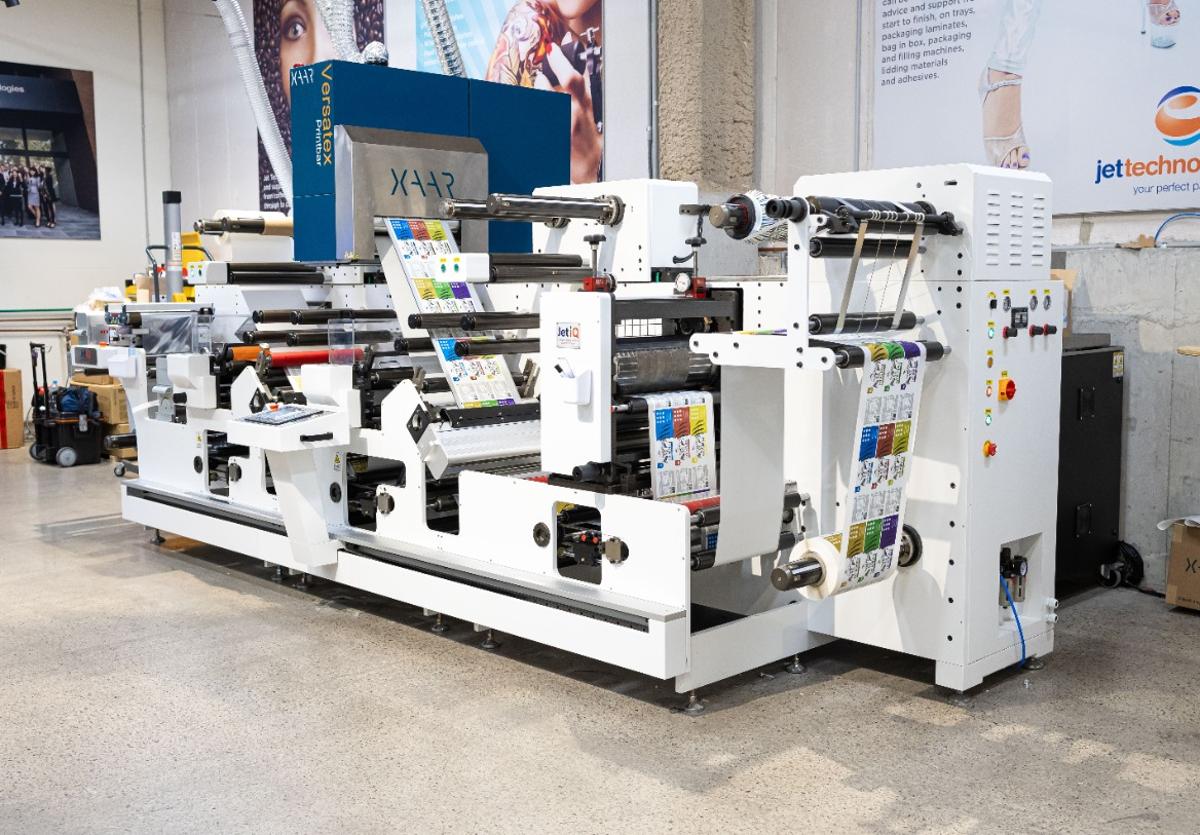
Automation and Inkjet Reshape Print Manufacturing in 2026 – Jet Technologies
•March 3, 2026
0
Why It Matters
The move lets printers maintain output, quality, and speed with fewer skilled operators, preserving profitability in a tightening labour market. It also spurs product innovation and greener practices, reshaping competitive dynamics across the print sector.
Key Takeaways
- •Labor shortages push printers toward automation.
- •Inkjet reduces manual touchpoints across production.
- •Integrated digital platforms boost speed and variation.
- •Label contouring creates tactile, high‑impact branding.
- •Sustainable materials gain mainstream acceptance.
Pulse Analysis
The print industry faces a perfect storm of dwindling skilled labour, heightened customer expectations for rapid, customized runs, and mounting pressure to reduce waste. Automation—ranging from management information systems to robotic finishing—offers a pragmatic response, cutting cycle times and freeing operators for higher‑value tasks. When paired with digital inkjet, which inherently minimizes manual handling, manufacturers can achieve a leaner workflow that scales with demand without sacrificing print quality.
Beyond the press, connected ecosystems are redefining pre‑press and post‑press operations. Automated artwork ingestion, variable‑data engines, and job‑memory functions synchronize each stage, creating a seamless data pipeline that accelerates time‑to‑market. Inkjet’s flexibility also unlocks novel embellishment opportunities, notably label contouring, where tactile, multi‑height finishes differentiate brands on crowded shelves. Simultaneously, the sector’s sustainability narrative is evolving; recyclable laminates and low‑VOC inks are moving from niche experiments to standard inventory, driven by cost‑effective supply chains and clear environmental ROI.
Looking ahead, printers that embed digital inkjet, end‑to‑end automation, and sustainable material strategies will be best positioned to navigate labour constraints while delivering the speed, variation, and quality modern brands demand. Investment in integrated software platforms and modular hardware upgrades not only future‑proofs operations but also opens new revenue streams through premium, high‑impact finishing services. As the technology matures, the competitive advantage will shift from sheer production capacity to the agility of a connected, low‑touch manufacturing model.
Automation and inkjet reshape print manufacturing in 2026 – Jet Technologies
0
Comments
Want to join the conversation?
Loading comments...