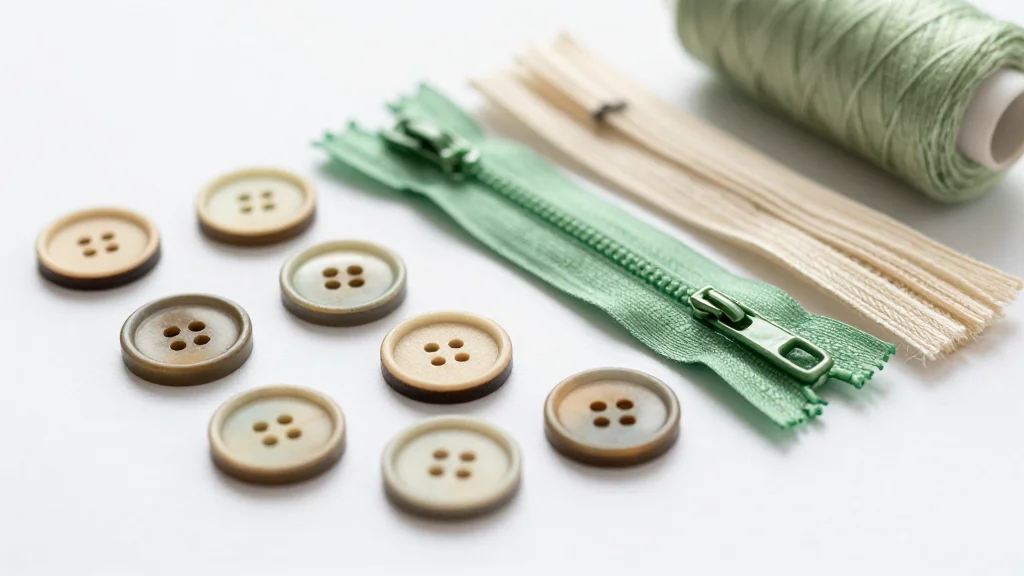
Bangla’s Harnest Launches Platform for Sustainable Apparel Components
Why It Matters
By addressing the overlooked trim segment, the platform could unlock significant recycling rates and reduce landfill waste, giving apparel brands a practical path to meet sustainability commitments and regulatory pressure.
Key Takeaways
- •Trims represent over 40% of garment material weight.
- •Less than 1% of textiles use recycled fiber globally.
- •Harnest partners with five innovators for circular trim solutions.
- •OceanSafe’s naNea offers biodegradable alternative to polyester.
- •Platform aims to embed recycled trims at industrial scale.
Pulse Analysis
The fashion industry’s environmental footprint is dominated by material waste, yet most sustainability conversations focus on the main fabric. In reality, trims—buttons, zippers, threads, elastics and labels—make up more than 40 % of a garment’s bill of materials, and their mixed composition often prevents efficient recycling. Current global statistics show that less than 1 % of textile inputs are derived from recycled fiber, leaving a massive gap between circularity goals and practical outcomes. Addressing this hidden bulk is essential for any credible circular‑fashion strategy.
Harnest, a Bangladesh‑based textile solutions firm, has responded with the Responsible Trims Collection, a platform that integrates recycled, next‑generation and biodegradable components directly into existing supply chains. The collection is anchored by five partnerships with innovators such as OceanSafe, Ambercycle, BlockTexx, Indorama Ventures and Jiaren, covering textile‑to‑textile recycling, advanced polymer regeneration and fully biodegradable polymers. Its first offering, OceanSafe’s naNea, mimics polyester’s performance while breaking down in the environment, providing a commercially viable alternative that can be sourced at industrial volumes. By standardising these materials, Harnest aims to lower cost barriers and accelerate adoption across global apparel manufacturers.
The launch arrives as major brands face mounting pressure from consumers, investors and regulators to demonstrate measurable reductions in textile waste. By tackling the trim segment, Harnest gives designers a tangible lever to improve product circularity without redesigning entire garments, potentially boosting recycling rates and extending the life of apparel. If the platform achieves scale, it could catalyse a shift in sourcing standards, prompting other suppliers to develop similar eco‑trim portfolios. Ultimately, the initiative signals a maturing circular‑fashion ecosystem where ancillary components receive the same sustainability scrutiny as primary fabrics.
Bangla’s Harnest launches platform for sustainable apparel components
Comments
Want to join the conversation?
Loading comments...