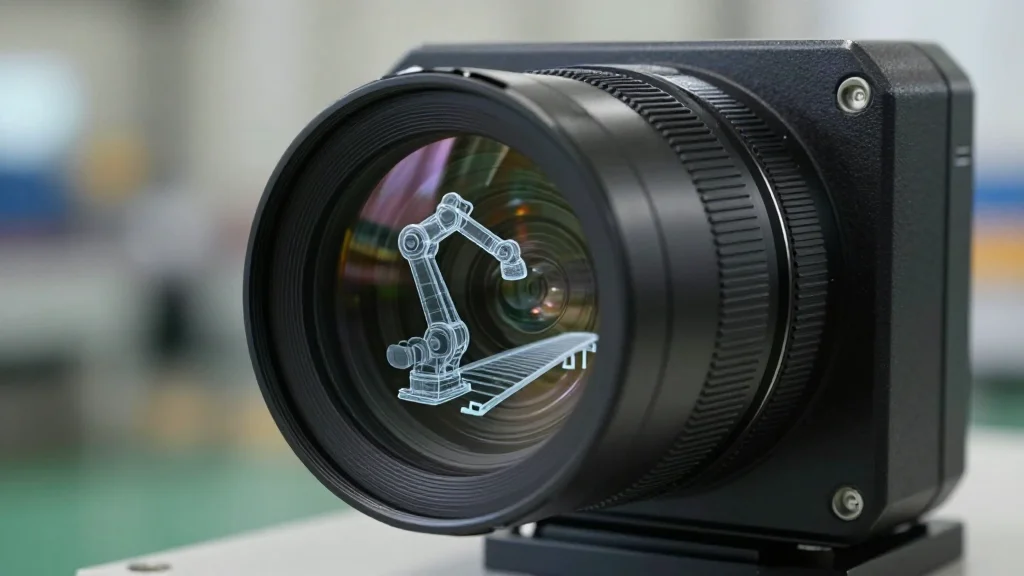
Basler Vision Simulation: Fully Virtual Evaluation and Development of Vision Systems
Companies Mentioned
Why It Matters
By cutting weeks of physical prototyping to a few hours, the tool slashes development costs and accelerates time‑to‑market for vision‑based products, a critical advantage as AI‑driven inspection and automation demand faster iteration.
Key Takeaways
- •Early Access version free, supports 250+ cameras, 30 lenses, 14 lights
- •Virtual testing reduces development time from weeks to hours
- •Synthetic data includes automatic annotations, aiding AI model training
- •Digital twins enable cost‑effective hardware selection before purchase
- •Basler plans full release early 2027 to boost daily productivity
Pulse Analysis
Machine vision is becoming the backbone of modern manufacturing, logistics and quality control, yet traditional development cycles still rely on costly hardware prototypes and manual testing. Basler Vision Simulation disrupts this paradigm by offering a high‑fidelity digital twin of its extensive camera and lighting portfolio. Engineers can now assemble virtual rigs, tweak optics and illumination, and instantly see how changes affect image quality, allowing informed decisions long before a single component is ordered. This shift not only shortens design timelines but also reduces waste associated with multiple physical iterations.
Beyond hardware configuration, the platform addresses a growing bottleneck in AI adoption: the scarcity of diverse, accurately labeled training data. By randomizing 3D objects, lighting conditions and sensor settings, Basler generates synthetic images that cover rare edge cases such as extreme glare or low‑light scenarios. Each image comes with precise, automatically generated annotations, eliminating the labor‑intensive labeling process. This capability accelerates the training of convolutional neural networks, improving model robustness and shortening the path from concept to deployment for AI‑enhanced inspection systems.
The broader industry impact is significant. Companies can now evaluate multiple vision solutions in parallel, selecting the optimal configuration based on simulated performance metrics rather than trial‑and‑error. The resulting cost savings—both in hardware spend and engineering labor—translate into faster product launches and higher competitive advantage. As Basler refines the tool with user feedback and plans a full release in early 2027, the expectation is that virtual development will become a standard practice, driving productivity gains across the entire machine‑vision ecosystem.
Basler Vision Simulation: Fully Virtual Evaluation and Development of Vision Systems
Comments
Want to join the conversation?
Loading comments...