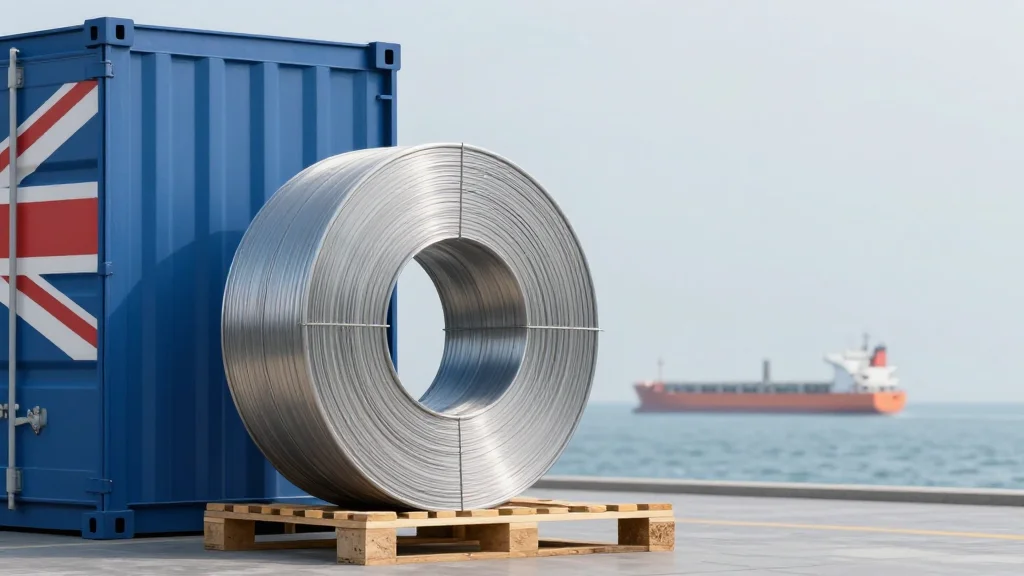
Bowers & Jones Steels Itself for Change
Companies Mentioned
Why It Matters
Tariff volatility is forcing a leading UK steel exporter to re‑engineer its market strategy, highlighting the ripple effect of trade policy on high‑value manufacturing and supply‑chain resilience.
Key Takeaways
- •US tariffs now limit Bowers & Jones' price certainty for American clients
- •Exports fell from 40% of sales after tariff confusion emerged
- •Company pivots to aerospace and defence tooling to replace US demand
- •80% of revenue now generated from international markets beyond the US
- •One-third of UK firms consider shifting away from US exposure, BCC survey
Pulse Analysis
The UK’s high‑precision steel sector has long relied on the United States as a cornerstone market. When tariff levels become opaque, exporters like Bowers & Jones lose the ability to lock in delivered‑price contracts, a critical factor for capital‑intensive tooling projects. This uncertainty not only squeezes margins but also hampers cash‑flow forecasting, prompting firms to seek more stable revenue streams elsewhere. The recent surge in global tariff rates—now the highest since the 1930s—has amplified these pressures, turning what was once a tactical trade dispute into a chronic risk for manufacturers.
Bowers & Jones illustrates how a single‑product exporter can adapt. After the US market slipped from half of its international sales to an unpredictable segment, the company leveraged its core competence in precision roll tooling to enter the aerospace and defence arena. By addressing foreign‑object debris concerns for a local aerospace client, it opened a pathway to higher‑margin, domestically focused contracts. This strategic pivot underscores the importance of product diversification and the ability to translate existing engineering expertise into adjacent high‑tech sectors, mitigating exposure to volatile trade policies.
The broader implication for UK manufacturing is clear: firms must embed trade‑risk management into their growth strategies. As the British Chambers of Commerce reports, one‑third of surveyed companies are already planning to reduce US exposure, and a similar shift is likely across other export‑dependent industries. Policymakers face pressure to provide clearer tariff guidance or negotiate more stable trade frameworks, while companies invest in domestic market development and innovation to safeguard productivity. The Bowers & Jones case serves as a bellwether for how UK exporters can steel themselves against ongoing tariff turbulence.
Bowers & Jones steels itself for change
Comments
Want to join the conversation?
Loading comments...