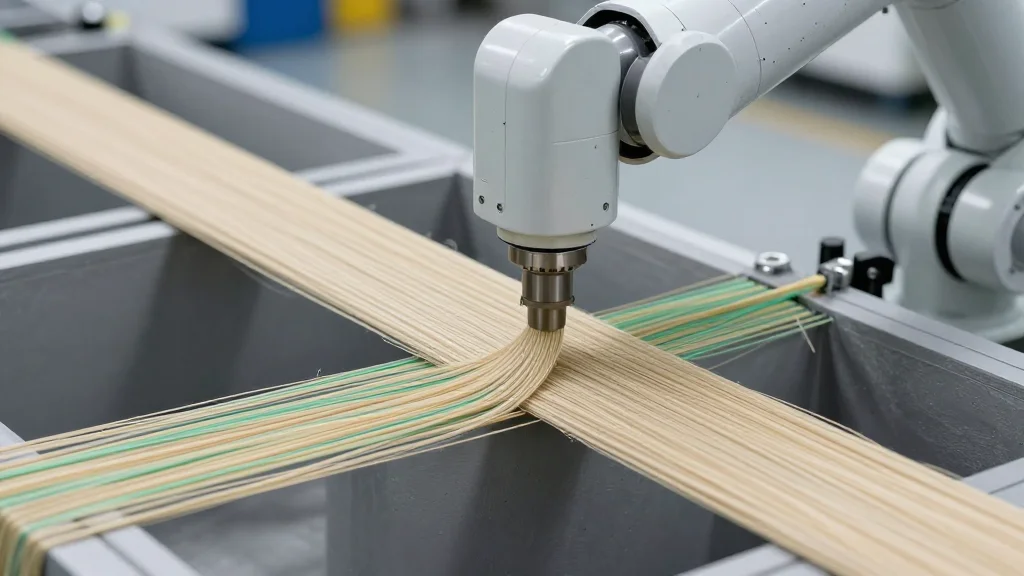
Bpreg Composites, Fibionic Form Synergy to Intersect Natural Fibers with Bionically Optimized Architectures
Why It Matters
The breakthrough shows that renewable natural fibers can meet demanding performance standards, opening sustainable pathways for automotive, aerospace, and industrial parts. It signals a shift where environmental goals no longer compromise engineering excellence.
Key Takeaways
- •Fibionic and Bpreg merge tailored fiber placement with natural fibers.
- •Flax and hemp UD tapes placed precisely improve stiffness and reduce thickness.
- •New inserts enable lighter, stronger components for injection molding.
- •Approach balances affordability, sustainability, and high‑performance demands.
- •Potential expands eco‑friendly mobility and hybrid structural applications.
Pulse Analysis
Natural‑fiber composites have long been touted for their low carbon footprint, yet their adoption in high‑performance sectors has been hampered by inconsistent mechanical properties and limited design flexibility. Tailored fiber placement (TFP) technology, which deposits continuous fibers along engineered load paths, offers a solution by delivering load‑optimized structures. Fibionic’s bionically optimized FFP system builds on this premise, using algorithm‑driven placement strategies that mimic nature’s efficiency. By integrating Bpreg’s flax and hemp unidirectional tapes, the collaboration creates a hybrid material that retains the renewable advantage of natural fibers while achieving the precision traditionally reserved for carbon or glass composites.
The joint trials revealed two tangible benefits. First, the precise positioning of flax and hemp reinforcements directly along critical stress lines yields a marked increase in stiffness without adding weight, allowing designers to trim excess material and lower part thickness. Second, the ability to embed localized reinforcing inserts during injection molding simplifies manufacturing workflows and reduces cycle times, as the inserts provide structural reinforcement without separate assembly steps. Early prototypes, such as a tire‑lever demonstrator, showcased a measurable reduction in mass while delivering stiffness comparable to conventional glass‑fiber parts, underscoring the commercial viability of the approach.
Industry observers view this development as a catalyst for broader adoption of sustainable composites across mobility and industrial markets. Automakers seeking to meet stricter emissions targets can now consider natural‑fiber‑reinforced thermoplastics for interior panels, under‑body shields, and even structural brackets. Likewise, aerospace and wind‑energy sectors stand to benefit from lighter, bio‑based components that lower overall vehicle weight and improve fuel efficiency. As regulatory pressure mounts and consumer demand for greener products grows, the Fibionic‑Bpreg synergy illustrates how deep‑tech collaborations can translate environmental ambition into concrete performance gains, accelerating the transition toward a circular, high‑performance materials economy.
Bpreg Composites, fibionic form synergy to intersect natural fibers with bionically optimized architectures
Comments
Want to join the conversation?
Loading comments...