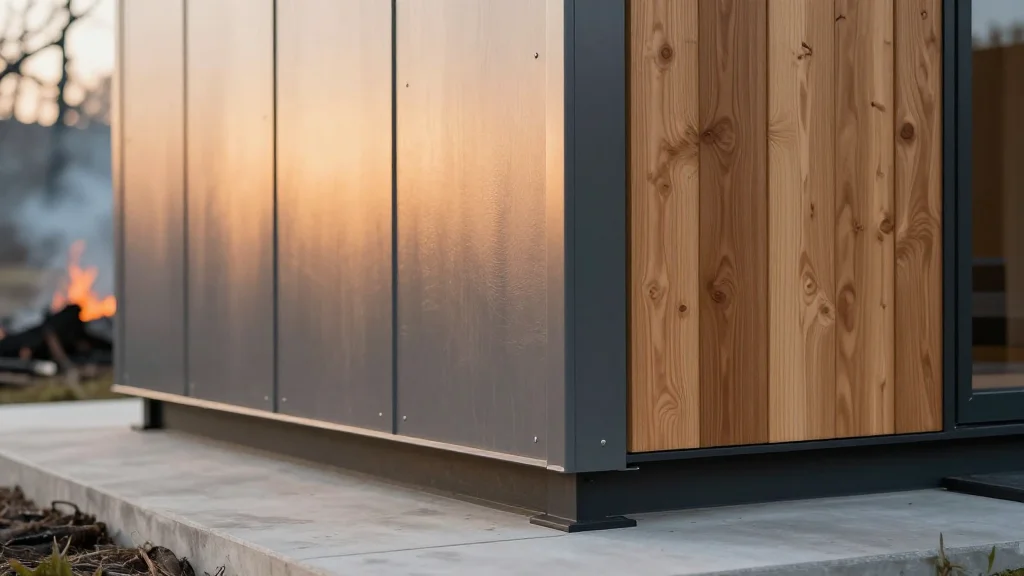
California Wildfire Survivors Turn to $100‑$500 Per‑sq‑ft Prefab Homes for Rapid Rebuild

Why It Matters
The rapid uptake of prefabricated housing after the Eaton Fire illustrates how modular construction can become a primary tool for climate‑resilient rebuilding. By delivering fire‑rated, weather‑proof homes at a fraction of conventional costs, manufacturers are addressing a critical gap in disaster response and creating a new revenue stream that aligns with tightening building codes. This shift also pressures traditional contractors to adopt factory‑built components, potentially accelerating industry‑wide efficiency gains. Moreover, the city‑LAB UCLA program demonstrates a replicable public‑private partnership model that other fire‑prone states could adopt. By bundling financing assistance with vetted prefab options, local governments can streamline approvals, reduce insurance burdens, and expedite safe rehousing for displaced residents, thereby mitigating long‑term socioeconomic fallout from wildfires.
Key Takeaways
- •Dozens of families rebuilding after the 2025 Eaton Fire are using prefab homes priced $100‑$500 per sq ft.
- •City‑LAB UCLA offers a financing guide and a showcase of six modular designs to accelerate disaster recovery.
- •Manufacturers like Honomobo and Bevy House provide fire‑resistant, WUI‑certified units that can endure 250 mph winds.
- •Prefab construction often undercuts traditional on‑site building costs while meeting stricter safety standards.
- •The model could be replicated nationwide, reshaping the building‑materials market toward modular, climate‑ready solutions.
Pulse Analysis
The California prefab surge marks a turning point where disaster recovery and manufacturing intersect. Historically, modular housing occupied a niche market for affordable housing and temporary shelters; today, climate risk is forcing a re‑evaluation of its core value proposition. The integration of fire‑rated materials and engineered resilience into factory‑built units creates a differentiated product that commands premium pricing yet remains cheaper than conventional builds, a classic case of value‑based pricing.
From a competitive standpoint, firms that can certify their modules against multiple hazards—wildfire, hurricanes, earthquakes—will capture the lion's share of public‑sector contracts. This will likely spur consolidation as larger players acquire specialized manufacturers to broaden their hazard‑certification portfolios. At the same time, supply‑chain dynamics are shifting: steel, insulated panels, and composite cladding are seeing higher demand, prompting manufacturers to invest in automated fabrication lines that can scale output while maintaining strict quality controls.
Looking ahead, policy will be the decisive catalyst. If state and local governments embed prefab incentives into rebuilding codes, the market could see a tenfold increase in modular unit orders over the next five years. Such a trajectory would not only accelerate the decarbonization of the construction sector—factory production reduces waste and emissions—but also embed resilience into the housing stock, fundamentally altering how the United States rebuilds after climate disasters.
California wildfire survivors turn to $100‑$500 per‑sq‑ft prefab homes for rapid rebuild
Comments
Want to join the conversation?
Loading comments...