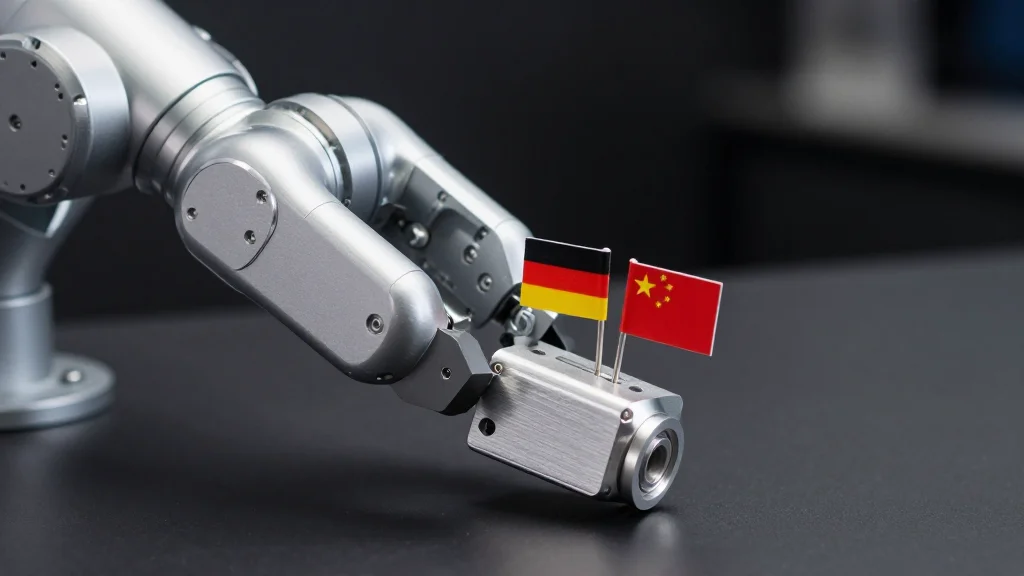
Canton Fair Showcases China‑Germany Intelligent Manufacturing Partnership at 139th Edition

Why It Matters
The China‑Germany intelligent manufacturing partnership highlighted at the Canton Fair marks a decisive move toward higher‑value, technology‑driven production in a market long dominated by cost competition. By combining German engineering standards with China’s manufacturing scale, the alliance could accelerate the diffusion of AI‑enabled factories, reduce carbon footprints, and set new benchmarks for product quality. For the broader manufacturing sector, the partnership signals that future growth will hinge on collaborative innovation rather than isolated cost cuts. Companies that fail to adopt smart‑factory solutions risk being left behind as buyers—especially in Europe and North America—tighten sustainability criteria and demand greater supply‑chain transparency.
Key Takeaways
- •139th Canton Fair opened April 16, 2026 in Guangzhou
- •Zhejiang RongQe Technology displayed AI‑driven sensors and eco‑friendly components
- •Fair highlighted a new China‑Germany intelligent manufacturing partnership
- •Partnership aims to boost export competitiveness by up to 15% according to analysts
- •B2B matchmaking sessions will focus on sustainable materials and digital twins
- •
Pulse Analysis
The Canton Fair’s spotlight on a China‑Germany intelligent manufacturing tie‑up reflects a strategic recalibration of global production networks. Historically, China’s comparative advantage lay in scale and low labor costs; today, the narrative is shifting toward high‑tech, low‑carbon value creation. Germany’s reputation for precision engineering and rigorous quality standards complements China’s massive manufacturing base, creating a synergistic platform for joint R&D, standard‑setting, and market access.
From a market perspective, this partnership could compress the technology adoption curve for Chinese midsize manufacturers, who have traditionally lagged behind tier‑one OEMs in AI and robotics integration. By leveraging German expertise, Chinese firms can accelerate the rollout of smart‑factory solutions, potentially narrowing the gap with advanced economies. This, in turn, may reshape global supply‑chain dynamics, as Western buyers increasingly prefer partners that can demonstrate both cost efficiency and sustainability credentials.
Looking ahead, the success of the collaboration will depend on concrete outcomes—joint patents, co‑developed product lines, and measurable reductions in carbon intensity. If the Canton Fair’s matchmaking sessions translate into binding agreements, the model could be replicated across other sectors, from automotive to consumer electronics, cementing a new era of collaborative, intelligent manufacturing that balances economic growth with environmental stewardship.
Canton Fair Showcases China‑Germany Intelligent Manufacturing Partnership at 139th Edition
Comments
Want to join the conversation?
Loading comments...