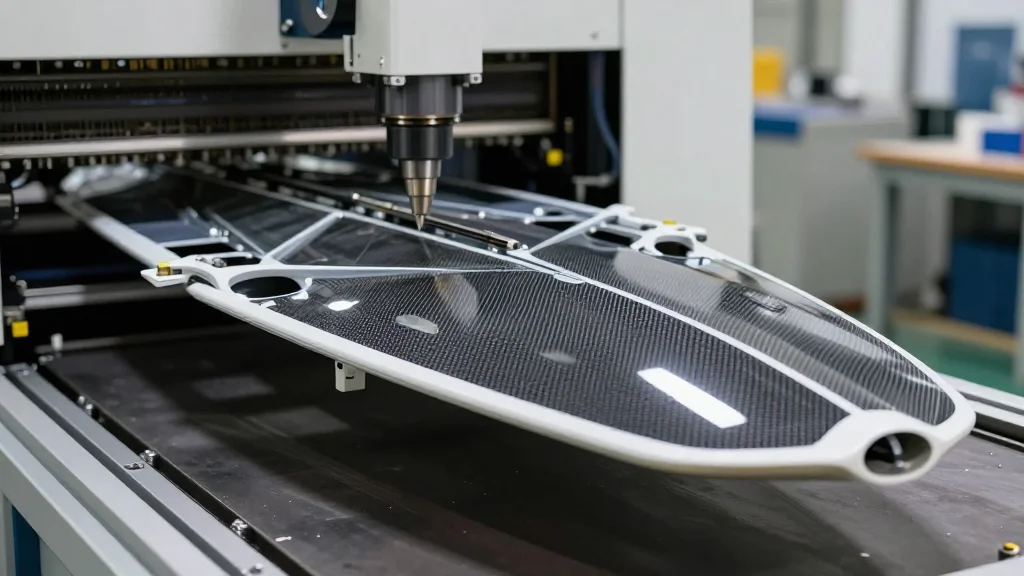
Century Tool Adds Thermoplastic Composites Trial Capabilities On-Site
Why It Matters
The partnership shortens tooling cycles for composites firms, enabling quicker product launches and cost savings, while expanding LFAM’s footprint in a high‑growth market.
Key Takeaways
- •CEAD partners with AIC to bring LFAM to North and Latin America
- •Large-format 3D printing cuts tooling lead times by up to 50%
- •Regional distributor adds process expertise, bridging additive and traditional methods
- •Composites manufacturers gain faster prototyping and scalable production capabilities
Pulse Analysis
Additive manufacturing has moved beyond prototyping into large‑scale production, especially for high‑performance composites used in aerospace, automotive, and wind‑energy sectors. Large‑format additive manufacturing (LFAM) enables the printing of full‑size tooling and structural components, delivering weight reductions and design freedom that traditional machining cannot match. Industry analysts forecast a compound annual growth rate of roughly 20% for LFAM through 2030, driven by demand for rapid iteration and lower inventory costs.
The CEAD‑AIC alliance leverages CEAD’s integrated LFAM platform—combining printers, software, and post‑processing—with AIC’s deep distribution network across the United States, Mexico, and Brazil. This synergy accelerates technology transfer, allowing local composites producers to adopt 3D‑printed molds and fixtures without the typical learning curve. Early adopters report lead‑time reductions of 30‑50% and material waste cuts, translating into faster time‑to‑market and improved margins. By providing on‑site support and localized case studies, the partnership mitigates the perceived risk of transitioning from conventional tooling.
Looking ahead, the collaboration could reshape supply chains by decentralizing tooling production and enabling on‑demand manufacturing hubs. As LFAM matures, we expect tighter integration with digital twins and AI‑driven process optimization, further enhancing part quality and repeatability. Companies that embrace this technology early will gain a competitive edge, positioning themselves to meet the accelerating demand for lightweight, high‑strength composite structures across multiple industries.
Century Tool adds thermoplastic composites trial capabilities on-site
Comments
Want to join the conversation?
Loading comments...