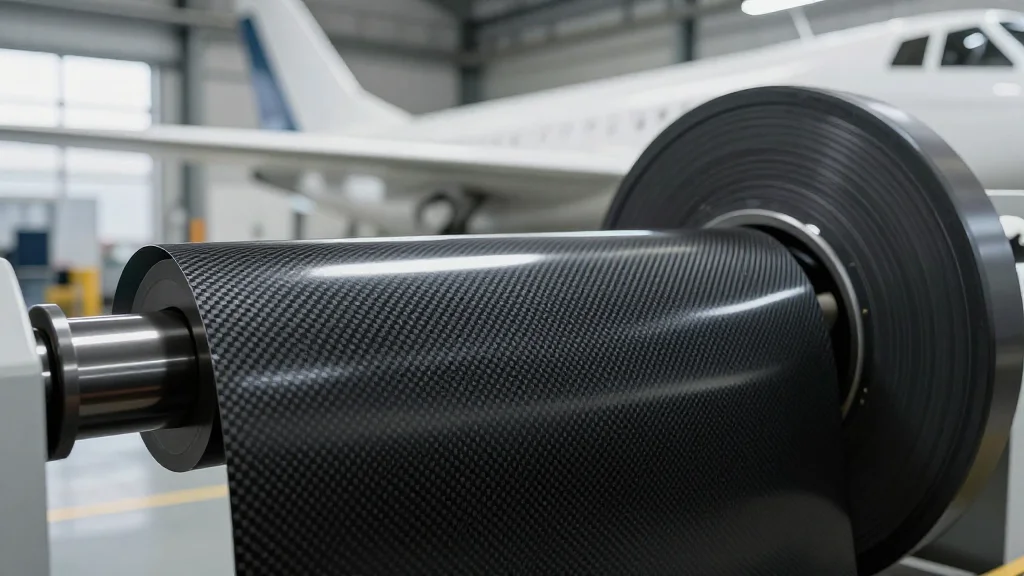
CF3D Systems: Continuous Composites More than Doubles Its Capacity to Support Defence Efforts
Why It Matters
The expansion gives the firm the scale to supply rapidly growing defence composite systems, accelerating fielding of lightweight, high‑performance parts for military platforms.
Key Takeaways
- •New 17,000‑sq‑ft Idaho facility doubles production capacity
- •CF3D tech now can produce five times more components
- •Expansion enables tighter collaboration with government, industry, academia
- •Scalable composite structures meet growing defence demand
- •Integrated software‑material platform accelerates system integration
Pulse Analysis
Continuous Composites' CF3D process blends advanced thermosetting resins with continuous carbon and glass fibers, creating parts that combine high strength, low weight, and rapid manufacturability. In recent years, the aerospace and defence sectors have intensified demand for such materials to reduce fuel consumption and increase payload capacity on aircraft, unmanned systems, and ground vehicles. By embedding design software, material science, and precision robotics into a single platform, the company shortens the development cycle from concept to part, a capability that aligns with the fast‑paced acquisition cycles of modern militaries.
The move to a 17,000‑square‑foot campus in Coeur d’Alene effectively doubles the company's floor space and, according to CEO Steve Starner, unlocks a five‑fold increase in component output. This scaling is more than a physical expansion; it introduces dedicated zones for systems integration, engineering validation, and low‑volume production that can be quickly transitioned to full‑scale manufacturing. For defence contractors, the ability to source composite structures that are already production‑ready reduces lead times, mitigates supply‑chain bottlenecks, and supports rapid fielding of next‑generation platforms such as hypersonic missiles and electric‑propulsion aircraft.
Beyond immediate capacity gains, the Idaho facility positions Continuous Composites as a hub for collaborative research with the Department of Defense, automotive OEMs, and universities. Such partnerships accelerate the evolution of digitally defined fiber architectures, enabling more complex geometries and integrated sensor networks within a single part. As the U.S. defense budget continues to prioritize lightweight, high‑performance materials, firms that can deliver scalable, turnkey composite solutions are likely to capture a larger share of contracts, reinforcing the strategic importance of this expansion.
CF3D systems: Continuous Composites more than doubles its capacity to support defence efforts
Comments
Want to join the conversation?
Loading comments...