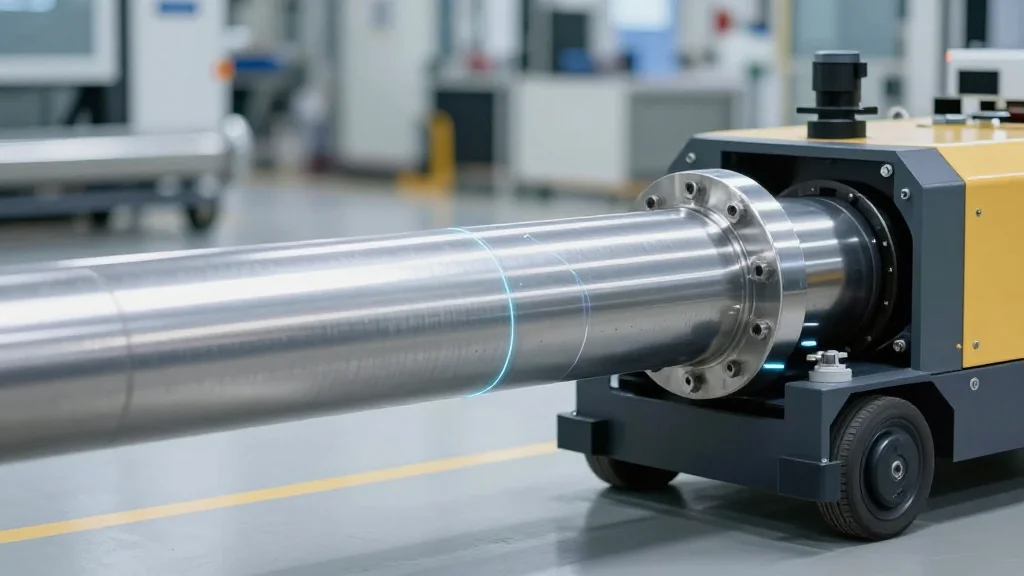
China Completes First Smart Production Line for Deepwater Oil & Gas Pipelines

Companies Mentioned
Why It Matters
The smart production line represents a tangible step toward reducing China’s reliance on imported deepwater pipeline technology, a critical bottleneck for offshore exploration. By embedding AI, robotics and real‑time data analytics into the manufacturing process, the line can deliver higher reliability, lower defect rates and shorter construction cycles, directly impacting the safety and economics of offshore projects. The initiative also aligns with Beijing’s broader Made‑in‑China 2025 goals, showcasing how advanced manufacturing can be leveraged to secure strategic industries. Beyond the oil‑gas sector, the successful integration of MES, AI vision and AGV logistics sets a precedent for other heavy‑industry supply chains seeking to modernize. If the line achieves its projected efficiency gains, it could accelerate the adoption of similar smart factories across shipbuilding, aerospace and renewable‑energy component production, reshaping China’s industrial landscape.
Key Takeaways
- •China Offshore Engineering completes the first AI‑driven deepwater pipeline production line at Zhuhai base.
- •Line integrates MES, AI visual inspection, robotic welding and AGV transport for end‑to‑end automation.
- •Covers three material types, eight pipe diameters and multiple fittings in a single workflow.
- •Two‑year development with domestic smart‑equipment firms achieved flexible job scheduling and remote control.
- •Project aims to cut lead times and improve quality for offshore oil‑gas infrastructure in China.
Pulse Analysis
The launch of this intelligent production line is more than a symbolic milestone; it is a strategic lever for China’s offshore energy ambitions. Historically, deepwater pipeline fabrication has been a cost‑intensive, labor‑heavy process, often constrained by a shortage of skilled welders and the need for meticulous quality assurance. By automating the "cut‑to‑weld" sequence, the line promises to compress project timelines, a critical advantage as China accelerates development of new offshore fields to meet rising domestic energy demand.
From a competitive standpoint, the move positions China alongside a small cohort of global players that have begun digitizing heavy‑industry production. While Norway’s Kongsberg and Saudi Arabia’s Aramco have announced pilot smart‑factory projects, China’s approach is distinguished by its scale and integration depth, leveraging a homegrown ecosystem of AI and robotics firms. This could translate into lower unit costs and faster technology diffusion across the domestic supply chain, potentially eroding the market share of foreign pipeline manufacturers.
Looking ahead, the line’s performance data will be a key indicator for policymakers and investors. If the system delivers the promised efficiency and quality improvements, it could unlock further public and private funding for intelligent manufacturing in other strategic sectors, reinforcing China’s push for self‑sufficiency in high‑tech industrial capabilities. Conversely, any shortfalls in reliability or scalability may temper expectations and prompt a reassessment of the pace at which AI can be embedded in complex, safety‑critical manufacturing environments.
China Completes First Smart Production Line for Deepwater Oil & Gas Pipelines
Comments
Want to join the conversation?
Loading comments...