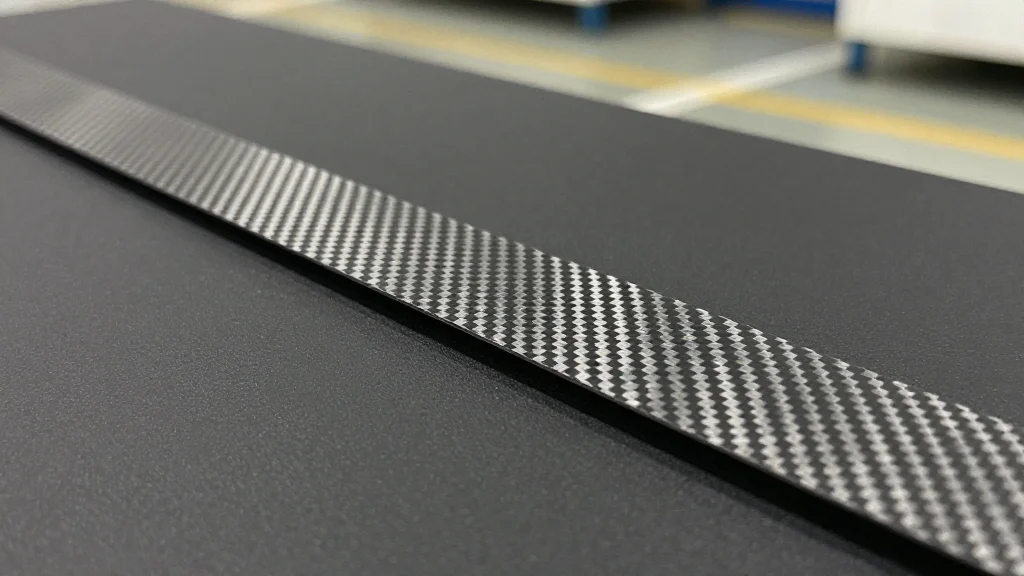
China Mass‑Produces Ultra‑Strong T1200 Carbon Fiber, Ten Times Steel Strength

Why It Matters
The T1200 fibre’s unprecedented strength‑to‑weight ratio could redefine design constraints across multiple manufacturing sectors. By enabling lighter, stronger components, the material promises to reduce energy consumption in transport, lower emissions, and cut raw‑material costs. Moreover, China’s ability to mass‑produce at the hundred‑ton level gives it a strategic advantage in the global supply chain for high‑performance composites, potentially shifting market share away from established Western suppliers. Beyond immediate applications, the breakthrough signals a broader trend toward industrialising advanced materials that were previously confined to research labs. If other nations cannot match China’s production scale, the competitive landscape for next‑generation manufacturing could tilt decisively toward firms that secure early access to T1200‑grade fibre, influencing everything from aircraft design to wind‑turbine blade construction.
Key Takeaways
- •CNBM’s subsidiary Zhongfu Shenying began industrial‑scale production of T1200‑grade carbon fibre.
- •T1200 fibre is ten times stronger than structural steel, with tensile strength >8 GPa.
- •The fibre’s diameter is less than one‑tenth that of a human hair and its density is ~25% of steel.
- •Annual production capacity has already surpassed 100 tons, the first such scale globally.
- •Potential impact spans aerospace, automotive, and construction, offering up to 75% weight reduction.
Pulse Analysis
China’s rapid move from prototype to mass production of T1200 carbon fibre marks a strategic inflection point for the global composites market. Historically, breakthroughs in high‑strength fibres have been hampered by costly, low‑volume manufacturing that limited adoption to niche aerospace programs. By achieving a hundred‑ton capacity, CNBM not only lowers unit costs but also creates a domestic supply chain that can feed China’s ambitious electric‑vehicle and next‑generation aircraft programs. This vertical integration mirrors the country’s broader industrial policy of turning scientific breakthroughs into export‑ready products.
The competitive response will likely intensify. Western firms, which have traditionally led in carbon‑fibre technology, now face a rival that can undercut price and deliver comparable performance at scale. Expect accelerated R&D collaborations, potential joint‑ventures, and perhaps a wave of intellectual‑property disputes as firms scramble to protect their own high‑strength fibre patents. In the short term, OEMs will conduct rigorous certification trials; success could lock in long‑term supply contracts that cement China’s foothold in high‑value manufacturing.
Looking ahead, the T1200 fibre could catalyse a new generation of ultra‑light, high‑strength products that were previously impractical. If the material proves reliable under fatigue and environmental stress, it may enable revolutionary aircraft designs with longer ranges and lower fuel burn, as well as lighter electric‑vehicle chassis that improve range and handling. The ripple effect could extend to renewable energy, where lighter turbine blades increase efficiency. In sum, the industrialisation of this fibre not only reshapes material economics but also redefines engineering possibilities across the manufacturing spectrum.
China Mass‑Produces Ultra‑Strong T1200 Carbon Fiber, Ten Times Steel Strength
Comments
Want to join the conversation?
Loading comments...