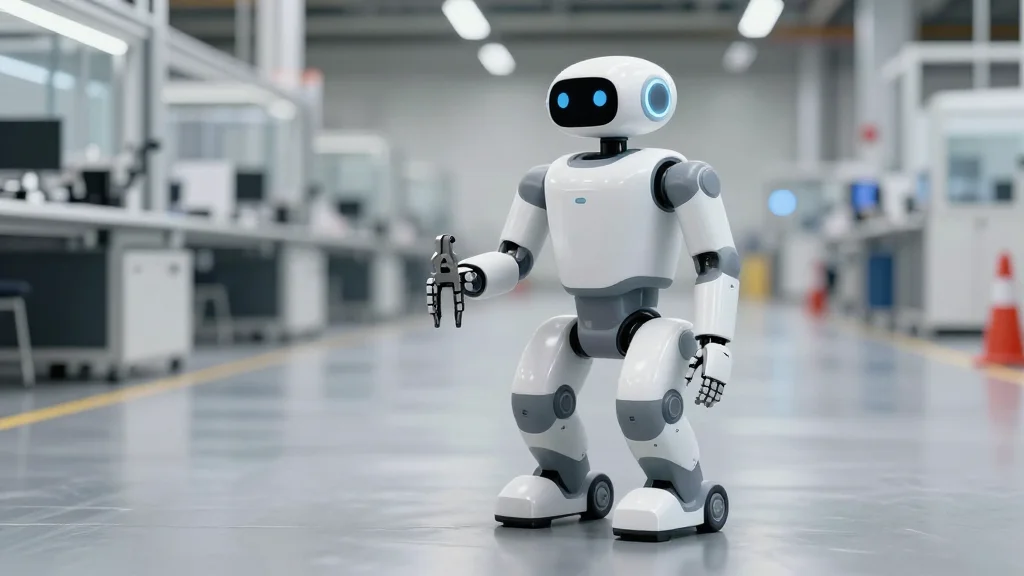
China’s Next Export Shock Walks on Two Legs — and Costs Less than a Used Car
Companies Mentioned
Why It Matters
Cheaper robots could offset China’s rising wages, preserving its export advantage, while creating a new value chain for suppliers and raising security concerns in Western markets.
Key Takeaways
- •Government orders for humanoid robots jumped to $31.5 M in 2024.
- •Robots priced around $13,500 could offset rising Chinese labor costs.
- •China now produces 13,000 humanoids, 90% of global output.
- •Component suppliers stand to gain as robot ecosystems expand.
Pulse Analysis
China’s manufacturing strategy is entering a new phase as Beijing pours public funds into affordable humanoid robots. Rising wages and a shrinking labor pool have eroded the low‑cost advantage that once defined Chinese exports. By subsidizing startups and placing purchase orders worth $31.5 million last year, the state is creating a market where a $13,500 robot can perform repetitive assembly, inspection, and logistics tasks, potentially lowering unit costs across sectors ranging from electronics to automotive.
The ripple effect extends far beyond the robot manufacturers themselves. Much like the electric‑vehicle boom, the robot surge is spawning a dense ecosystem of component suppliers—actuators, sensors, machine‑vision systems, batteries, and industrial software firms—that stand to capture significant revenue as factories adopt these machines. With China already operating roughly 2 million industrial robots, the addition of 13,000 humanoids—accounting for 90 % of global production—signals a rapid scaling that could reshape global supply‑chain economics, giving Chinese factories a cost edge even if the robots are not exported.
However, the geopolitical dimension adds complexity. A bipartisan U.S. bill now bars federal agencies from purchasing Chinese‑made humanoids, citing data‑security risks. Even if export bans limit direct sales, the cost advantages of robot‑augmented factories will flow through cheaper Chinese‑made goods worldwide. Investors and policymakers must watch how this technology reshapes competitive dynamics, supplier profitability, and the broader debate over technology security.
China’s next export shock walks on two legs — and costs less than a used car
Comments
Want to join the conversation?
Loading comments...