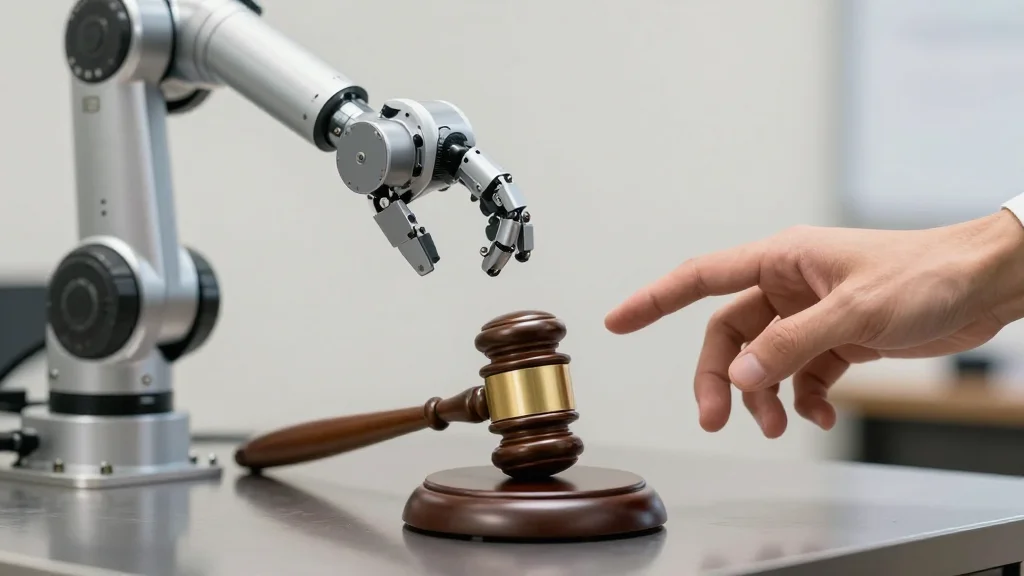
Chinese Court Bars AI‑Driven Layoffs, Citing Worker Rights

Why It Matters
The ruling signals a shift in China’s approach to balancing technological advancement with social stability. By explicitly tying AI‑driven restructuring to existing labor‑contract law, the decision forces manufacturers to reconsider cost‑cutting strategies that rely solely on automation. This could slow the rapid displacement of low‑skill workers, preserving employment levels in a sector that employs hundreds of millions. For global supply chains, the judgment introduces a regulatory variable that may affect the timing and scale of AI investments in Chinese factories. Companies that previously counted on swift AI integration to boost margins may now need to allocate resources to workforce transition programs, potentially altering competitive dynamics with peers in regions with fewer labor protections.
Key Takeaways
- •Hangzhou Intermediate People's Court ruled AI‑only layoffs illegal on April 28, 2026.
- •Employee Zhou earned 25,000 yuan ($3,640) monthly; offered 15,000 yuan ($2,180) after AI takeover.
- •Court cited lack of “major change in objective circumstances” under China’s Labor Contract Law.
- •Decision builds on a December 2025 precedent involving a mapping‑company AI dismissal.
- •Manufacturers may need to invest in retraining and cobot solutions rather than pure automation.
Pulse Analysis
China’s legal stance reflects a broader tension between the nation’s AI ambitions and its social contract. While the government touts AI as a pillar of future growth, the ruling acknowledges that unchecked automation could exacerbate unemployment and social unrest. Historically, China has used top‑down directives to steer industrial policy; this court decision adds a bottom‑up check that could temper the speed of AI adoption in factories.
From a competitive perspective, firms that can integrate AI as a collaborative tool rather than a wholesale replacement will likely gain a strategic edge. Companies that already employ hybrid human‑machine workflows—such as using AI for quality‑control assistance while retaining human inspectors for exception handling—are better positioned to comply with the new legal expectations. Conversely, firms that have built automation roadmaps predicated on large‑scale labor cuts may face cost overruns as they redesign processes to meet legal standards.
Looking ahead, the ruling may inspire similar jurisprudence in other jurisdictions grappling with AI‑driven workforce changes. Multinationals will need to monitor Chinese labor courts closely and adapt their global automation strategies accordingly, balancing efficiency gains with the risk of legal pushback. The next wave of AI deployment in manufacturing will likely emphasize upskilling, reskilling, and the development of AI‑augmented roles, reshaping the talent landscape across the sector.
Chinese Court Bars AI‑Driven Layoffs, Citing Worker Rights
Comments
Want to join the conversation?
Loading comments...