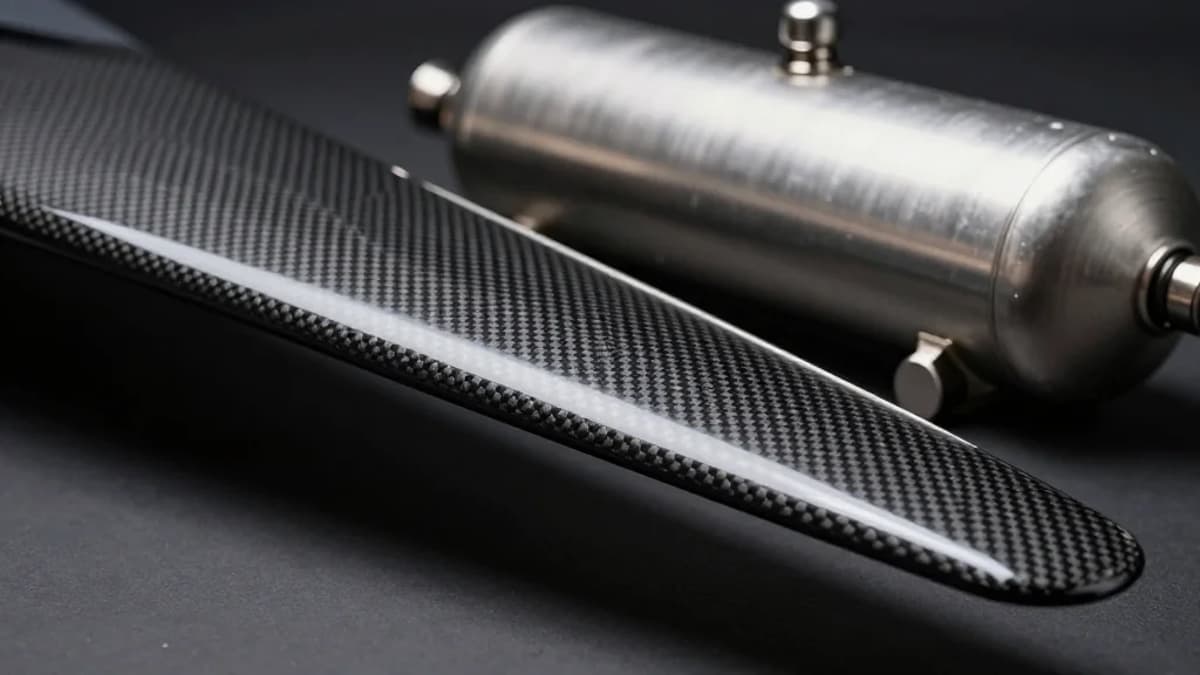
Climate Impulse Project Reaches Milestone Success with Main Wing Spar Testing
•February 25, 2026
0
Why It Matters
These breakthroughs validate critical technologies for zero‑emission aviation and demonstrate scalable, eco‑friendly composite manufacturing, accelerating industry adoption of sustainable flight solutions.
Key Takeaways
- •Climate Impulse spar passed worst‑case load test
- •Validation confirms Syensqo composite quality
- •VIBRIO vibration press reaches 244 Hz frequency
- •Bending strength rose to 484 MPa with vibration
- •Both projects push zero‑emission aviation forward
Pulse Analysis
The successful spar test marks a pivotal moment for hydrogen‑driven aircraft, confirming that advanced carbon‑fiber composites can meet the extreme stress profiles of high‑altitude flight while maintaining the weight advantages essential for range and efficiency. By replicating worst‑case gust and turbulence loads, Climate Impulse not only validates its design calculations but also builds confidence among regulators and investors that hydrogen propulsion can be paired with structurally sound airframes, a combination long sought after in the quest for carbon‑neutral air travel.
Meanwhile, the VIBRIO project’s vibration‑assisted double‑belt press addresses a longstanding bottleneck in natural‑fiber reinforced thermoplastic production: achieving uniform impregnation at industrial speeds. The introduction of high‑frequency (up to 244 Hz) vibration dramatically improves resin flow, lifting bending strength from 145 MPa to a record‑breaking 484 MPa. This performance leap demonstrates that bio‑based fibers can rival traditional glass‑fiber composites, opening new supply‑chain opportunities for manufacturers aiming to reduce embodied carbon without sacrificing mechanical integrity.
Together, these developments signal a broader shift toward sustainable aviation manufacturing. As policy frameworks tighten emissions standards, airlines and OEMs will increasingly demand lightweight, recyclable structures that align with green‑fuel strategies. The proven scalability of vibration‑enhanced processing and the verified durability of hydrogen‑compatible composites position Europe’s composite sector at the forefront of this transition, promising faster commercialization of zero‑emission aircraft and a measurable reduction in the sector’s environmental footprint.
Climate Impulse project reaches milestone success with main wing spar testing
0
Comments
Want to join the conversation?
Loading comments...