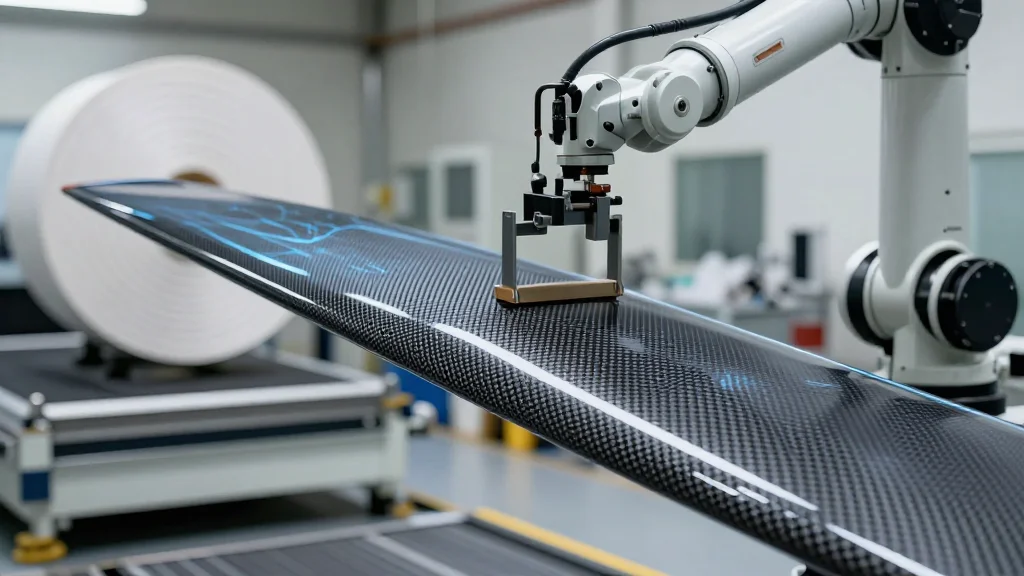
Continuous Composites Expands Manufacturing Footprint to Support Production-Relevant CF3D Systems
Why It Matters
The expansion accelerates U.S. production‑ready composite capabilities for critical defense and aerospace applications, while the ACCE keynote signals a strategic crossover where automotive composites can capture emerging VTOL demand.
Key Takeaways
- •Continuous Composites' new 17,000 sq ft plant doubles its footprint.
- •Expansion targets five‑fold increase in component and system output.
- •Facility supports large‑format CF3D structures and integrated software‑materials workflow.
- •SPE ACCE 2026 keynote features Shield AI’s Jeff Bosworth on VTOL composites.
- •VTOL market opens growth avenues for automotive composites suppliers.
Pulse Analysis
Continuous Composites’ relocation to a 17,000‑square‑foot campus marks a decisive step in scaling American composite manufacturing. By more than doubling its physical footprint, the company can now produce five times as many CF3D‑based components, a capability that directly supports high‑profile defense contracts such as the Air Force‑sponsored AFWERX program. The larger space also accommodates advanced digital fiber‑placement equipment and integrated software‑materials pipelines, reducing lead times and improving repeatability for aerospace and high‑performance applications.
The CF3D technology at the heart of Continuous Composites’ offering blends additive manufacturing with precise fiber architecture, enabling lightweight, high‑strength structures that meet stringent aerospace standards. As the U.S. defense sector seeks faster, more adaptable supply chains, the expanded facility positions the firm as a critical partner for government and industry projects that demand production‑ready composite parts. Moreover, the proximity to academic collaborators in the Pacific Northwest fosters ongoing R&D, ensuring the company stays at the forefront of material innovation.
Meanwhile, the SPE Automotive Composites Conference & Expo’s 2026 keynote, delivered by Shield AI’s Jeff Bosworth, underscores a growing convergence between automotive and aerospace composite markets. Bosworth’s discussion of the X‑Bat VTOL fighter illustrates how lightweight composite solutions can unlock performance gains for unmanned aerial systems, while also presenting a lucrative entry point for automotive suppliers accustomed to high‑volume production. This cross‑industry dialogue highlights a strategic opportunity: firms that can translate automotive‑grade composite expertise to aerospace‑grade specifications stand to capture a share of the rapidly expanding VTOL market, driving new revenue streams and reinforcing the United States’ leadership in advanced manufacturing.
Continuous Composites expands manufacturing footprint to support production-relevant CF3D systems
Comments
Want to join the conversation?
Loading comments...