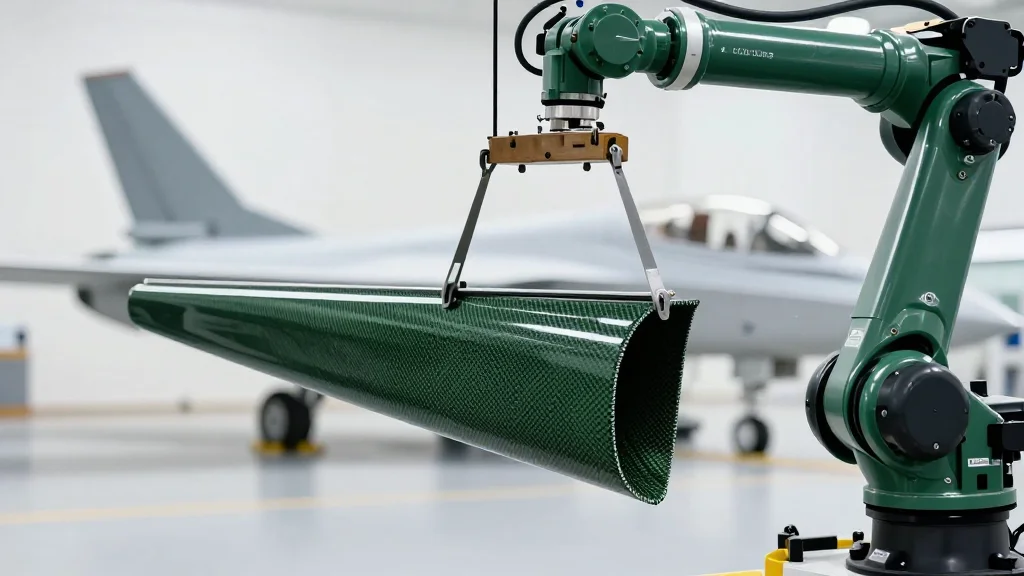
CW Tech Days Virtual Workshop Targets Thermoplastic Composites for Aerospace Structures
Why It Matters
Thermoplastic composites promise faster, higher‑volume production, lower CO₂ emissions and recyclability—key advantages for next‑generation aircraft and defense platforms. Accelerating adoption of these technologies could reshape supply chains and cost structures across the aerospace sector.
Key Takeaways
- •One-shot tape sandwich molding cuts cycle time below 45 seconds.
- •CONTIjoin laser system enables 500 mm wide single-shot layup.
- •Simulation framework predicts wrinkles, warpage, and adhesion issues.
- •Induction welding provides fast, repeatable thermoplastic composite assembly.
- •Scaling TPC to large structures demands new tooling and inspection.
Pulse Analysis
Thermoplastic composites are emerging as a strategic alternative to traditional thermoset materials in aerospace, offering superior impact resistance, rapid processing and full recyclability. Unlike autoclave‑cured laminates, TPCs can be reshaped and joined using heat‑based methods, enabling manufacturers to shrink cycle times and lower energy consumption. This shift aligns with industry pressure to meet stricter carbon‑reduction targets while scaling production for commercial jets, unmanned aerial systems and the burgeoning advanced air‑mobility market.
The CW Tech Days virtual workshop brings together leading innovators to showcase how these benefits are being realized at scale. Engel Austria’s one‑shot tape‑sandwich injection molding demonstrates sub‑45‑second cycles for rotor‑blade components, while Fraunhofer’s CONTIjoin laser system delivers continuous, 500‑mm‑wide layups with closed‑loop control. Researchers from the ThermoPlastic Composites Research Center present a physics‑based simulation platform that flags defects such as wrinkles and warpage before parts leave the tool, and KVE’s induction‑welding experts outline rapid, repeatable assembly methods. Together, these sessions map a clear technology roadmap from small secondary parts to primary structural elements.
For aerospace OEMs and defense contractors, the practical takeaways are immediate. Faster, automated processes reduce labor costs and enable higher production volumes, essential for meeting the demand surge in commercial aviation and AAM fleets. However, scaling TPCs to larger structures introduces new challenges in tooling design, inspection and certification, as highlighted in the closing panel. Companies that invest early in these capabilities stand to gain a competitive edge, positioning themselves at the forefront of a more sustainable, high‑throughput aerospace manufacturing paradigm.
CW Tech Days virtual workshop targets thermoplastic composites for aerospace structures
Comments
Want to join the conversation?
Loading comments...