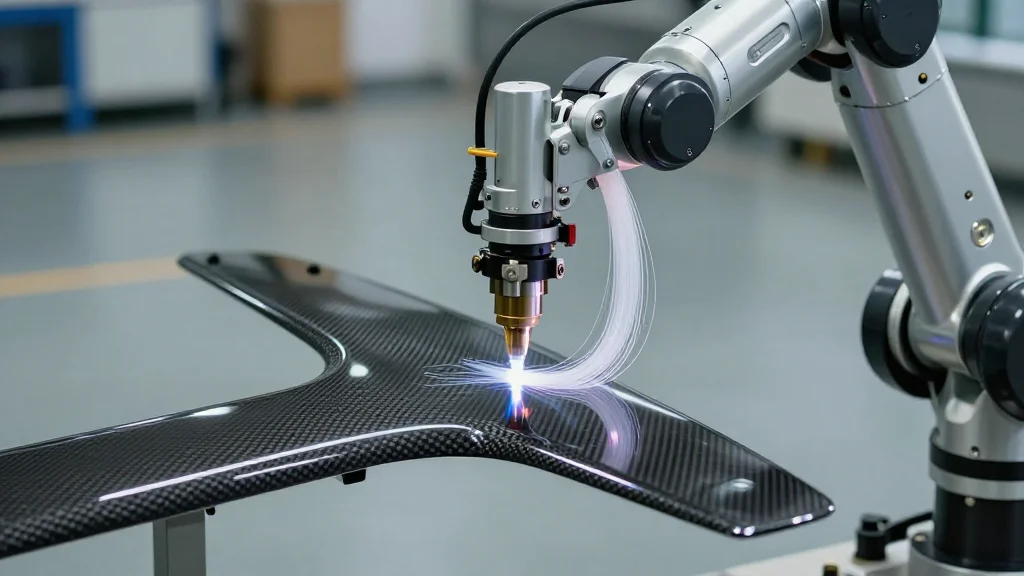
DLR Uses Aibuild to Combine AFP and 3D Printing
Why It Matters
The integration reduces manufacturing cost and time while enabling higher‑performance, lightweight aerospace parts, accelerating the industry’s shift toward fully automated, low‑waste production lines.
Key Takeaways
- •DLR integrates AFP with robotic fused granular fabrication.
- •In situ thermoplastic printing directly onto composite laminates.
- •AI software optimizes scanning, path planning, and deposition live.
- •Tooling dependence drops, reducing lead time and waste.
- •Process yields higher geometric accuracy for aerospace components.
Pulse Analysis
In‑situ additive manufacturing is reshaping how aerospace structures are built. By marrying automated fiber placement—a proven method for laying continuous fibers—with robotic fused granular fabrication, DLR can deposit high‑performance thermoplastics directly onto curved composite panels. This hybrid process eliminates the need for separate molds or fixtures, a long‑standing bottleneck in low‑volume, high‑complexity part production. The result is a lighter, more integrated component that meets the stringent strength‑to‑weight ratios demanded by modern aircraft and satellite designs.
The breakthrough hinges on Aibuild’s AI‑enabled software platform, which fuses digital scanning data with adaptive tool‑path generation in real time. Sensors map the exact geometry of each laminate, allowing the robot to adjust deposition angles and speeds on the fly. This closed‑loop control not only improves bond consistency but also reduces material waste by targeting deposition only where needed. As aerospace manufacturers pursue higher production rates, such intelligent process orchestration becomes essential for maintaining quality while scaling up.
Strategically, the DLR‑Aibuild collaboration signals a shift toward fully digital, end‑to‑end manufacturing ecosystems in the aerospace sector. Lower tooling costs and shortened lead times translate into faster design iterations and more responsive supply chains, critical for programs with aggressive timelines. Moreover, the ability to produce lightweight, high‑performance parts in a single, automated step could give early adopters a competitive edge in both commercial and defense markets. As the technology matures, we can expect broader adoption across satellite structures, unmanned aerial vehicles, and next‑generation airframes, driving industry standards toward AI‑guided, tool‑free additive manufacturing.
DLR uses Aibuild to combine AFP and 3D printing
Comments
Want to join the conversation?
Loading comments...