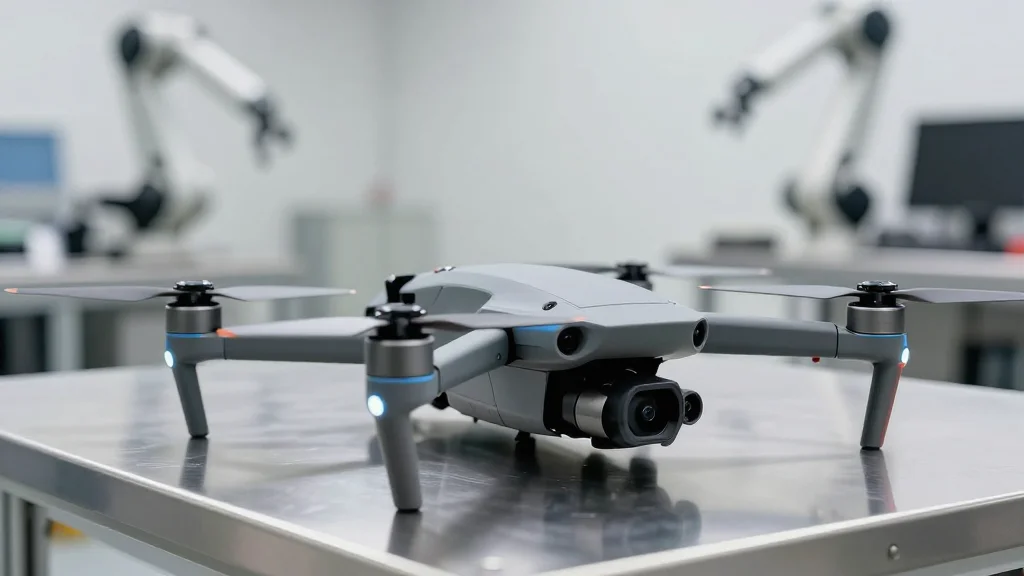
Draganfly Ramps up DPRO Line to High‑volume Defense Drone Manufacturing

Companies Mentioned
Why It Matters
The transition of Draganfly’s DPRO line to high‑volume, certified production signals a maturation of the commercial drone sector into a core component of defense supply chains. By meeting AS9100 and ISO9001 standards, Draganfly can access lucrative government contracts that were previously out of reach for low‑volume innovators, potentially reshaping the competitive dynamics of the defense drone market. Moreover, the domestic manufacturing footprint enhances supply‑chain security for U.S. and allied forces, reducing dependence on foreign components amid geopolitical tensions. For the broader manufacturing ecosystem, Draganfly’s expansion illustrates how niche technology firms can leverage quality certifications and facility upgrades to scale rapidly. This model may encourage other drone and robotics startups to invest in aerospace‑grade processes, accelerating the overall capacity of the U.S. defense industrial base.
Key Takeaways
- •Draganfly adds AS9100‑ and ISO9001‑certified production lines in Texas and Canada
- •Shift enables fulfillment of larger defense orders, including U.S. Army Flex FPV drones
- •CEO Cameron Chell highlighted the need for scalable, cost‑effective unmanned systems
- •Company’s stock has risen 132.6% in the past year, outpacing the industry’s 30.2% growth
- •Expansion aligns with broader defense‑sector capacity upgrades by Lockheed Martin and Northrop Grumman
Pulse Analysis
Draganfly’s strategic pivot reflects a convergence of two market forces: exploding demand for unmanned systems in modern conflict and the tightening of procurement standards for defense suppliers. By attaining AS9100 and ISO9001 certifications, the firm not only unlocks high‑value contracts but also signals to investors that it can sustain the rigorous production cadence required by the Pentagon. This move differentiates Draganfly from smaller drone startups that remain stuck in low‑volume, custom‑build models, which struggle to meet the scale and reliability expectations of large defense programs.
Historically, defense manufacturing has been dominated by legacy aerospace giants. Draganfly’s entry into this space could intensify competition, driving down costs and spurring innovation in areas such as rapid reconfiguration and modular payloads. If the company can maintain its growth trajectory, it may force incumbents to partner with or acquire agile drone specialists to stay relevant.
The next critical milestone will be the company’s Q2 earnings release, where management is expected to disclose order backlogs and the financial impact of the new facilities. Investors will watch for evidence that the capacity expansion translates into recurring revenue streams rather than one‑off contracts. Success could position Draganfly as a benchmark for other tech‑focused manufacturers seeking to transition from boutique prototyping to mass‑production for defense customers.
Draganfly ramps up DPRO line to high‑volume defense drone manufacturing
Comments
Want to join the conversation?
Loading comments...