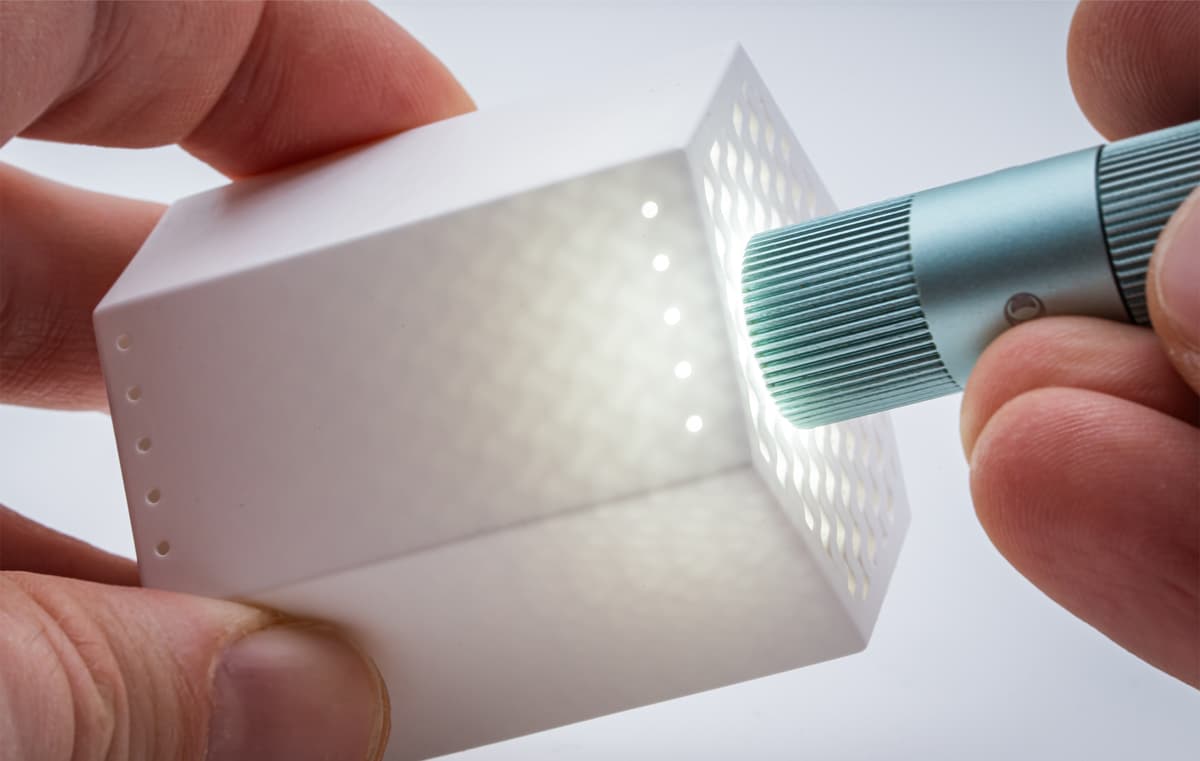
DTU Uses Lithoz Ceramic 3D Printing to Build Gyroid Fuel Cells
Why It Matters
The breakthrough lifts SOFC efficiency while slashing system weight, a critical hurdle for adopting hydrogen power in vehicles, aircraft and marine vessels. It demonstrates that additive manufacturing can redefine fuel‑cell architecture, accelerating the transition to zero‑emission transport.
Key Takeaways
- •DTU printed monolithic SOFCs with gyroid geometry using Lithoz CeraFab.
- •Power‑to‑weight reached ~1 W per gram, five times planar cells.
- •8 mol % YSZ electrolyte enables gas‑tight, thin‑walled architecture.
- •Eliminating interconnects cuts weight, thermal stress, and sealing complexity.
- •Project aims to scale to industrial hydrogen‑powered transport.
Pulse Analysis
Solid‑oxide fuel cells have long promised high‑temperature efficiency for hydrogen conversion, but their adoption has been hampered by bulky planar stacks and heavy interconnects. Traditional manufacturing methods struggle to produce intricate three‑dimensional geometries that could boost surface area without compromising structural integrity. Recent advances in ceramic additive manufacturing, especially lithography‑based ceramic manufacturing (LCM), are changing that landscape by enabling precise, repeatable fabrication of complex lattice structures directly from yttria‑stabilized zirconia slurries.
DTU’s latest experiment leverages Lithoz’s CeraFab printer to create a monolithic gyroid lattice—a triply periodic minimal surface that maximizes internal surface area while maintaining thin walls. The resulting cells achieve a power‑to‑weight ratio of about 1 W g⁻¹, a fivefold improvement over the 0.2 W g⁻¹ typical of flat SOFCs. By integrating the electrolyte, electrodes, and sealing shell into a single printed piece, the design eliminates the need for separate interconnects and sealants, reducing mass, thermal expansion mismatches, and mechanical stress during operation at 850 °C.
The implications extend beyond laboratory performance. Lighter, higher‑specific‑power SOFCs could be integrated into compact hydrogen engines for cars, drones, and marine vessels, where every gram matters. DTU’s roadmap to industrial scaling, combined with Lithoz’s production‑grade printers, suggests a near‑term pathway to commercializing these monolithic cells. As hydrogen infrastructure expands, such weight‑optimized fuel‑cell modules could accelerate the shift from fossil fuels to clean energy across multiple transport sectors, reinforcing the strategic role of ceramic 3D printing in the next generation of sustainable power systems.
DTU uses Lithoz ceramic 3D printing to build gyroid fuel cells
Comments
Want to join the conversation?
Loading comments...