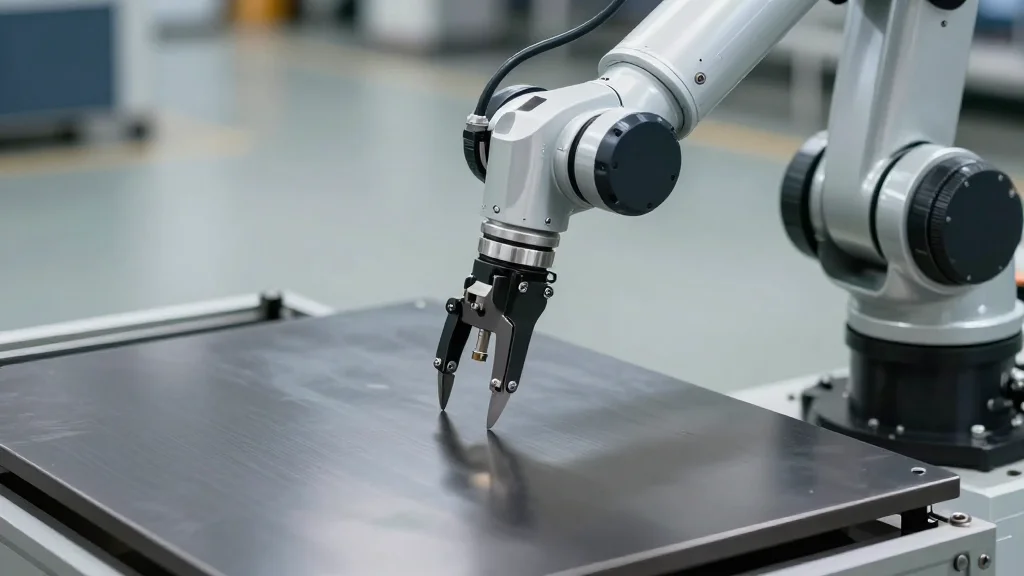
Dürr AG Q1 Profit Falls 16% as Industrial Automation Orders Slump

Companies Mentioned
Why It Matters
The dip in Dürr’s Q1 performance signals a potential slowdown in the broader European manufacturing automation market, a sector that has been a key driver of productivity gains and competitiveness for the region’s industrial base. A sustained reduction in automation spending could delay the adoption of advanced manufacturing technologies, affecting everything from automotive production to aerospace component fabrication. For investors, Dürr’s results serve as an early indicator of how macro‑economic headwinds—such as tighter credit conditions, lingering supply‑chain bottlenecks, and the capital‑intensive shift to electric vehicles—are translating into real‑world order cancellations and postponements. The company’s move toward service‑based revenue may reshape the competitive dynamics, rewarding firms that can bundle hardware with data‑analytics and predictive‑maintenance platforms.
Key Takeaways
- •Dürr AG Q1 net profit fell 16% YoY to €20.23 million ($22.0 million)
- •Revenue dropped 6.6% to €940.21 million ($1.025 billion)
- •Earnings per share declined to €0.29 ($0.32) from €0.34 ($0.37) a year earlier
- •Operating margin slipped to 2.2% from 2.6% in Q1 2025
- •Company did not provide full‑year guidance, citing macro‑economic uncertainty
Pulse Analysis
Dürr’s Q1 results highlight a turning point for the German automation champion, which has historically benefited from the steady capital‑expenditure cycles of the automotive sector. The current earnings dip reflects a confluence of factors: a deceleration in traditional OEM spending, the capital‑intensive nature of re‑tooling for electric‑vehicle production, and a broader risk‑off sentiment among European manufacturers. Historically, automation firms have weathered cyclical downturns by leveraging long‑term service contracts and software upgrades; however, Dürr’s modest shift toward digital services may not be enough to offset the immediate revenue gap.
From a competitive standpoint, the data suggests that mid‑tier players like Dürr could become acquisition targets for larger industrial conglomerates seeking to consolidate technology stacks. Siemens Digital Industries, for example, has been expanding its portfolio through strategic buyouts, and a weakened Dürr could fit that narrative. Conversely, the slowdown may also open opportunities for niche robotics firms that specialize in electric‑vehicle assembly lines, a segment where demand is expected to rebound later in the decade.
Looking forward, the key question for Dürr and its peers is whether the current dip is a short‑term blip or the beginning of a more protracted contraction in automation spending. If macro‑economic conditions improve and OEMs accelerate EV rollouts, we could see a rapid rebound in order volumes. Until then, investors should monitor Dürr’s service‑revenue growth, cost‑control measures, and any strategic alliances that could diversify its addressable market beyond traditional heavy‑industry customers.
Dürr AG Q1 Profit Falls 16% as Industrial Automation Orders Slump
Comments
Want to join the conversation?
Loading comments...