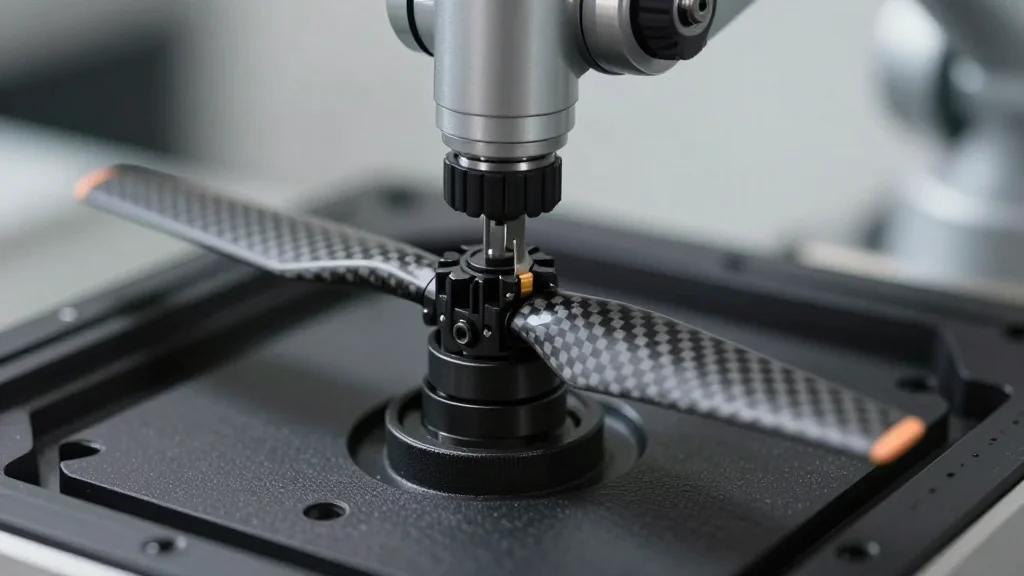
Engel Develops Automated High-Rate Process for TPC Drone Blades
Why It Matters
Automated thermoplastic composite production and AI‑enabled acoustic inspection together lower costs and accelerate adoption of lightweight structures, reshaping supply chains in aerospace, electric vehicles and emerging mobility sectors.
Key Takeaways
- •ENGEL’s one‑cycle tape placement and over‑molding cuts blade production time
- •Thermoplastic composites offer recyclability and high‑volume injection molding
- •BladeScanner captures acoustic signatures for repeatable composite inspection
- •Data‑driven NDT reduces reliance on expert judgment and speeds certification
- •Both technologies enable scalable, lightweight solutions for drones and EVs
Pulse Analysis
The launch of ENGEL’s high‑rate thermoplastic composite process marks a turning point for drone manufacturing. By aligning carbon‑fiber tapes with principal stress trajectories and fusing them with injection‑molded thermoplastic resin in a single pass, the company delivers a part that is lighter, stronger and fully recyclable. This integration eliminates the traditional multi‑step lay‑up and curing stages, slashing cycle times and opening the door for mass‑production volumes that were previously limited to metal or thermoset components. For original equipment manufacturers, the shift translates into lower material waste, reduced tooling costs, and a faster path from prototype to market.
Wemech’s BladeScanner tackles a different bottleneck: the reliability of composite inspection. Conventional nondestructive testing relies heavily on skilled technicians interpreting ultrasonic or visual data, a process prone to variability. BladeScanner combines robotic positioning, controlled‑impact excitation, and high‑fidelity acoustic sensors to generate repeatable datasets, which are then processed by gfai tech’s Qairos software. The resulting signal‑interpretation models provide objective defect detection and create a digital audit trail, essential for aerospace certification and large‑scale production runs. By standardizing data capture, the platform paves the way for machine‑learning enhancements that can predict failure modes before they manifest.
Together, these developments illustrate a broader industry migration toward fully automated, data‑centric composite workflows. As manufacturers adopt thermoplastic injection molding for structural parts, the need for equally automated, quantitative quality control becomes critical. The synergy between rapid, recyclable part fabrication and AI‑enabled inspection promises to reduce total cost of ownership, accelerate time‑to‑flight for aerospace components, and support the next generation of lightweight electric vehicles. Stakeholders that integrate both manufacturing and inspection innovations will likely gain a competitive edge in the emerging market for high‑performance, sustainable mobility solutions.
Engel develops automated high-rate process for TPC drone blades
Comments
Want to join the conversation?
Loading comments...