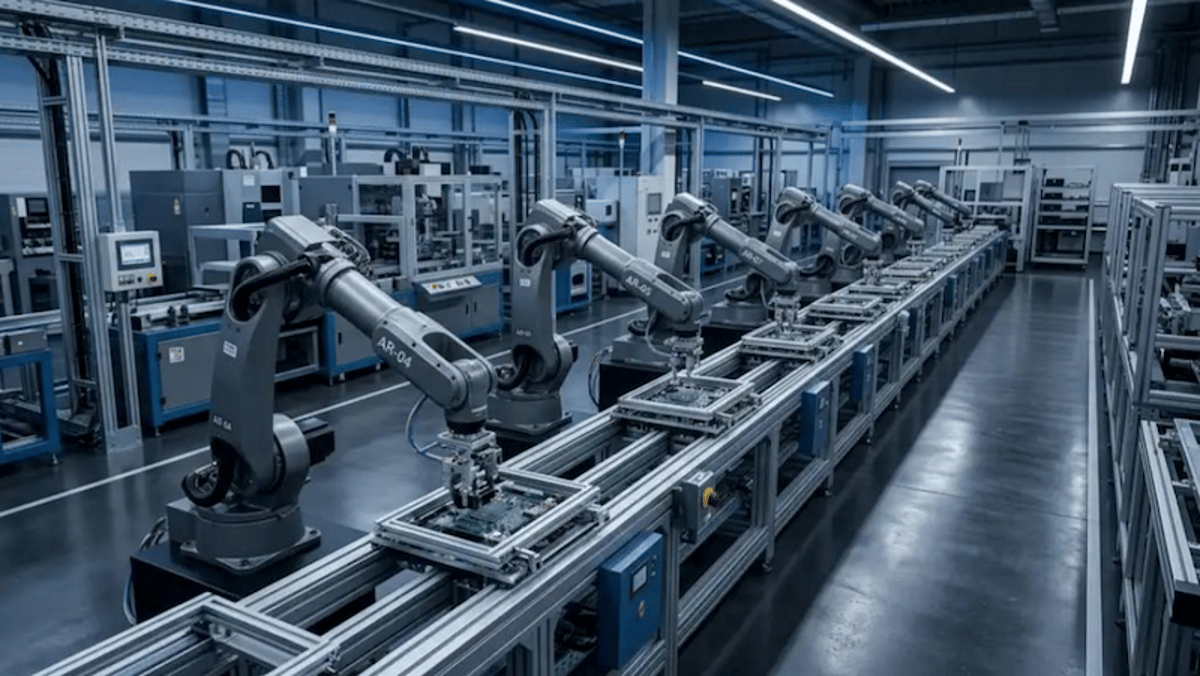
Factory Automation: Bridging Promise and Real-World Production
Companies Mentioned
Why It Matters
The shift from isolated automation pilots to fully integrated, flexible factories determines whether manufacturers can meet rising customization demand and sustainability goals while protecting margins. Companies that master integration and talent development will capture the bulk of the projected market growth.
Key Takeaways
- •Industrial automation market projected $235B by 2035, 5.5% CAGR.
- •45% of manufacturers have IIoT connectivity; 42% use predictive maintenance.
- •Legacy equipment integration remains the biggest barrier to full automation.
- •Skills gap forces workers to blend mechanical, data, and security expertise.
- •Modular cobots enable flexible, low‑batch production in precision manufacturing.
Pulse Analysis
The automation landscape is no longer defined by isolated robot arms but by the ability to weave new digital layers into decades‑old production lines. While the global market is set to swell to roughly $235 billion by 2035, the real cost driver is the hidden labor of translating legacy PLC signals into cloud‑ready data streams. Companies that invest in protocol gateways, edge computing, and standardized data models can cut debugging time dramatically, turning integration from a three‑hour nightmare into a routine engineering task.
Workforce readiness is emerging as the decisive factor. As seasoned technicians retire, the tacit knowledge of machine quirks disappears, leaving a gap that can only be filled by engineers fluent in both mechanical troubleshooting and data analytics. Training programs that blend hands‑on hardware skills with scripting, network security, and AI‑driven diagnostics are becoming essential. Meanwhile, modular, plug‑and‑play cobot solutions allow manufacturers to add flexibility without overhauling entire lines, delivering quicker ROI within the typical 18‑to‑36‑month payback window.
Looking ahead, flexible manufacturing and sustainability will converge on the shop floor. Digital twins now simulate tooling swaps and capacity changes before any physical alteration, reducing waste and energy use. AI‑orchestrated scheduling can balance demand spikes with equipment health, extending asset life and cutting emissions. However, the promise of a fully autonomous smart factory remains contingent on industry‑wide data standards and disciplined integration practices. Firms that prioritize these fundamentals will not only meet tighter product tolerances but also position themselves as leaders in the next wave of resilient, eco‑friendly production.
Factory Automation: Bridging Promise and Real-World Production
Comments
Want to join the conversation?
Loading comments...