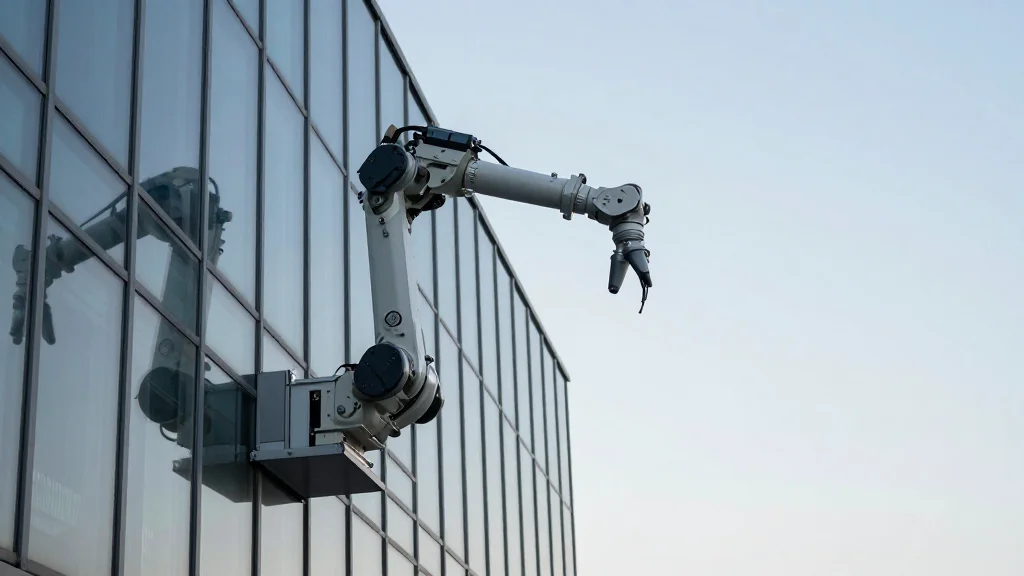
FANUC America to Spend $90 Million on New Michigan Robot Plant

Companies Mentioned
Why It Matters
The Michigan facility strengthens the resilience of North American automation supply chains by shortening the distance between robot production and end‑user factories. As U.S. manufacturers pursue reshoring and adopt advanced technologies like AI‑driven robotics, local capacity becomes a strategic asset for maintaining competitive lead times. Moreover, FANUC’s commitment signals confidence in sustained demand for industrial robots, encouraging other OEMs to consider domestic expansion. The plant’s focus on digital‑twin and virtual commissioning also accelerates the adoption curve for smart manufacturing, potentially raising overall productivity across the sector.
Key Takeaways
- •FANUC America commits $90 million to a new 840,000‑sq‑ft Michigan facility.
- •The plant will create 225 jobs and expand FANUC’s U.S. footprint to 3 million sq ft.
- •Completion targeted for late 2027, with equipment installation starting in 2025.
- •Investment reflects a broader reshoring trend driven by tariffs and supply‑chain concerns.
- •Facility will emphasize physical AI, virtual commissioning and digital‑twin capabilities.
Pulse Analysis
FANUC’s Michigan expansion arrives at a pivotal moment for U.S. manufacturing. The country’s industrial robot market, valued at roughly $5 billion in 2025, is projected to grow at a compound annual rate of 8‑10% through 2030. By localizing production, FANUC not only cuts shipping latency but also mitigates exposure to geopolitical shocks that have plagued offshore supply chains. This strategic positioning could translate into a pricing advantage, as manufacturers increasingly value speed and reliability over marginal cost savings.
Historically, FANUC has relied on a global network of factories in Japan, Europe and China. The shift toward a domestic hub mirrors moves by competitors such as ABB and KUKA, which have announced similar U.S. investments. However, FANUC’s emphasis on advanced software layers—physical AI and digital twins—distinguishes its approach. These tools enable customers to simulate entire production lines before hardware arrives, reducing commissioning time and risk. If the Michigan plant can deliver on this promise, it may set a new industry standard for integrated hardware‑software solutions.
Looking ahead, the plant’s success will hinge on talent acquisition and the ability to scale skilled labor in the Midwest. While the 225‑job figure is modest compared with the plant’s size, the demand for engineers versed in robotics, AI and data analytics is intense. Partnerships with local universities and vocational programs could become a decisive factor in meeting staffing needs. In the broader context, FANUC’s investment underscores a growing consensus: to stay competitive, manufacturers must embed automation within domestic ecosystems, turning the United States into not just a consumer but a producer of next‑generation robotics.
FANUC America to Spend $90 Million on New Michigan Robot Plant
Comments
Want to join the conversation?
Loading comments...