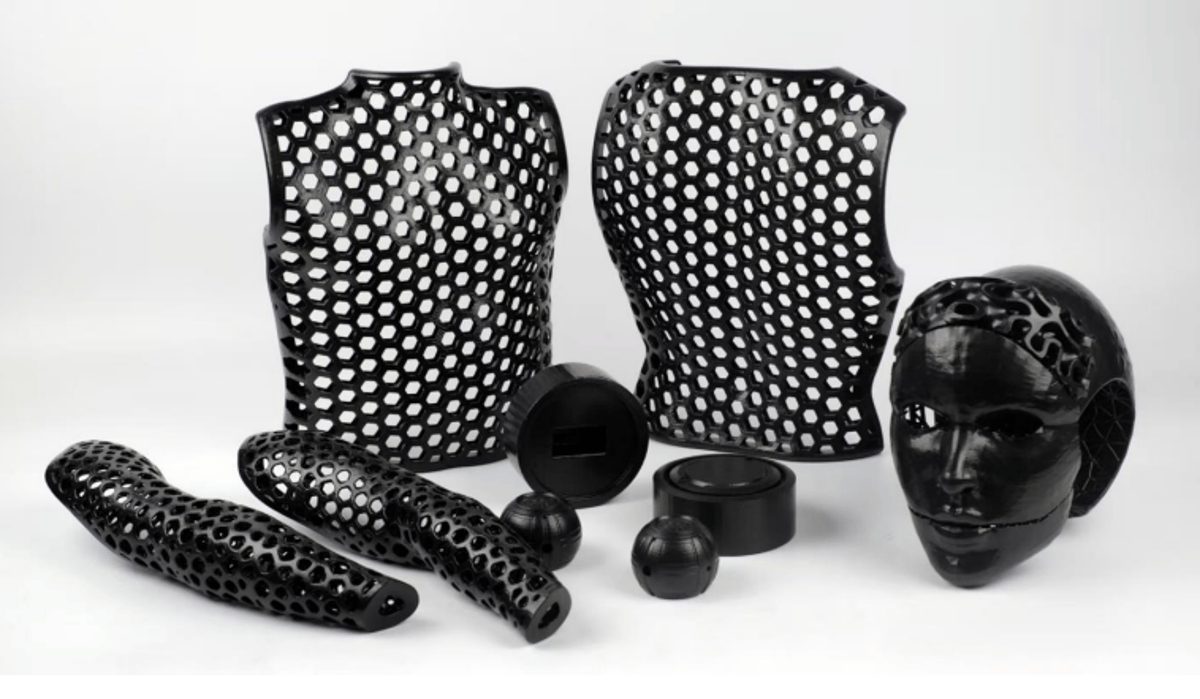
Farsoon Adds ALM Materials and New PEBA Production
Why It Matters
The material additions broaden Farsoon’s engineering‑grade portfolio, enabling customers to replace legacy polymers and meet aerospace or rail standards, while the PEBA foaming process opens a lightweight, flexible‑part market previously underserved by SLS. Together they strengthen Farsoon’s position in a competitive additive‑manufacturing landscape.
Key Takeaways
- •Farsoon adds three EOS ALM polymer powders to its open material ecosystem
- •HT‑23 carbon‑fiber PEKK blend replaces Ultem in high‑temp applications
- •New SLS‑PEBA process reduces part density to 0.3‑0.5 g/cm³
- •PEBA foamed parts achieve up to 70% weight savings versus TPU
- •Open platform lets third‑party powders run on Farsoon PBF machines
Pulse Analysis
Additive manufacturing is moving beyond a closed‑loop of proprietary powders toward open ecosystems that let operators source materials from multiple suppliers. Farsoon’s partnership with EOS’s Advanced Laser Materials brings three high‑performance powders—HT‑23, PA 850 Black, and FR‑106—into its polymer‑bed fusion lineup, giving users a direct Ultem replacement, a bio‑based polyamide, and a flame‑retardant option that meets FAR 25.853 standards. This diversification reduces supply‑chain risk and expands the addressable market for sectors such as aerospace, rail, and automotive, where material certification is a critical hurdle.
The newly announced SLS‑PEBA workflow tackles a longstanding gap in flexible‑part production. By printing PEBA via SLS and then applying a rapid foaming step, part densities drop from roughly 1.0 g/cm³ to as low as 0.3 g/cm³, delivering up to 70% weight reduction compared with conventional TPU. The foamed structures retain high resilience, surviving over 200,000 bending cycles, making them ideal for robotics components that require auxetic lattice designs for impact mitigation, as well as customized footwear midsoles that benefit from on‑demand geometry without costly molds. The 12‑minute foaming cycle per pair underscores the process’s suitability for low‑volume, high‑mix production.
Industry analysts view Farsoon’s dual strategy as a signal that open‑platform printers will dominate the next wave of industrial 3D printing. By exposing processing parameters and supporting third‑party powders, Farsoon reduces the gatekeeping role traditionally held by equipment manufacturers, encouraging material innovation and faster adoption. The upcoming TCT Asia 2026 exhibition will likely showcase these capabilities, positioning Farsoon as a key enabler for manufacturers seeking both high‑temperature engineering polymers and ultra‑lightweight flexible parts in a single, versatile system. This could accelerate the shift toward decentralized, on‑demand production across multiple verticals.
Farsoon adds ALM materials and new PEBA production
Comments
Want to join the conversation?
Loading comments...